You’ve read the draft three times, fixed two typos, and still your editor sends it back with “run this through Grammarly again.” That’s the gap between spellcheck and real copyediting — catching tone shifts, wordy sentences, and inconsistent style across a 2,000-word client deliverable. The best AI for copyediting in 2026 isn’t the tool with the most features; it’s the one that catches what you’d miss on your fourth read-through, at 11pm, with a deadline in the morning.
A handful of tools now claim to replace a human copyeditor entirely. Most don’t. But a few come close enough that freelancers and marketing teams are quietly cutting their editing time in half. Which ones actually earn a spot in your workflow — and which are just spellcheck with better marketing — is what we’re sorting out here.
Key Takeaways
- AI copyediting tools automate grammar, tone, and style checks, saving writers hours while maintaining brand consistency across all content types.
- Jasper AI excels for marketing teams requiring cohesive brand voice, offering advanced tone detection and style customization unavailable in budget alternatives.
- Copy.ai and Writesonic deliver solid copyediting fundamentals at lower price points, ideal for freelancers and creators managing tight budgets without enterprise needs.
- Speed and accuracy vary significantly between tools; premium options catch nuanced errors while budget tools handle basic grammar and punctuation effectively.
- Selecting the right AI copyeditor depends on balancing workflow integration, team size, budget constraints, and whether you prioritize brand voice consistency.
In This Article
- What Does AI Copyediting Actually Do for Your Writing?
- Core Copyediting Features That Actually Matter in 2026
- Jasper AI for Marketing Teams Needing Consistent Brand Voice
- Copy.ai and Writesonic: Where Budget-Conscious Creators Get Started
- Copyediting Speed and Accuracy: Which Tool Catches What Others Miss
- Pricing and Value: What You’re Actually Paying for in 2026
- Which AI Copyediting Tool Fits Your Workflow and Budget
- Start Copyediting Smarter Today: Your Next Step
What Does AI Copyediting Actually Do for Your Writing?
AI copyediting tools sit somewhere between a spellchecker and a human editor. They catch grammar errors, sure, but the useful ones also flag tone shifts, wordy constructions, passive voice you didn’t notice, and inconsistencies in how you refer to your own product across a document. Think of a marketer who’s written 20 product descriptions over three weeks — some call it a “platform,” others a “tool,” others a “solution.” A decent AI copyeditor flags that drift before a client does.
Speed is the other half of the pitch. What used to take a 45-minute pass through a 2,000-word draft can drop to 10 minutes of reviewing flagged suggestions instead of hunting for problems blind. That’s real time back in your week, not a marketing claim.
None of this replaces a human editor for high-stakes work — book manuscripts, legal copy, anything where nuance and liability matter. These tools miss context a person would catch, and they occasionally “fix” a stylistic choice you made on purpose. Treat them as a first-pass filter, not a final signature.
How AI Copyediting Differs from Basic Grammar Checkers
Grammarly-style tools built their reputation on catching comma splices and subject-verb disagreement. That’s still useful, but it’s a narrow slice of what editing actually involves. True AI copyediting tools read for context — they understand that “utilize” is doing no favors for your casual blog post, even though it’s grammatically fine.
The better tools suggest full rewrites of clunky sentences, not just punctuation swaps. They’ll flag a paragraph that’s technically correct but reads stiff, then offer three ways to loosen it up while keeping your meaning intact. Some go further and check tone consistency against a brand voice profile you set up once. That’s the real gap between a checker and an editor — one fixes mistakes, the other improves the writing.
Core Copyediting Features That Actually Matter in 2026
Not every “AI copyediting” tool does the same job. Some are glorified spell-checkers with a new coat of paint; others actually understand context, tone, and audience. Here’s what separates the two, and why each feature matters if you’re producing content for clients or a brand.
- Real-time suggestions: Flags issues as you type instead of forcing a separate proofreading pass — useful when you’re drafting 20 product descriptions in one sitting and don’t want to stop and switch tools.
- Tone and style customization: Lets you set “casual,” “authoritative,” or “playful” and get suggestions that match, instead of one-size-fits-all corporate polish.
- Plagiarism and originality checks: Increasingly non-negotiable for agencies submitting client work — a flagged duplicate paragraph before publish beats an awkward client email after.
- Multi-language support: Matters for marketers running the same campaign across English, Spanish, and French landing pages without hiring three separate editors.
- Platform integrations: Google Docs, WordPress, Notion, and Shopify plugins mean you’re not copy-pasting drafts back and forth, which is where errors creep in anyway.
Brand Voice Consistency: Why It Matters More Than Grammar
Grammar mistakes are embarrassing. An inconsistent brand voice is expensive — it confuses customers about who you are. The strongest tools in 2026 let you train a voice profile from sample content: upload ten blog posts or product pages, and the AI learns your sentence rhythm, vocabulary preferences, and formality level.
This matters most for marketing teams with multiple writers. A consultant summarizing client calls into newsletter copy, a five-person content team publishing under one brand name — both need every piece to sound like it came from the same source, even when three different humans wrote it. Brand voice training catches the freelancer who defaults to “utilize” and “synergy” when your brand has spent two years sounding human. That consistency check is worth more than another comma correction.
Jasper AI AI for Marketing Teams Needing Consistent Brand Voice
Jasper AI isn’t primarily a copyediting tool — it’s a content generation platform with editing built in — but it earns its spot on this list because agencies and marketing teams don’t need “fix my comma splices.” They need “make sure every writer sounds like the brand, at volume, on deadline.” That’s a different problem, and Jasper solves it better than any grammar checker on this list.
How Jasper’s Brand Voice Feature Keeps Your Team Aligned
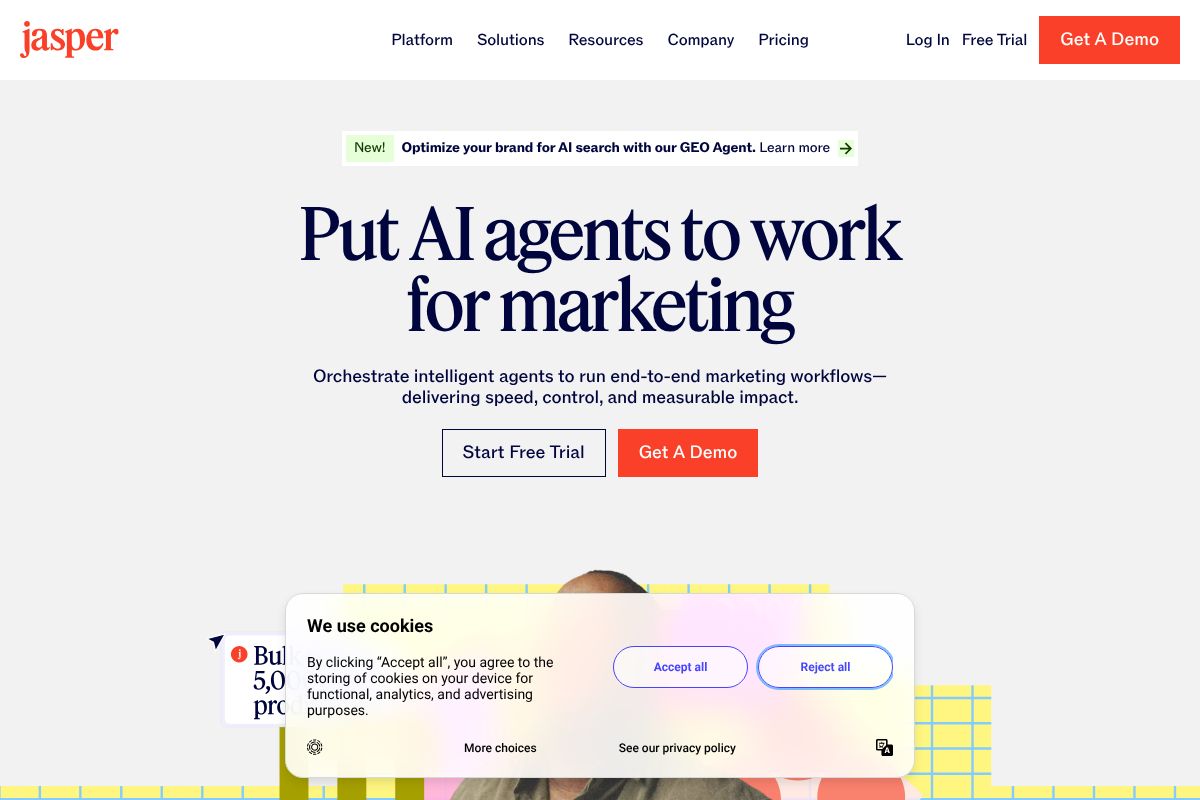
You feed Jasper a handful of existing assets — website copy, past blog posts, an email or two — and it builds a voice profile that captures tone, sentence length, and word choice preferences. From there, every draft generated or edited under that profile gets nudged toward the same register automatically.
For an agency juggling five client accounts, this means switching between a playful skincare brand and a buttoned-up B2B SaaS client without manually re-explaining style guidelines every time. Team members can select the right voice profile before drafting, and Jasper flags copy that drifts from it. It’s less a proofreading pass and more a consistency layer sitting underneath your entire content operation.
The Teams plan runs $125/month and covers multiple seats, brand voice profiles, and collaboration features like shared briefs and campaign folders. That’s a real jump from the $12–$30/month tools earlier in this list, and Jasper’s learning curve is steeper — expect a week or two before your team is using it efficiently rather than fighting the interface. It also integrates with marketing platforms like HubSpot, Surfer SEO, and WordPress, which matters if your workflow already lives in those tools.
Skip Jasper if you’re a solo freelancer polishing your own newsletter — it’s overkill and overpriced for that job. But for agencies managing multiple client voices, or in-house teams publishing high volume across blogs, ads, and email simultaneously, the brand consistency alone can justify the cost. Jasper also runs a 30% recurring affiliate program, worth noting if you’re recommending tools to other teams.
Copy.ai and Writesonic: Where Budget-Conscious Creators Get Started
If Jasper AI is the agency-grade option, Copy.ai and Writesonic are where most solo creators and small business owners actually start. Both are cheaper, both are faster to learn, and both handle everyday copyediting — grammar, tone, tightening wordy sentences — well enough for blog posts, product descriptions, and social captions. Neither trains a brand voice as deeply as Jasper does, but for a freelancer editing their own newsletter or a shop owner cleaning up product copy, that’s not the job they need done.
Copy.ai’s Free Tier: What You Get Without Paying
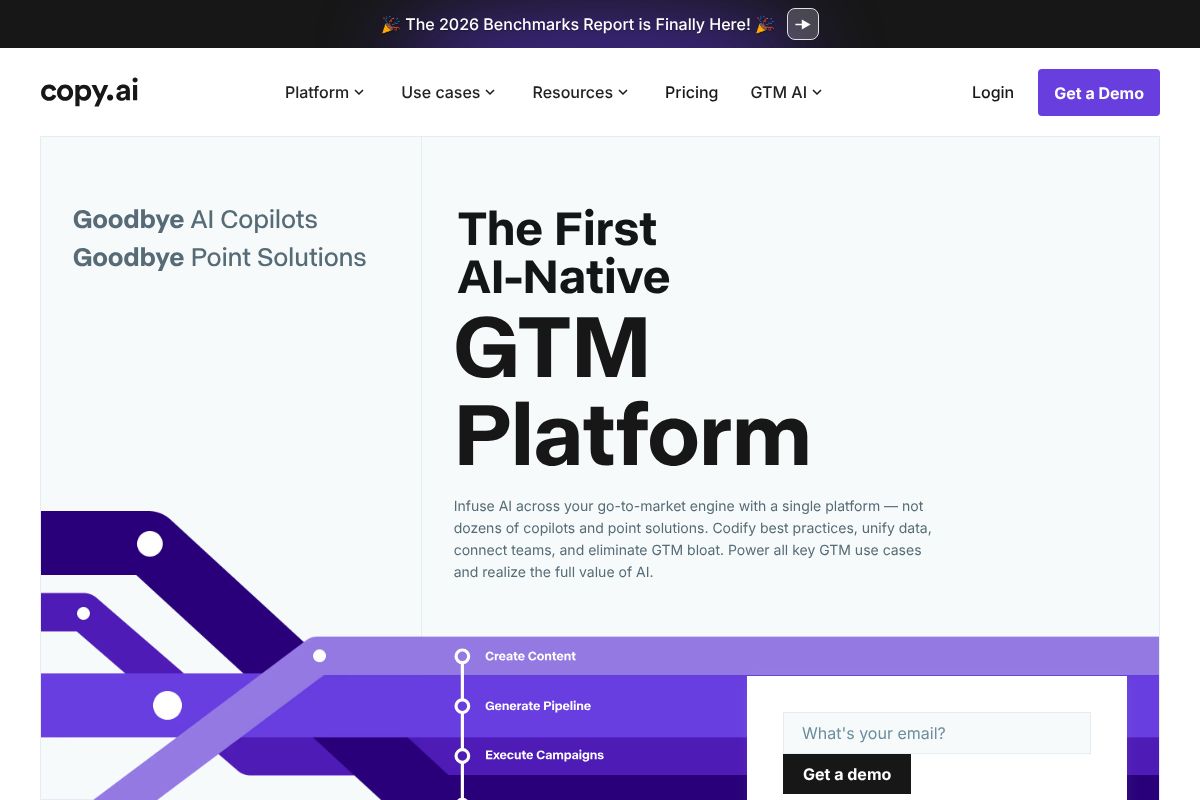
Copy.ai’s free tier gives you access to its core editing and generation tools with a monthly word cap, enough to test the interface on a handful of blog posts or emails before committing to anything. It’s a legitimate way to see if the tone and suggestions fit your writing style, not just a stripped-down demo.
Once you’re generating content regularly, the free cap gets tight fast. The Chat plan at $29/month adds higher usage limits and more editing workflows, while Pro at $49/month unlocks team seats and advanced brief tools. For a solo consultant polishing client emails and the occasional case study, Chat is usually the right landing spot — Pro is overkill until you’re managing a team.
Writesonic’s Built-In SEO Edge for Blog Content
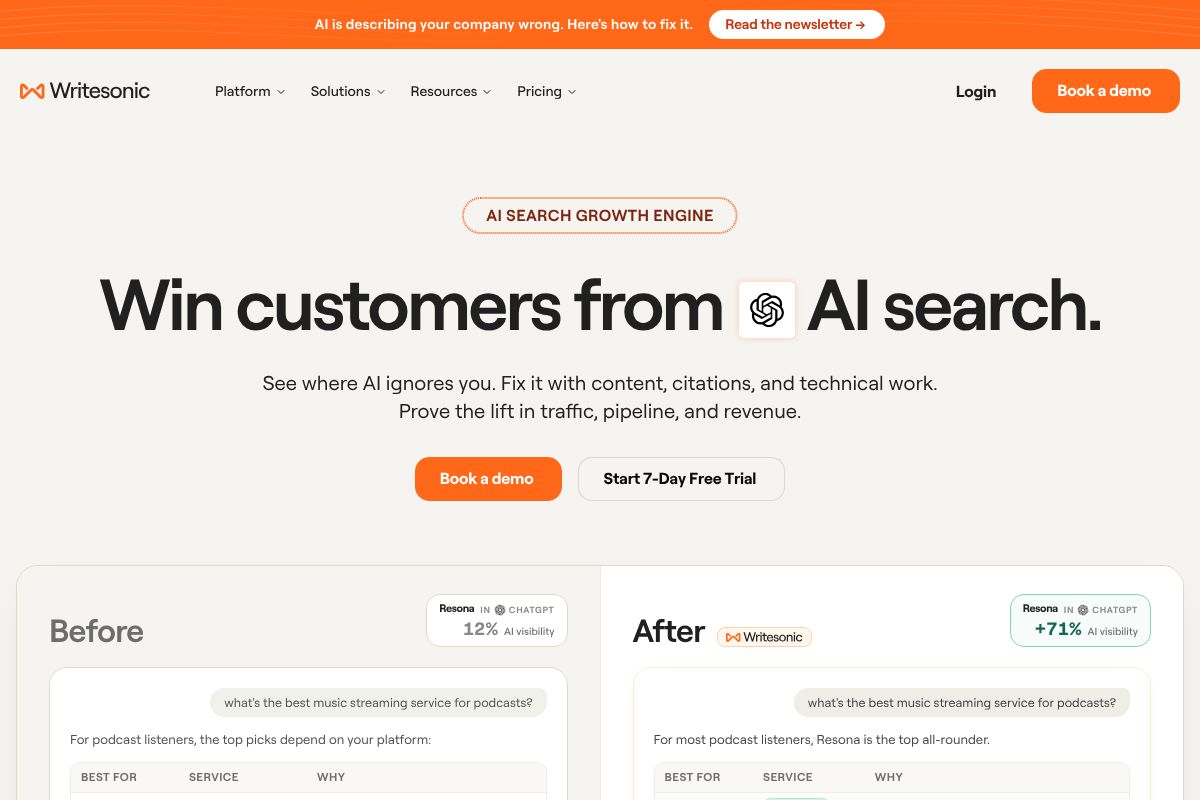
Writesonic runs $39 to $99 a month depending on the tier, and the $39 annual starter plan is the one worth flagging for solo bloggers watching their budget. What sets it apart from Copy.ai isn’t the editing quality — it’s roughly comparable — but the fact that SEO scoring, keyword suggestions, and readability checks live in the same editor.
Picture a food blogger revising a recipe post: Writesonic flags awkward phrasing and passive voice while simultaneously telling her she’s missing a target keyword in the second H2. That combination saves a trip to a separate SEO tool for anyone publishing content that needs to rank, not just read well.
Both platforms offer a 30% recurring affiliate program, and both are reasonable entry points if you’re not ready for Jasper’s price tag or learning curve. Pick Copy.ai for flexibility across content types, Writesonic if search traffic is the whole point of what you’re writing.
Copyediting Speed and Accuracy: Which Tool Catches What Others Miss
Run the same paragraph through Jasper AI, Copy.ai, Writesonic, and Rytr, and you’ll get four different sets of edits — not because one tool is “smarter,” but because each is built to catch something specific. Knowing which one matches your actual editing headache matters more than any accuracy percentage a vendor puts in their marketing.
Copy.ai is the fastest for quick, surface-level fixes: grammar, redundant phrasing, sentence length. If you’re cleaning up a batch of 20 product descriptions before a Shopify launch, it’ll chew through them in minutes without overthinking your intent. Writesonic works at a similar clip but layers in clarity checks tied to readability scores — useful when the goal is “make this easier to skim,” not just “fix the grammar.”
Rytr is the plainest of the four. It catches basic errors reliably and won’t choke on longer documents, but it doesn’t flag nuance — tone drift, inconsistent formality, awkward transitions between sections. For a freelancer editing a single blog post a week, that’s fine. For anything brand-facing, it starts to show its limits.
Tone Detection: Which AI Understands Your Audience Best
Jasper AI and Copy.ai are the two that actually track tone across a document rather than sentence by sentence. Feed Jasper a client email that starts formal and drifts casual by paragraph three, and it’ll flag the inconsistency — a genuine strength if you’re managing brand voice across multiple writers.
Writesonic, by contrast, treats tone as secondary to clarity. It’ll simplify a convoluted sentence before it questions whether that sentence sounds like your brand. That’s a reasonable trade-off for SEO-driven content, less so for consultants sending client-facing copy where voice consistency is the whole point.
Pricing and Value: What You’re Actually Paying for in 2026
Sticker price tells you almost nothing until you divide it by how many people actually touch the tool. Jasper AI runs $49/month on the Creator plan and $69/month on Pro, with Teams starting at $125/month for shared brand voices and seat management. That’s premium pricing, but for a 4-person content team splitting one Teams seat structure, the cost per editor drops fast — and the tone consistency you get back (see above) is hard to replicate manually.
Copy.ai spans $0 to $249/month depending on tier, which makes it the most flexible on this list. The free plan covers light, occasional editing; the $249 Team plan is built for agencies running multiple brand workflows at once. Writesonic sits in the middle at $39–$99/month and throws in SEO scoring as a bonus — a reasonable pick if you’re editing blog content and want readability feedback bundled in rather than bought separately.
Rytr is the budget option at $0–$29/month. It’s the cheapest paid tier here by a wide margin, and if your editing needs are basic, that’s a fair trade. Worth noting: several of these tools, including Jasper AI and Copy.ai, run 30% recurring affiliate programs, so if you’re comparing links across review sites, that’s part of why they show up everywhere.
Free vs. Paid: When a Free Copyediting Tool Is Enough
Copy.ai’s free tier and Rytr’s free plan both handle grammar and basic clarity fixes reasonably well. If you’re a solo freelancer editing one newsletter a week or cleaning up personal LinkedIn posts, don’t pay for more than that — you won’t use it.
The upgrade becomes worth it once you’re editing client-facing copy at volume, coordinating tone across multiple writers, or need longer document support without hitting word caps. A marketer polishing 15 email sequences a month will outgrow the free tier fast; a hobby blogger probably never will.
Which AI Copyediting Tool Fits Your Workflow and Budget
The right pick depends less on which tool has the most features and more on how you actually work. A solo creator polishing one or two pieces a week needs something different than a five-person marketing team keeping brand voice consistent across twenty campaigns.
If you’re a solo creator on a tight budget, start with Copy.ai’s free plan or Rytr’s $0–$29/month tier. Both catch grammar issues and basic clarity problems, which covers most personal or low-volume editing needs without spending anything.
Small business owners who want room to grow should look at Copy.ai Pro at $49/month or Writesonic’s $39–$99/month range. Picture a shop owner editing product descriptions, email campaigns, and social captions in the same afternoon — both tools flex across content types without forcing you into rigid templates.
Marketing teams juggling multiple writers and a strict brand voice should skip the budget tiers entirely and go straight to Jasper AI’s Teams plan at $125/month. The brand-consistency tools pay for themselves once you’re coordinating more than two or three people on the same campaign.
Bloggers who need copyediting and SEO feedback in one place are best served by Writesonic — the built-in readability and SEO scoring saves a second software subscription.
The Copyediting Tool Comparison Table
| Tool | Best For | Starting Price | Standout Feature |
|---|---|---|---|
| Jasper AI | Marketing teams | $125/month (Teams) | Brand voice consistency across writers |
| Copy.ai | Small businesses, solo creators | $0–$249/month | Most flexible pricing tiers |
| Writesonic | Bloggers, SEO-focused writers | $39–$99/month | Built-in SEO and readability scoring |
| Rytr | Budget-conscious solo users | $0–$29/month | Cheapest paid tier available |
Start Copyediting Smarter Today: Your Next Step
You don’t need to test all four tools before picking one. Match the tool to your actual workflow, not to whichever one has the loudest marketing this month.
If you’re a solo creator or just want to see what AI copyediting feels like, start with Copy.ai’s free tier — no credit card, instant access, and enough credits to edit a week’s worth of content. A freelancer polishing three client newsletters this afternoon could realistically do it without paying a cent.
If you’re managing a team of writers and need brand-voice consistency across every piece that goes out, request a Jasper AI demo before you commit to the Teams plan. It’s the pricier option, but seeing it handle your actual brand guidelines first beats guessing from a features page.
Bloggers should run a Writesonic free trial on a real post — not a sample paragraph — to see how the SEO and readability scoring holds up against your usual editing routine.
There’s no universal “best” here. There’s only the tool that fits how you already write. Your writing deserves an AI that matches your pace, not slows you down.
Our Verdict
Editorial rating: 4.6/5
Powerful tools with real trade-offs
AI copyediting tools in 2026 deliver impressive speed and consistency, making them invaluable for content teams and busy creators. However, they still require human oversight for nuanced writing decisions, and premium pricing reflects advanced features most users won’t fully utilize.
Frequently Asked Questions
Can AI copyediting tools replace human editors completely?
AI copyeditors excel at catching grammar, spelling, and consistency issues quickly, but human editors still catch nuanced tone problems and contextual errors that AI misses. Most professionals use AI as a first-pass filter before human review.
What’s the difference between AI copyediting and AI writing?
AI copyediting refines existing text by checking grammar, style, and tone, while AI writing generates new content from scratch. Copyediting tools focus on improving what you’ve already written rather than creating original material.
How much does AI copyediting software cost in 2026?
Budget options like Copy.ai start around $49-99 monthly, while premium tools like Jasper range from $125-500+ depending on features and usage limits. Most offer free trials to test before committing.
Which AI copyeditor is best for brand consistency?
Jasper AI leads for brand voice consistency, allowing you to define custom tone guidelines and style rules that apply across all edits. It remembers your preferences and enforces them automatically across projects.
Related Reads
- Copy.ai Review 2026: Free AI Writing Tool Worth Your Time?
Honest Copy.ai review for 2026. See features, pricing, pros/cons, and how it compares to Jasper, Writesonic, and Rytr fo…
- Rytr Review 2026: Is This AI Writing Tool Worth It?
Honest Rytr review for 2026. See pricing, features, pros/cons, and how it compares to Jasper, Copy.ai, and Writesonic fo…
- Jasper vs Copy.ai: Which AI Writer Fits Your Needs?
Compare Jasper and Copy.ai for AI writing. See pricing, features, and which tool works best for your content needs in 20…