You’ve got a blog post to write, a deadline looming, and two browser tabs open — one for Surfer SEO SEO, one for Frase. Sound familiar? Choosing between these two AI-powered SEO tools isn’t as straightforward as it might seem, and picking the wrong one could mean wasted money or, worse, content that never ranks.

The Surfer SEO vs Frase debate is one of the most common questions among content creators and marketers in 2026 — and for good reason. Both tools promise to help you write content that climbs the search rankings, but they take very different approaches to get you there.
Surfer SEO and Frase solve the same problem in different ways, and the wrong choice can tank your content workflow. We’ve tested both across real-world optimization tasks, pricing models, and user experience so you know exactly which one matches your process and budget.
Key Takeaways
- Surfer SEO excels at content optimization with real-time SERP analysis and data-driven recommendations for ranking improvements.
- Frase combines AI writing with SEO optimization, offering content creation and research tools in one integrated platform.
- Pricing differs significantly: Surfer starts lower but Frase bundles writing features, affecting total cost of ownership calculations.
- Surfer targets experienced SEO professionals needing advanced optimization, while Frase suits content teams wanting AI-assisted creation workflows.
- Both tools use AI for content analysis, but Surfer focuses optimization while Frase emphasizes writing efficiency and speed.
In This Article
Introduction: The AI SEO Tool Showdown
Let’s be honest — most content creators and marketers didn’t get into this work to spend hours deciphering keyword density charts and competitor gap analyses. But in 2026, publishing content without an SEO strategy is essentially shouting into the void. The good news? Tools like Surfer SEO and Frase exist specifically to bridge that gap between “great writer” and “SEO expert.”
The problem is that both tools look remarkably similar on the surface. They both analyze top-ranking content, offer optimization guidance, and use AI to help you write faster. But dig a little deeper and you’ll find two very different philosophies about what good SEO content actually looks like — and two very different price points to match.
Surfer SEO has built its reputation as a precision optimization engine, beloved by agencies and seasoned SEO professionals who want granular, data-driven control over every piece of content they publish. Frase, on the other hand, leans into the research and drafting workflow, making it particularly appealing to solo creators and small teams who need to go from blank page to polished article as efficiently as possible.
Choosing between them isn’t just a matter of which one has more features. It really comes down to how you work and what you’re willing to spend. Whether you’re a freelance writer, a marketing manager, or a small business owner wearing every hat at once, this comparison will help you figure out which tool actually fits your reality.
What Are Surfer SEO and Frase?
Before diving into the head-to-head comparison, it helps to understand what each tool is actually built to do — because while they overlap in some areas, their core strengths point in different directions.
Surfer SEO: Optimize as You Write
Surfer SEO is a content optimization platform that analyzes the top-ranking pages for your target keyword and tells you exactly what your content needs to compete. Think of it as a real-time SEO coach sitting beside you as you write. It scores your content live, flagging things like keyword usage, word count, heading structure, and NLP terms that Google’s algorithm tends to reward.
The core idea is simple: instead of guessing why certain pages outrank yours, Surfer reverse-engineers what’s already working and gives you a clear roadmap to match it. It’s particularly popular with:
- SEO agencies managing large content pipelines
- In-house marketing teams publishing at scale
- Freelancers who want to deliver measurable results to clients
Frase: Research, Draft, and Optimize in One Place
Frase takes a slightly different angle. It combines AI-powered content research with writing and optimization tools, so you can go from topic idea to finished draft without jumping between a dozen different tabs. When you enter a keyword, Frase automatically pulls together insights from the top-ranking pages — summaries, common questions, headers, and key statistics — so you can build a well-informed outline fast.
It’s designed for creators who want to move quickly without sacrificing depth. Key use cases include:
- Solo bloggers and content creators building topical authority
- Small business owners who write their own content
- Marketers who need to research and produce articles efficiently
Both tools are ultimately designed to help you rank faster by taking the guesswork out of SEO — they just approach that goal from different starting points.
Key Features: Side-by-Side Breakdown
Both Surfer SEO and Frase cover similar ground — content optimization, keyword research, SERP analysis, and AI writing assistance — but the way they handle each of these areas tells you a lot about which one fits your workflow. Here’s how they stack up where it matters most.
Content Optimization & Writing
Surfer SEO shines in its real-time content editor. As you write, it scores your content live — nudging you to add specific keywords, adjust your word count, or restructure headings based on what’s already ranking for your target term. It feels less like a writing tool and more like a co-pilot that keeps you on track with SEO best practices as you go.
Frase takes a research-first approach. Before you write a single word, it builds you a comprehensive brief — pulling together top-ranking page summaries, common questions people are asking, and suggested outline structures. Its built-in AI writer can then help you fill in those sections quickly, making it feel more like a full drafting environment than a pure optimization layer.
- Surfer SEO: Best for optimizing content as you write or refining existing drafts
- Frase: Best for going from blank page to structured draft with research baked in
If you already have a writing process you love and just want SEO guidance layered on top, Surfer’s workflow feels more natural. If you want everything in one place from research to draft, Frase has the edge.
Research & Competitive Analysis
This is where the two tools diverge most noticeably. Frase excels at surfacing what competing pages are actually saying — it breaks down their headers, key topics, word counts, and even pulls frequently asked questions from search results. You get a clear picture of the content landscape before you start writing, which is genuinely useful for building topical depth.
Surfer SEO leans harder into on-page optimization signals. Its SERP Analyzer digs into the structural and technical factors that correlate with high rankings — things like content length, keyword density, and NLP entity usage. It’s less about summarizing competitors and more about understanding the underlying patterns Google appears to reward.
- Frase: Stronger for qualitative research — understanding what topics and questions to cover
- Surfer SEO: Stronger for quantitative analysis — understanding how to structure and optimize your page
Ideally, you’d use both together. But if you have to pick one, your choice comes down to whether you need more help with what to write or how to optimize what you’ve written.
Pricing Comparison: What You’ll Actually Pay
Pricing is often where tool comparisons get messy, so let’s keep it straightforward. Both Surfer SEO and Frase operate on monthly subscription models with annual discounts — but they target slightly different budgets and use cases. Here’s what you’re actually looking at in 2026.
Surfer SEO Plans
Surfer SEO’s pricing runs from $89/month on the Essential plan up to $219/month for Business, with meaningful discounts if you pay annually (the Essential plan drops to around $79/month). Here’s how the tiers break down:
- Essential ($89/mo): Best for solo content writers — covers content editor access, keyword research, and a solid article limit for one user
- Professional ($129/mo): Adds more articles per month, audit features, and team seats — good for small agencies or growing content teams
- Business ($219/mo): Designed for agencies with higher volume needs and white-label reporting
For most freelancers and small business owners, the Essential or Professional tier offers the best value per feature. You’re paying primarily for optimization depth and the Content Score system.
Frase Plans
Frase has historically been the more affordable option, and that positioning holds in 2026. Their entry-level plan starts at a lower price point than Surfer, making it attractive if you’re primarily focused on research and AI-assisted drafting rather than deep optimization scoring.
- Solo plan: Budget-friendly entry point for individual creators with moderate monthly content needs
- Basic and Team plans: Step up document limits and add collaboration features for growing teams
Frase tends to win on cost-per-document if you’re producing high volumes of content. Surfer wins on optimization depth per article.
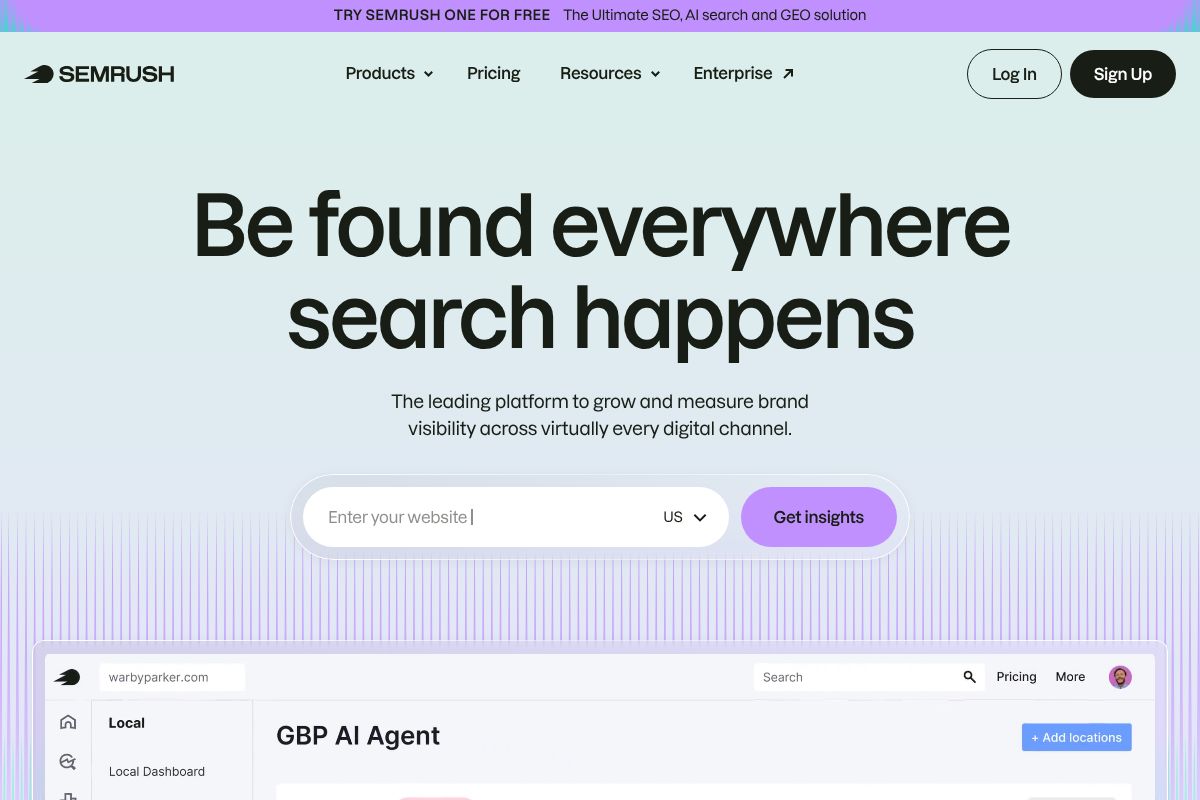
If you need rank tracking alongside content optimization, neither tool fully covers that gap. In that case, a premium platform like Semrush bundles rank tracking, site auditing, and keyword research into one suite — though the price reflects it. It’s worth considering if SEO is central to your business, not just your content process.
Pros and Cons: The Honest Trade-offs
No tool is perfect for every workflow. Before you commit to a subscription, it helps to see the strengths and weaknesses laid out plainly — without the marketing spin. Here’s what each platform genuinely does well, and where each one falls short.
Surfer SEO Strengths & Weaknesses
Surfer SEO’s biggest selling point is how quickly it gets you from blank page to optimized draft. The real-time Content Score updates as you write, which means you’re not guessing whether your article is hitting the right marks — you can see it happening live. For non-technical users especially, that immediate feedback loop is genuinely valuable.
Where Surfer shines:
- Real-time on-page optimization with a clear, actionable scoring system
- Clean, intuitive interface — minimal learning curve for new users
- Solid keyword density and NLP term suggestions baked into the editor
- Competitive pricing at the Essential tier for solo creators and freelancers
Where Surfer falls short:
- Limited competitive research depth — you won’t get granular insights into why competitors rank
- No built-in rank tracking, so you can’t monitor how your optimized content performs over time
- Content briefs are useful but less comprehensive than Frase’s research-driven approach
If your priority is writing and optimizing efficiently, Surfer delivers. If you need to understand the competitive landscape in detail, you’ll likely need a supplementary tool.
Frase Strengths & Weaknesses
Frase earns its reputation as a research powerhouse. The ability to pull competitor content, summarize SERP data, and build detailed briefs in one place makes it especially strong for content strategists and teams that plan before they write.
Where Frase shines:
- Deep SERP research and automated content briefs that save serious planning time
- Built-in AI writing assistant that integrates naturally into the research workflow
- Strong value per document at higher content volumes
- Useful for agencies building topic clusters and pillar page strategies
Where Frase falls short:
- Steeper learning curve — new users often need time to explore the full feature set
- Costs can climb quickly as you scale up document limits on higher-tier plans
- The optimization scoring isn’t quite as polished or intuitive as Surfer’s Content Score
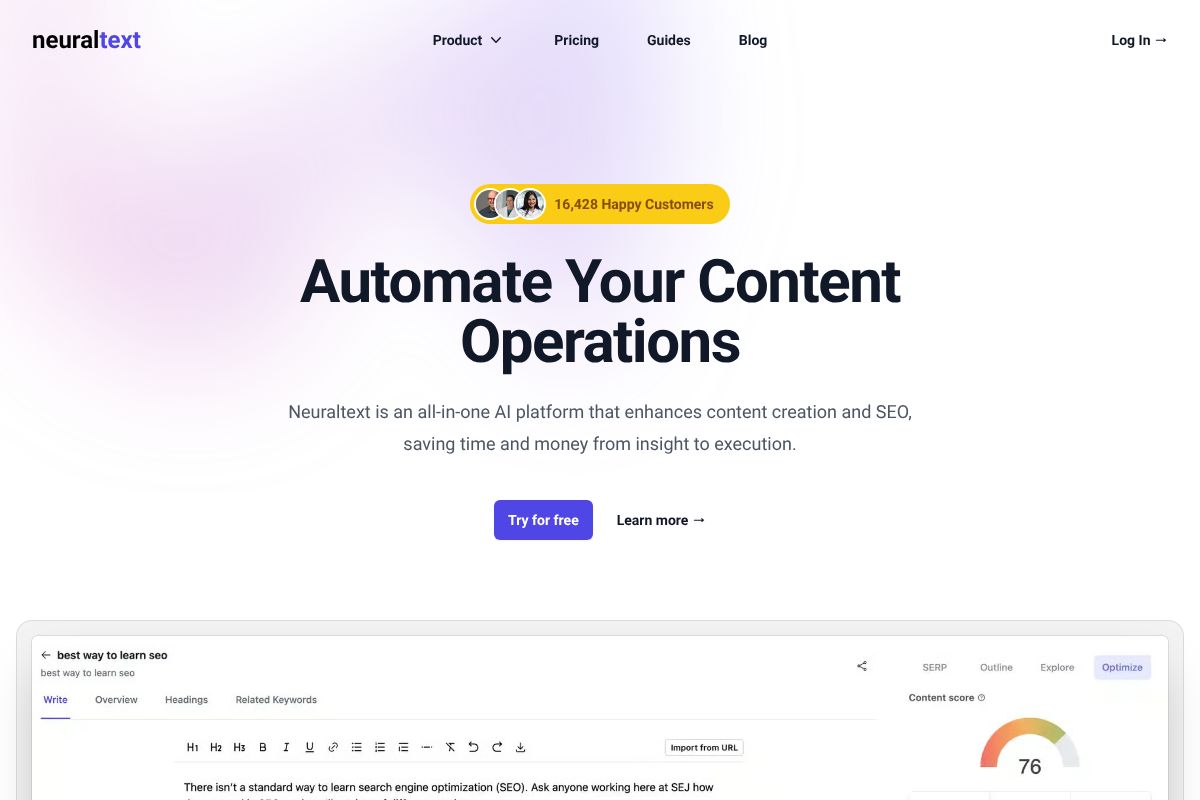
If your team is building out content clusters at scale and needs a research-first workflow, Frase is a strong fit. For budget-conscious teams doing similar work, NeuralText is worth exploring as a more affordable alternative — it covers keyword clustering and content briefs without the premium price tag of either Surfer or Frase.
Who Should Use Each Tool?
Both Surfer SEO and Frase are solid tools — but they’re built for different workflows and different types of users. Choosing the wrong one won’t just waste money; it’ll slow you down. Here’s a straightforward breakdown of who gets the most value from each.
Choose Surfer SEO If…
Surfer SEO is purpose-built for speed and simplicity. If your primary goal is to write well-optimized content quickly and without a steep learning curve, it’s hard to beat.
- You’re publishing multiple articles per week and need a fast, repeatable optimization process
- You’re a freelance writer or solo creator who wants clear, actionable guidance without digging through complex dashboards
- You’re budget-conscious and need a tool that delivers strong on-page optimization value at a lower entry price
- On-page SEO is your main focus — you’re not necessarily building elaborate content strategies, just making sure each article is properly optimized before it goes live
- You want a clean writing experience — Surfer’s editor keeps things uncluttered so you can focus on the content itself
For small teams or individuals who want to move fast without getting lost in research rabbit holes, Surfer SEO is the more practical everyday tool.
Choose Frase If…
Frase rewards users who invest time in the research and planning phase. If you’re managing content at scale or building a deliberate topical authority strategy, that investment pays off.
- You need deep competitive research before a single word gets written
- You’re managing a content team or agency where structured briefs keep everyone aligned
- You’re building content clusters and need to map out pillar pages and supporting topics systematically
- You want AI writing assistance built into your research workflow, rather than as a separate tool
- You’re focused on long-term topical authority for a brand or client
If your team also needs rank tracking alongside content optimization, Semrush is worth adding to the stack — it fills the gap that both Frase and Surfer leave when it comes to ongoing position monitoring and keyword performance data.
The Verdict: Which Tool Wins?
Here’s the honest answer: there’s no universal winner. The better question is which tool fits your workflow — and that comes down to how you create content, what your budget looks like, and how much time you’re willing to spend in the research phase.
Surfer SEO wins on simplicity and speed. If you’re a solo creator, freelancer, or small business owner who needs to optimize content quickly and get it published, Surfer gets out of your way and lets you do exactly that. The learning curve is minimal, and the results are visible fast.
Frase wins on research depth and AI integration. If you’re running a content team, managing multiple clients, or building a long-term topical authority strategy, Frase gives you the structure and intelligence to do it properly. The upfront time investment is higher, but the output quality reflects that.
Some teams actually use both — Frase for the research and brief-building phase, Surfer for real-time optimization during the writing phase. It’s a more expensive setup, but for agencies producing high volumes of content, the overlap can be worth it.
Our soft recommendation: if you’re a content creator or solo marketer, start with Surfer SEO. If you’re leading a content team or agency, Frase is the stronger long-term investment.
Quick Recommendation Matrix
| Your Situation | Best Fit |
|---|---|
| Budget-conscious solo creator | Surfer SEO — lower entry cost, fast results |
| Research-heavy content strategy | Frase — deeper briefs and competitive analysis |
| Content team or agency workflow | Frase — built for collaboration and scale |
| Need rank tracking + content optimization | Semrush — covers the full SEO stack in one platform |
| Want simplicity above everything | Surfer SEO — clean editor, minimal friction |
If you find yourself needing ongoing rank monitoring and keyword performance data on top of content optimization, Semrush is worth a serious look — it fills the gap that both tools leave when it comes to tracking how your content actually performs over time.
Ready to Optimize Your Content?
The best SEO tool isn’t the one with the most features — it’s the one you’ll actually open and use every time you sit down to write. Both Surfer SEO and Frase offer free trials, so there’s no reason to commit blind.
Here’s how to approach your decision without overthinking it:
- Start with Surfer SEO if you want to jump straight into optimizing content and see real-time feedback as you write. The learning curve is minimal, and results show up fast.
- Start with Frase if your biggest bottleneck is research and brief creation. Run a few queries, build a brief, and see how it fits your workflow before upgrading.
- Test both if your budget allows. A month of hands-on use will tell you more than any comparison article — including this one.
If you’re ready to get started, Surfer SEO is a great first step for creators and marketers who want a clean, focused optimization experience. You can explore their current plans and kick things off with a free trial to see how it fits your content process.
Whichever tool you choose, committing to a consistent optimization workflow is what actually moves the needle. Stop guessing what Google wants — and start publishing content that’s built to rank. Save hours on optimization and rank faster.
Frequently Asked Questions
Is Surfer SEO better than Frase for ranking content?
Surfer SEO provides more granular SERP analysis and optimization metrics, making it superior for technical content optimization. Frase excels at content creation speed but offers less detailed ranking guidance than Surfer’s specialized approach.
Can Frase replace Surfer SEO for SEO optimization?
Frase handles basic SEO optimization and AI writing, but lacks Surfer’s advanced SERP data and content score depth. Choose Frase for writing efficiency; choose Surfer for comprehensive optimization analysis and competitive research.
Which tool is cheaper: Surfer SEO or Frase?
Surfer SEO’s entry plan costs less monthly, but Frase bundles writing and SEO features, potentially offering better value for content teams. Compare total features needed rather than base price for accurate cost evaluation.
Does Surfer SEO have AI writing like Frase?
Surfer SEO added AI writing capabilities but focuses primarily on optimization. Frase positions AI writing as a core feature with integrated SEO, making it the stronger choice for content creation workflows.
Related Reads
- Best AI Tool for SEO Beginners in 2026
Find the best AI SEO tool for beginners in 2026. Compare features, pricing, and ease of use for content creators and sma…
- Best Keyword Research Tool for 2026: Top Picks
Find the best keyword research tool for your needs in 2026. Compare top SEO tools with honest reviews, pricing, and reco…
- Surfer SEO vs NeuralText: Which AI Tool Wins in 2026?
Compare Surfer SEO and NeuralText in 2026. See pricing, features, and which AI SEO tool fits your content strategy best.…