If you’ve ever spent hours researching keywords, rewriting meta descriptions, and wondering why your content still isn’t ranking — you’re not alone. SEO has always been time-consuming, but in 2026 it’s also more competitive than ever. The good news? The best AI SEO tool can cut that workload dramatically, helping you research, write, and optimize content in a fraction of the time.
Whether you’re a freelancer juggling multiple clients, a small business owner trying to get found on Google, or a content creator building an audience, AI-powered SEO tools have become less of a luxury and more of a necessity. In this guide, we break down the top picks for creators and marketers — covering features, pricing, and honest trade-offs so you can find the right fit for your workflow.
Key Takeaways
- AI SEO tools automate keyword research, content optimization, and performance tracking, saving creators hours of manual work monthly.
- Modern AI SEO platforms integrate machine learning to predict ranking opportunities and identify content gaps competitors miss.
- Choosing the right tool depends on your budget, team size, and whether you prioritize technical SEO or content creation.
- Top-tier AI SEO tools offer real-time competitor analysis, automated reporting, and multi-language support for global campaigns.
- Most AI SEO solutions require a learning curve but deliver measurable ROI through improved organic traffic within three months.
In This Article
What Is an AI SEO Tool?
An AI SEO tool is software that uses artificial intelligence to help you improve your content’s visibility in search engines — without requiring you to be an SEO expert. Instead of manually digging through spreadsheets of keyword data or guessing what Google wants to see, these tools analyze patterns across millions of web pages and surface actionable recommendations for you.
Traditional SEO software, like the tools many of us used a few years ago, was largely data-driven but still required a lot of human interpretation. You’d get a list of keywords and a pile of metrics, then figure out what to do with them yourself. AI SEO tools go a step further — they don’t just show you the data, they tell you what it means and what to do next.
Here’s where AI makes a real difference in your workflow:
- Keyword research: AI identifies not just popular search terms, but the intent behind them — whether someone is looking to buy, learn, or compare.
- Content optimization: Get real-time suggestions on structure, word count, headings, and semantic keywords as you write.
- Competitive analysis: Understand what’s already ranking and why, without spending hours reading through competitor pages manually.
- Time savings: Tasks that used to take half a day can now be done in under an hour.
The biggest shift is that AI handles the heavy lifting of research and analysis automatically. You stay focused on strategy and creativity — the parts that actually require a human touch. For non-technical users especially, this levels the playing field considerably.
Why You Need an AI SEO Tool in 2026
If you’ve been trying to grow your organic traffic through sheer effort alone, you already know how exhausting it can be. Writing content that never ranks, watching competitors outpace you despite publishing less, and spending hours on keyword research that leads nowhere — these are real frustrations that creators and marketers face every single day.
The hard truth is that SEO has gotten more competitive, not less. With more content being published online than ever before, standing out in search results requires more than good writing. You need to understand search intent, topic authority, semantic relevance, and technical optimization — all at once. For most non-technical professionals, that’s a steep hill to climb without the right tools.
Here’s where the pain really shows up depending on who you are:
- Content creators often produce great work that simply doesn’t get found — not because the writing is poor, but because the SEO fundamentals aren’t there.
- Marketers managing multiple campaigns don’t have time to manually audit every piece of content or track keyword shifts across dozens of pages.
- Freelancers frequently lack the deep SEO expertise that larger agencies have on staff, which makes it harder to deliver consistent results for clients.
AI SEO tools directly address all three of these scenarios. They automate the time-consuming research and analysis work, surface clear recommendations in plain language, and help you optimize content in a fraction of the time it used to take. You don’t need to be an SEO specialist to get specialist-level results.
Perhaps most importantly, AI-assisted content optimization has shifted from a competitive advantage to a baseline expectation. Larger brands and agencies have been using these tools for a while now. If you’re still working without them, you’re not just missing out — you’re actively falling behind.
The good news? The tools available in 2026 are more accessible, more affordable, and more powerful than anything that came before. You just need to know which ones are worth your time.
Key Features to Look for in an AI SEO Tool
Not all AI SEO tools are built the same, and the feature set that matters to a developer is very different from what actually helps a creator or marketer move the needle. Before diving into specific product recommendations, it’s worth knowing which capabilities should be on your checklist.
Here are the core features that separate genuinely useful tools from ones that just look impressive in a demo:
- Keyword research automation — surfacing relevant terms without hours of manual digging
- Real-time content optimization — scoring and improving your content as you write, not after
- Competitor analysis — understanding what’s already ranking and why
- Rank tracking — monitoring your positions automatically over time
- Content briefs and outlines — AI-generated structures that save you hours of planning
- Integration with writing tools — fitting into the workflow you already use
- Non-technical interface — plain-language recommendations you can act on immediately
The best tools use natural language processing (NLP) to understand content the way search engines do — not just matching keywords, but evaluating relevance, depth, and topical context. That shift is what makes modern AI SEO tools genuinely powerful for everyday users.
Content Optimization & Writing Assistance
The most immediately useful feature for creators is real-time content optimization — guidance that appears while you’re actually writing, not as an afterthought. Today’s AI tools go well beyond basic keyword density checks. They suggest headings, flag missing subtopics, recommend semantic terms, and even flag tone inconsistencies based on what’s performing well in search results.
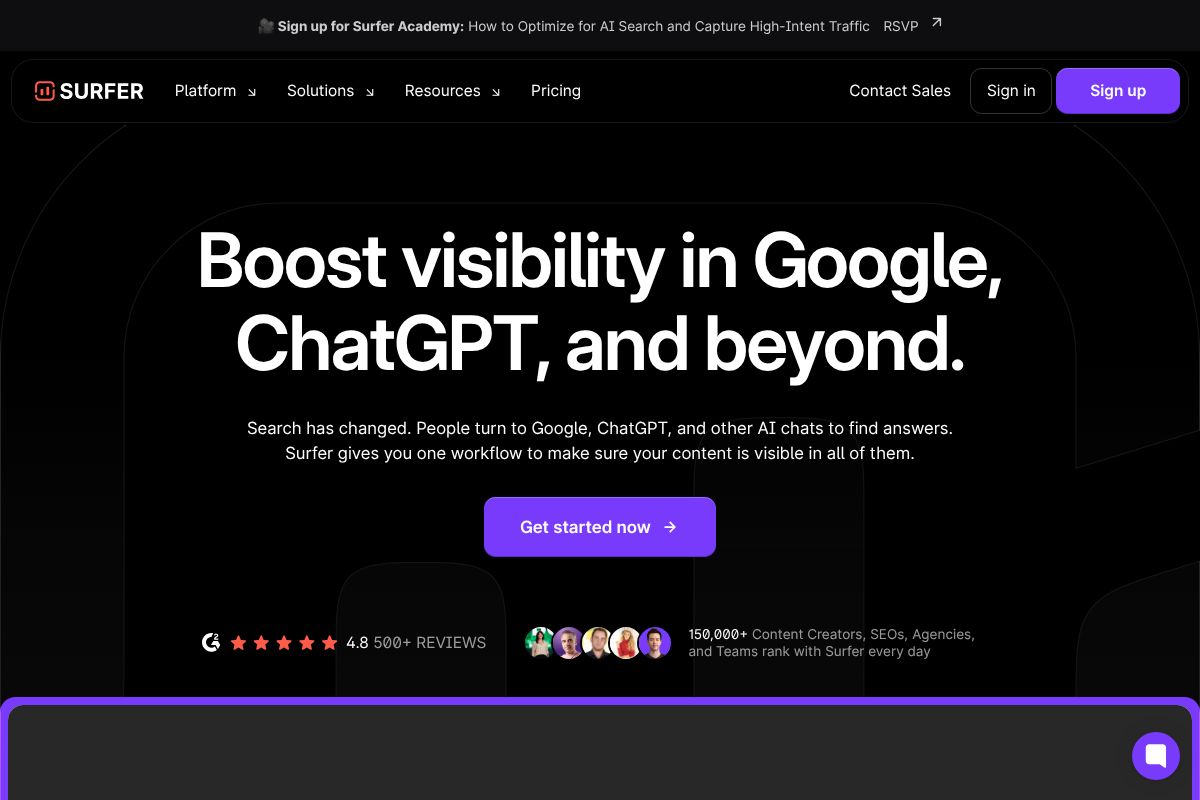
Surfer SEO SEO is one of the standout examples here. Its Content Editor integrates directly into your writing workflow and gives you a live optimization score as you build out a piece. It tells you which related terms to include, how long your content should be, and how your structure compares to top-ranking pages — all without requiring any SEO background to understand.
Competitor Intelligence & Rank Tracking
Knowing where you stand relative to competitors is half the battle in SEO. AI-powered competitor analysis goes beyond a simple keyword gap report — it breaks down the structure, depth, backlink profile, and content strategy of pages that are outranking you, then translates that into actionable steps.
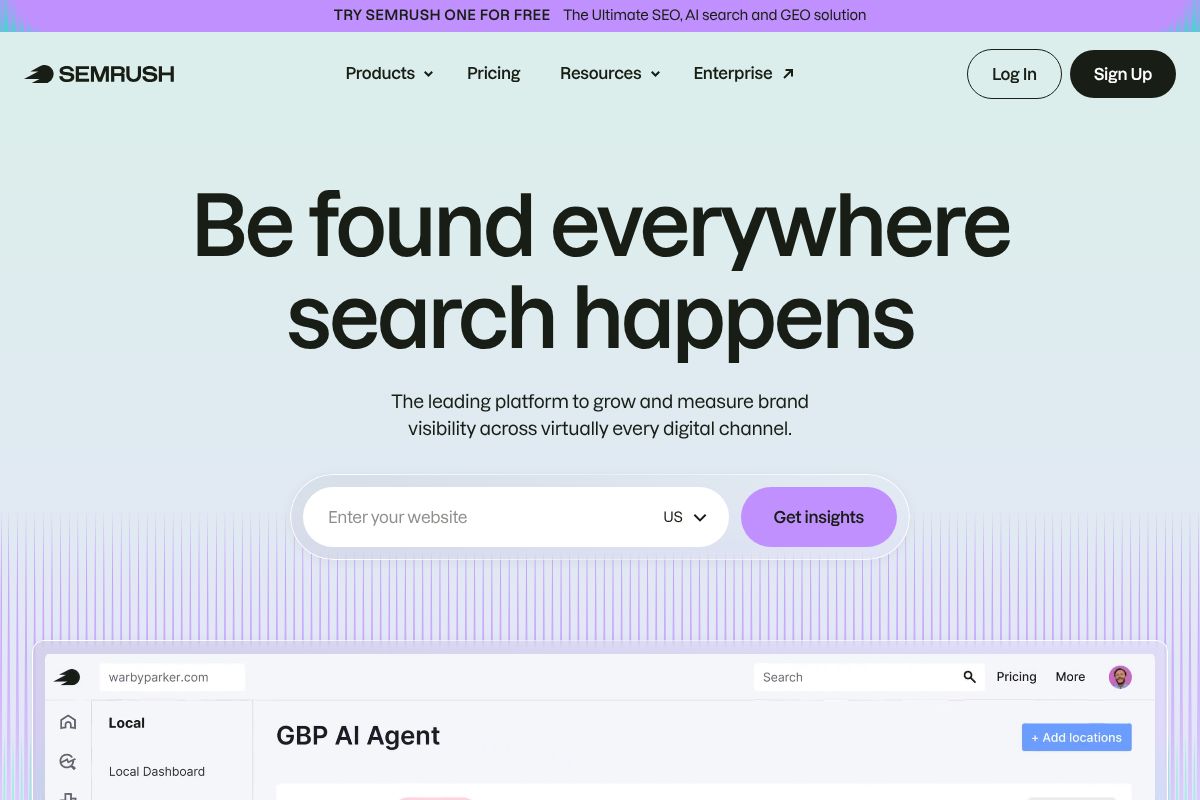
Semrush has long been the benchmark here, and its AI-enhanced features make it even more accessible in 2026. You can track your rankings automatically across hundreds of keywords, get alerts when competitors make significant moves, and pull detailed content gap analyses without needing to build a single spreadsheet. For marketers managing multiple clients or campaigns, that kind of automated intelligence is invaluable.
Topical Authority & Content Clustering
Search engines increasingly reward websites that demonstrate deep, consistent expertise on a subject — not just individual well-optimized posts. Building that topical authority means covering a subject comprehensively, which requires knowing which related topics and subtopics you’re missing.
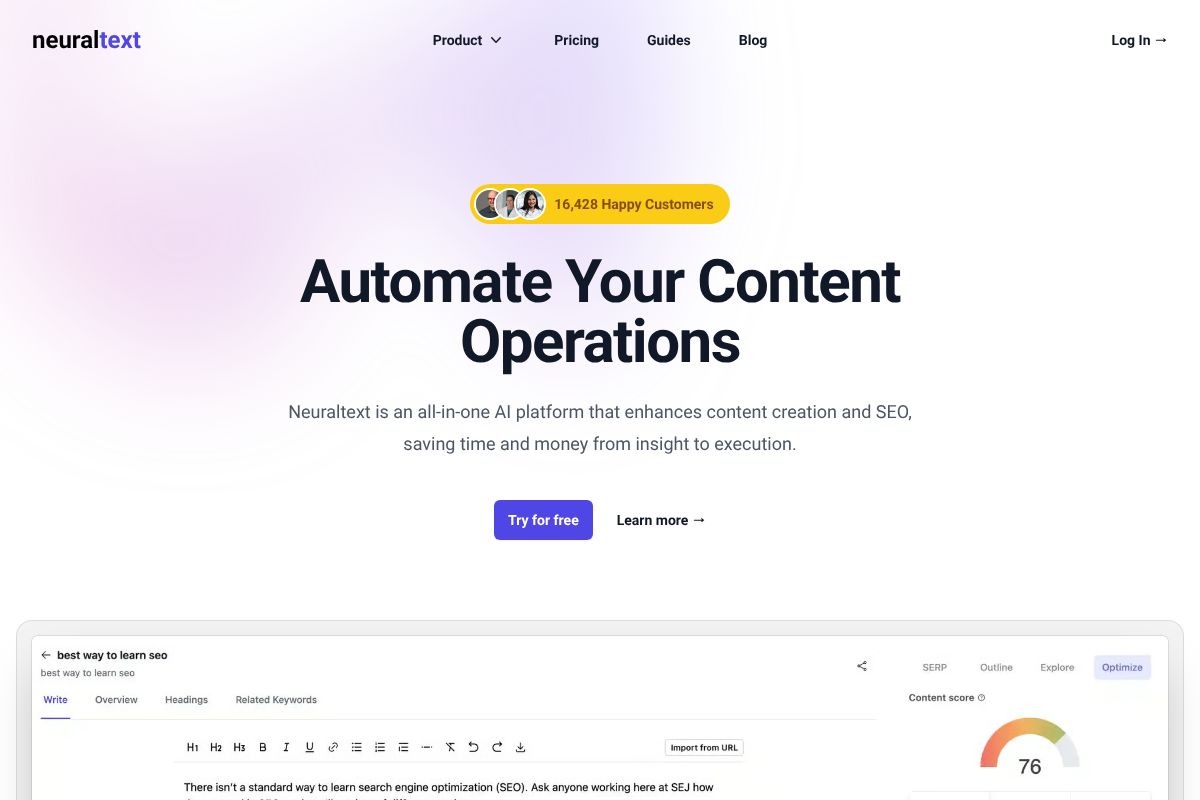
This is where tools with strong content clustering capabilities shine. NeuralText is particularly well-suited for this, helping you map out content clusters around core topics and identify gaps in your existing coverage. Instead of guessing what to write next, you get data-backed suggestions for the pieces that will do the most to strengthen your overall authority in a niche — a huge advantage for creators and marketers trying to grow organic traffic systematically.
Top AI SEO Tools Compared
Choosing the right AI SEO tool comes down to your workflow, your budget, and what you actually need it to do. The three tools below each occupy a distinct lane — and understanding the differences will save you from paying for features you’ll never use, or settling for a tool that can’t keep up with your goals.
Semrush: Best for SEO Professionals & Competitive Analysis
If you’re managing SEO across multiple clients, campaigns, or websites, Semrush is the most comprehensive platform available right now. It goes well beyond keyword research — you get rank tracking, deep competitor analysis, technical SEO audits, backlink monitoring, and even PPC insights all under one roof. For agencies and in-house marketing teams, having that breadth of data in a single dashboard is a genuine time-saver.
Pricing starts at $139.95/month (or around $117/month on an annual plan for the Pro tier), scaling up to $499.95/month for the Business plan. That’s a significant investment, and it’s worth being honest: if you’re a solo creator publishing a handful of posts per month, Semrush is likely overkill. The platform also has a steeper learning curve than its competitors — there’s a lot here, and it takes time to figure out which reports actually matter for your goals.
That said, for marketers who need to move fast on competitive intelligence, Semrush’s AI-enhanced features in 2026 make it easier than ever to extract actionable insights. Key strengths include:
- Automated rank tracking across large keyword sets
- Competitor content gap and backlink analysis
- Technical SEO site audits with prioritized recommendations
- PPC and paid search data alongside organic insights
If budget isn’t the primary constraint and you need enterprise-grade data, Semrush is hard to beat.
Surfer SEO: Best for Content Writers & On-Page Optimization
Surfer SEO takes a more focused approach — it’s built specifically to help you write and optimize content that ranks. Its real-time content editor scores your article as you write, giving you live feedback on keyword usage, structure, word count, and how your piece stacks up against the top-ranking pages for your target term. It also integrates directly with Google Docs, which makes it a natural fit for writers who don’t want to change their existing workflow.
Plans run from $89/month up to $219/month, with the Essential plan available at around $79/month on annual billing. For freelance writers and small content teams focused on consistent publishing, that’s a reasonable price for the value you get. The AI-powered outline builder is particularly useful — it gives you a data-backed structure before you write a single word.
The trade-off is scope. Surfer doesn’t offer the depth of rank tracking or competitive analysis that Semrush does. If you need to monitor a broad keyword portfolio or run technical audits, you’ll need a separate tool. But for creators whose primary job is writing optimized content, Surfer keeps you focused on exactly what moves the needle:
- Real-time on-page optimization scoring
- SERP analysis and content structure recommendations
- AI-generated content outlines
- Google Docs integration for seamless writing
NeuralText: Best for Budget-Conscious Content Teams
NeuralText is the most affordable option in this comparison, with plans ranging from just $19 to $119/month. That price point makes it genuinely accessible for solopreneurs, small agencies, and content teams that need to scale output without scaling their software budget alongside it.
Where NeuralText earns its place is in content brief creation and topical authority mapping. You can generate detailed, AI-powered briefs quickly, build out content clusters around core topics, and run bulk content optimization — all features that would cost significantly more on competing platforms. For teams building out a content strategy from scratch, that combination is hard to argue with.
The honest trade-off is that NeuralText doesn’t match Semrush on advanced data depth, and its content editor isn’t quite as polished as Surfer’s real-time scoring experience. But if your priority is getting a solid content operation running efficiently at a low cost, NeuralText delivers real value. Core strengths include:
- Affordable entry point with no feature-gating on core tools
- AI-generated content briefs at scale
- Topical authority and content cluster mapping
- Bulk content optimization for larger publishing schedules
Think of NeuralText as the smart pick for teams that need structure and strategy without the premium price tag.
Pros & Cons: What You Should Know
AI SEO tools can genuinely transform the way you research, create, and optimize content — but they’re not a magic fix. Before you commit to a subscription, it’s worth understanding both what these tools do well and where they fall short. Honest expectations lead to better results.
Common Advantages
The most immediate benefit most users notice is time savings. Tasks that used to take hours — keyword research, competitor analysis, content briefs — can now be completed in minutes. That efficiency compounds quickly when you’re managing a content calendar at scale.
Beyond speed, here’s where AI SEO tools consistently deliver:
- Faster research: Surface keyword opportunities, content gaps, and SERP insights without manual digging
- Better keyword insights: Identify search intent, clustering opportunities, and long-tail variations you might otherwise miss
- Competitive edge: Understand what’s ranking and why, so you can create content that actually competes
- Scalability: Produce more optimized content without proportionally increasing your workload
- Reduced manual work: Automate repetitive tasks like brief creation and on-page scoring
- Improved content quality: Real-time optimization guidance helps you hit topical depth and relevance targets consistently
Real Trade-Offs to Consider
No tool is perfect, and being clear-eyed about the limitations will save you frustration down the line.
- Cost adds up: Several of these platforms start affordably but scale quickly. If you’re on a tight budget, the mid-tier and enterprise plans can feel steep fast
- Learning curve varies: Tools like Semrush have a significant onboarding investment — expect to spend real time learning the platform before seeing returns
- Human judgment still required: AI suggestions aren’t always right. Keyword recommendations, content angles, and optimization scores need a human layer of review before you publish
- Data accuracy isn’t guaranteed: Search volume estimates and competitive metrics differ across tools — treat them as directional, not definitive
- Integration gaps: Not every tool connects cleanly with your existing CMS, analytics stack, or workflow — always check compatibility before committing
The bottom line: these tools work best when you bring quality input and critical thinking to the process. They amplify good strategy — they don’t replace it.
Who Should Use Each Tool?
Choosing the right AI SEO tool isn’t just about features — it’s about fit. The best tool for you depends on your workflow, your team size, and what you’re actually trying to accomplish. Here’s a straightforward breakdown to help you self-identify.
For Freelance Writers & Solo Content Creators
If you’re a solo writer or independent creator, Surfer SEO is the strongest match for your day-to-day workflow. Its Content Editor gives you real-time optimization guidance as you write, so you’re not toggling between a dozen tabs trying to reverse-engineer what Google wants to see.
The interface is clean and approachable — you don’t need an SEO background to get value from it quickly. It also integrates directly with Google Docs and WordPress, which means it slots into the tools you’re probably already using. For freelancers charging per article or managing multiple client briefs, the time savings alone can justify the cost.
- Best for: blog writers, content freelancers, niche site builders
- Key workflow benefit: write and optimize in one place
- Ideal plan: Essential or Scale, depending on your volume
For Marketing Teams & Agencies
If you’re managing SEO across multiple clients or running campaigns that require deep competitive intelligence, Semrush is in a league of its own. Its suite covers everything from keyword research and rank tracking to backlink audits and client-ready reporting — all under one roof.
Yes, the price point is higher than most alternatives. But for agencies billing clients on retainer, the ROI becomes clear fast: fewer tools to manage, more data to back your recommendations, and professional reports that build client trust. The learning curve is real, but the depth of insight rewards the investment.
- Best for: digital marketing agencies, in-house SEO teams, consultants
- Key workflow benefit: centralized campaign management and reporting
- Ideal plan: Pro or Guru for most small-to-mid agencies
For Content Teams Building Authority
If your goal is to dominate a topic area through a high volume of well-structured content, NeuralText deserves a serious look. Its topical clustering features help you map out content pillars and identify gaps — exactly what you need when you’re scaling a content operation on a budget.
It’s particularly well-suited for small editorial teams or content managers who need to coordinate multiple writers without overspending on tooling. The combination of AI-assisted briefs and clustering makes it easier to build genuine topical authority over time.
- Best for: content managers, small editorial teams, bootstrapped media brands
- Key workflow benefit: topical planning and scalable brief creation
- Ideal plan: Starter tier offers strong value for growing teams
How to Choose the Right AI SEO Tool for You
With so many capable options on the market, the “best” AI SEO tool isn’t the one with the longest feature list — it’s the one that fits how you actually work. Before committing to any platform, it’s worth getting clear on a few key factors.
Start With Your Primary Goal
Different tools excel at different things. Ask yourself what you need most right now:
- Ranking and technical SEO: You’ll want a tool with deep site auditing and keyword tracking capabilities.
- Content writing and optimization: Look for AI writing assistance paired with on-page scoring and NLP suggestions.
- Strategy and topic planning: Prioritize tools with topical clustering, content gap analysis, and SERP research.
Consider Your Budget and Team Size
Solo creators and freelancers have very different needs than a five-person marketing team. Some tools charge per seat, others offer flat monthly rates — so factor in how many people will actually be using it. If budget is tight, shortlist tools with generous free tiers or low-cost starter plans before scaling up.
Be Honest About Your Technical Comfort Level
Some platforms assume a baseline of SEO knowledge. If you’re newer to search optimization, a tool with guided workflows and plain-language recommendations will serve you better than one built for seasoned practitioners.
Check Your Integration Needs
Think about the tools already in your stack — your CMS, Google Search Console, analytics platforms. A tool that connects smoothly with what you’re already using will save you significant time and friction.
Most platforms on this list offer a free trial or a no-commitment free plan. Start there. Features look great on a pricing page, but the real test is whether the tool fits naturally into your daily workflow.
Final Verdict & Next Steps
After all of this, here’s the honest truth: there is no single best AI SEO tool for every creator or marketer. The right choice depends entirely on your goals, your budget, and how you actually work day to day. What transforms one person’s workflow might feel overcomplicated — or underbuilt — for someone else.
That said, a few standouts are worth putting at the top of your shortlist:
- Semrush — the go-to if you need comprehensive site auditing, competitor research, and keyword tracking all in one place.
- Surfer SEO — the strongest choice for real-time content optimization and on-page scoring as you write.
- NeuralText — a smart, budget-friendly option for creators who want AI writing assistance paired with solid keyword clustering.
Rather than agonizing over the perfect pick, choose one or two tools that align with your primary use case and actually test them. Most offer free trials — use them. Run a real project through the platform, not just a demo, and measure what changes in your results over the following weeks.
The right AI SEO tool won’t just save you hours of manual research and guesswork — it will help you create content that ranks, reaches the right audience, and keeps working for you long after you hit publish.
Our Verdict
Editorial rating: 4.6/5
AI SEO Tools Deliver Real Value in 2026
AI SEO tools have matured significantly and now offer legitimate competitive advantages through automation and predictive analytics. However, success requires combining AI insights with human strategy—no tool replaces solid SEO fundamentals or quality content creation.
Frequently Asked Questions
What is the best AI SEO tool for beginners?
Beginner-friendly AI SEO tools prioritize intuitive dashboards and guided workflows over advanced features. Look for platforms offering free trials, built-in tutorials, and affordable starter plans that don’t require technical expertise to generate actionable insights.
Can AI SEO tools replace human SEO specialists?
AI SEO tools excel at data analysis, keyword discovery, and optimization suggestions, but they cannot replace human strategy, creative content development, or relationship-building. The best approach combines AI automation with human expertise for superior results.
How much do the best AI SEO tools cost?
Pricing ranges from free limited versions to $100+ monthly for enterprise plans. Most mid-tier AI SEO tools cost $50-150 monthly and include keyword research, rank tracking, and content optimization features suitable for small to medium businesses.
Which AI SEO tool is best for content creators?
Content-focused AI SEO tools emphasize content briefs, outline generation, and on-page optimization. Platforms with AI writing assistance, competitor content analysis, and readability scoring help creators produce SEO-optimized articles faster without sacrificing quality.
Related Reads
- Best Keyword Research Tool for 2026: Top Picks
Find the best keyword research tool for your needs in 2026. Compare top SEO tools with honest reviews, pricing, and reco…
- Best AI Tool for SEO Beginners in 2026
Find the best AI SEO tool for beginners in 2026. Compare features, pricing, and ease of use for content creators and sma…
- Surfer SEO vs NeuralText: Which AI Tool Wins in 2026?
Compare Surfer SEO and NeuralText in 2026. See pricing, features, and which AI SEO tool fits your content strategy best.…