If you’ve ever stared at a blank screen wondering how to turn a vague idea into compelling copy that actually converts, you’re not alone. Whether you’re writing product descriptions, email campaigns, social media posts, or landing pages, the pressure to produce high-quality content — fast — is real. That’s exactly why so many creators and marketers are turning to AI tools for copywriting in 2026.
Copywriting AI tools fall into three camps: speed machines, brand guardians, and jack-of-all-trades platforms. Our breakdown of the market leaders reveals which tools deliver real ROI and which ones overpromise.
Key Takeaways
- Best AI copywriting tools combine natural language generation with brand voice customization, enabling marketers to scale content production without sacrificing quality or authenticity.
- Pricing models vary dramatically from freemium to enterprise, so calculating cost-per-word and ROI matters more than choosing the cheapest option available.
- Top performers excel at specific formats like email sequences, product descriptions, or long-form content, making tool selection dependent on your primary use case.
- Integration capabilities with existing marketing stacks and workflow automation separate professional-grade tools from basic AI writing assistants in real-world productivity.
- Human editing remains essential even with advanced AI tools, as fact-checking, brand alignment, and strategic nuance require human judgment and oversight.
In This Article
What Makes a Great AI Copywriting Tool?
Not all AI writing tools are created equal, and the differences matter more than you might expect. Before diving into specific recommendations, it helps to understand what separates a genuinely useful copywriting tool from one that just sounds impressive in a demo. The right tool should fit into your workflow, not create more work for you.
Here are the core qualities worth evaluating before you commit to any platform:
- Output quality: Does the copy actually sound natural, persuasive, and on-point — or does it need heavy editing every time?
- Ease of use: Can you get results without a steep learning curve or technical background?
- Speed: How quickly can you go from prompt to publish-ready draft?
- Tone and style controls: Can you adjust formality, personality, and audience targeting?
- Integration options: Does it connect with tools you already use, like your CMS, email platform, or browser?
- Pricing transparency: Are the limits and costs clear, or do you hit a paywall mid-project?
It’s also worth being honest about what AI can’t do. These tools won’t replace strategic thinking, deep audience research, or genuine creativity. They’re best used as a starting point or a productivity multiplier — not a fully autonomous copywriter.
Beyond Just Speed: Quality That Matches Your Brand
Fast output is table stakes in 2026 — nearly every tool can generate a paragraph in seconds. What actually sets tools apart is whether that output sounds like you. Generic AI copy is easy to spot, and audiences are getting better at tuning it out.
The best AI copywriting tools offer some form of brand voice customization — whether that’s a dedicated training feature, style profiles, or tone presets you can fine-tune over time. The ability to feed in your existing content, define your audience, and lock in your messaging style can be the difference between copy you publish with confidence and copy you spend an hour rewriting.
When evaluating any tool, ask yourself: does this adapt to my brand, or am I adapting to it? That question alone will help you narrow down the field quickly.
Top AI Copywriting Tools for 2026
The AI copywriting market has matured significantly, and a handful of tools have pulled ahead of the pack — not by doing everything, but by doing specific things exceptionally well. Whether you’re running a content agency, freelancing solo, or trying to rank higher on Google, there’s a tool built with your workflow in mind. Here’s how the top contenders stack up.
Jasper AI AI: Built for Marketing Teams
If you’re managing content at scale — across multiple clients, campaigns, or team members — Jasper AI is hard to beat. Its standout feature is Brand Voice training, which lets you feed in existing copy so Jasper learns your tone, vocabulary, and messaging style. The result is output that actually sounds like your brand, not a generic AI template.
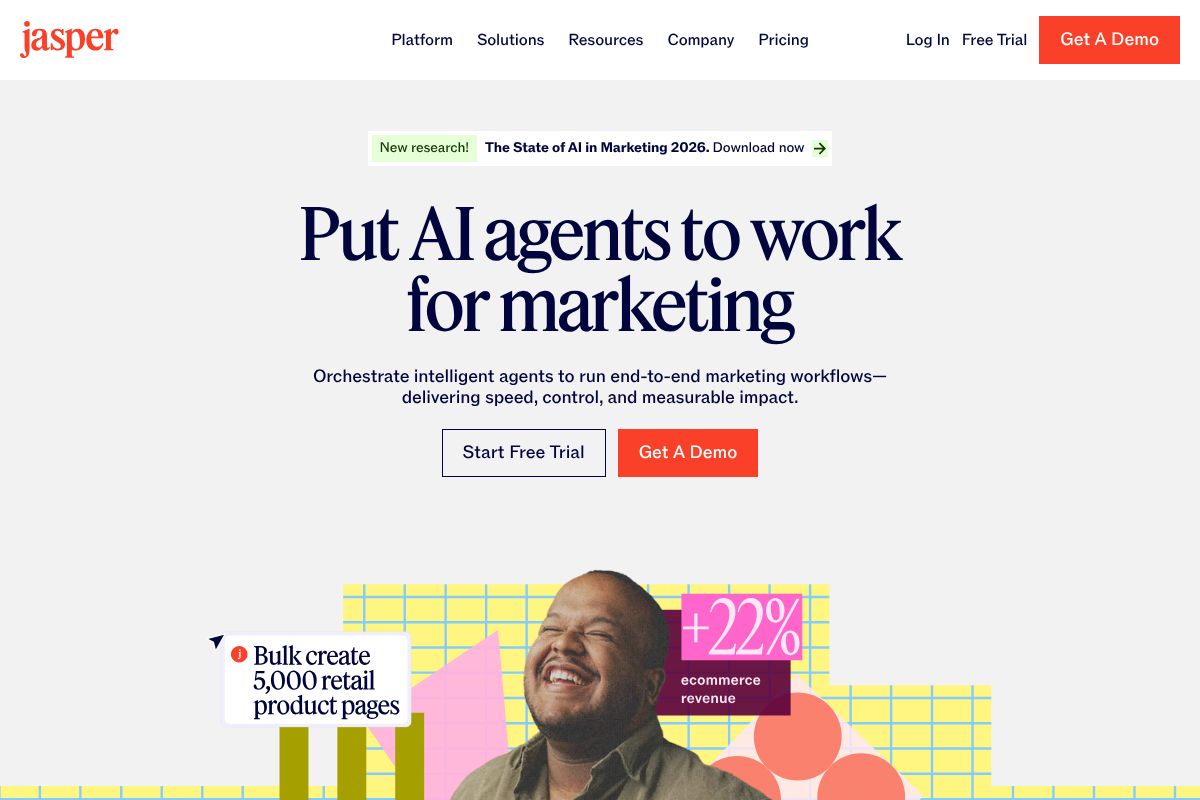
In 2026, Jasper has doubled down on multi-user collaboration, making it easier for teams to manage campaigns, review drafts, and maintain consistency across writers. Pricing starts at $49–$69/month for the Creator and Pro plans, with the Teams plan coming in at $125/month. It’s not the cheapest option, but for agencies and marketing departments producing high volumes of content, the time savings justify the cost quickly.
- Brand voice customization and training
- Multi-user collaboration features
- Templates for ads, emails, landing pages, and more
- Ideal for agencies and in-house marketing teams
Copy.ai: Start Free, Scale as You Grow
Copy.ai is one of the most accessible entry points into AI copywriting, thanks to its generous free tier that lets you test the platform before committing to anything. The interface is chat-based and intuitive — you describe what you need, and Copy.ai delivers without requiring you to learn a complex prompt system.
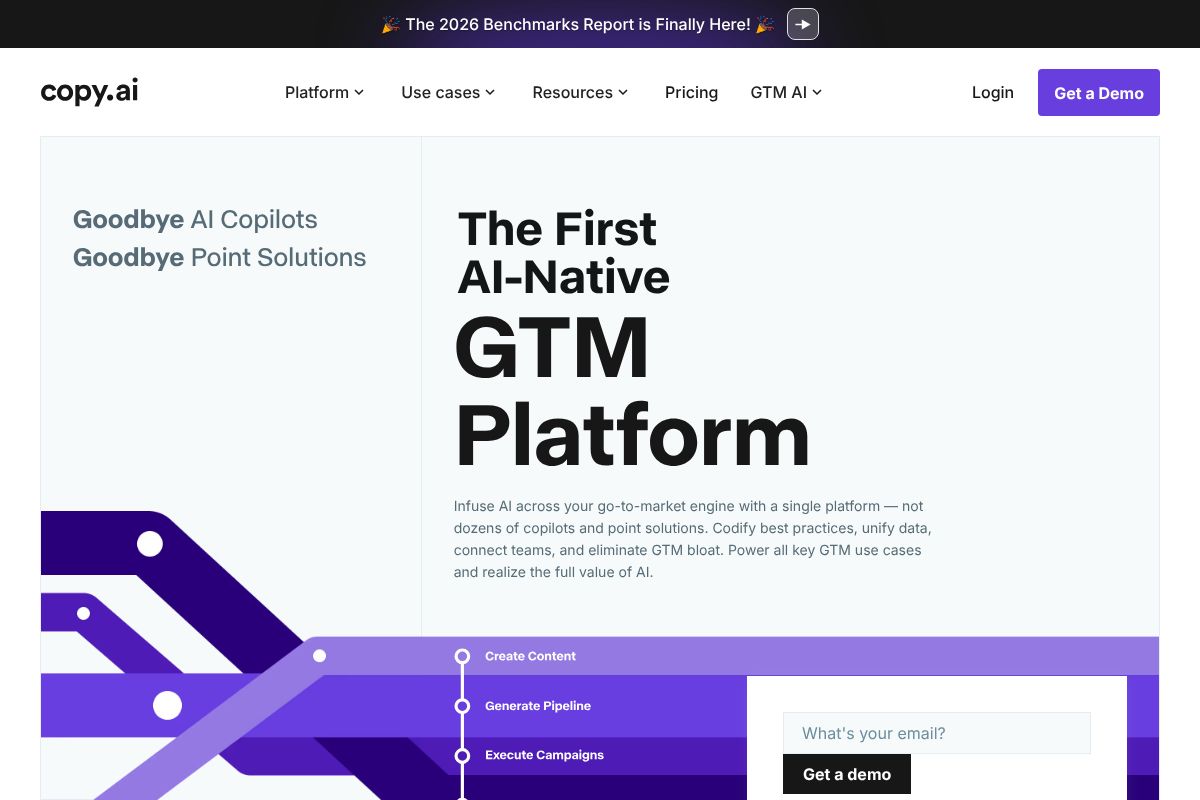
For solo creators and freelancers just getting started, this low barrier to entry is a real advantage. As your needs grow, paid plans scale from free up to $249/month, unlocking automation workflows, unlimited runs, and more advanced features. The 2026 version has improved its workflow automation tools significantly, making it a stronger option even for users who outgrow the basics.
- Functional free plan with no credit card required
- Simple chat-based interface
- Automation workflows for repetitive content tasks
- Best for solo creators and small teams on a budget
Writesonic: Content + SEO in One
Writesonic takes a different angle from the other tools on this list — it’s built with search visibility baked into the output, not bolted on as an afterthought. If driving organic traffic is a core part of your content strategy, Writesonic’s SEO-optimized generation and blog integration features give it a distinct edge.
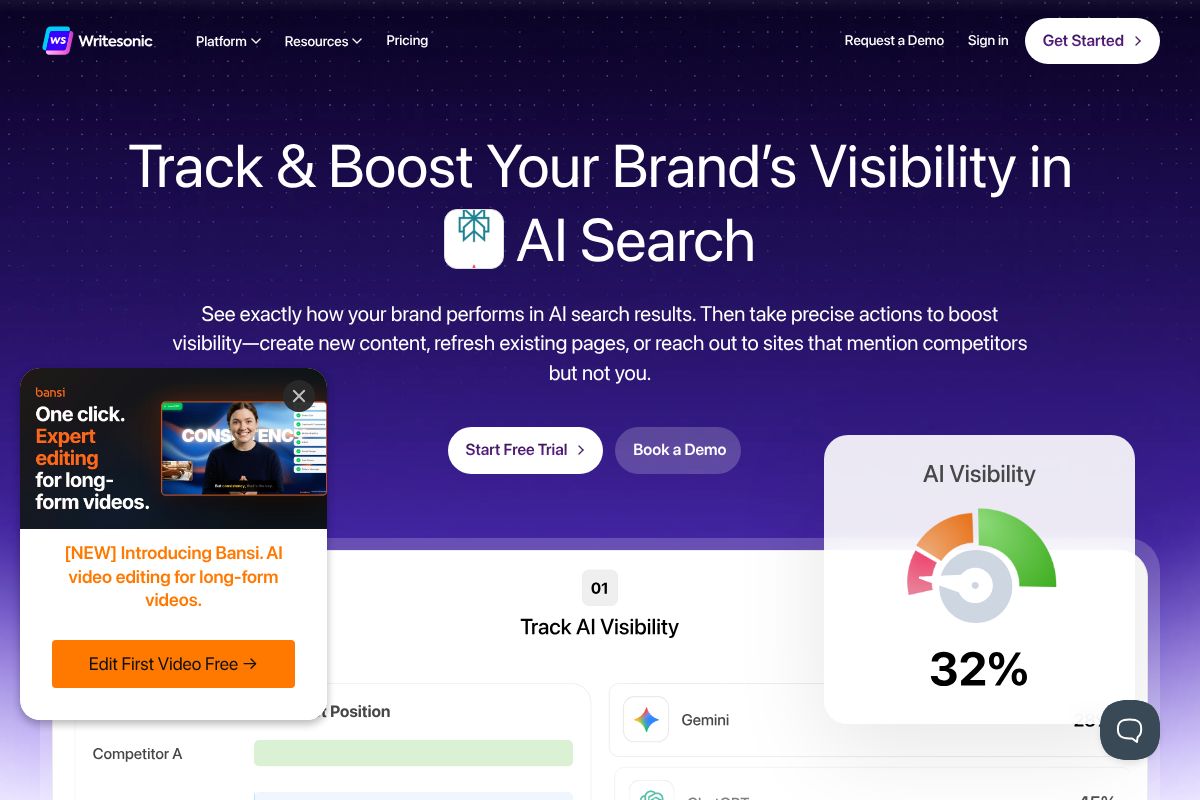
Pricing runs from $39–$99/month, making it competitively priced for the feature set. In 2026, Writesonic has expanded its AI search optimization capabilities, helping your content perform not just in traditional search but in AI-generated answer results — a growing priority for content marketers. It’s a strong pick if ranking and reach matter as much as the writing itself.
- SEO-focused content generation built in
- Blog and CMS integration options
- AI search visibility optimization
- Best for bloggers, content marketers, and SEO-focused teams
Key Features That Matter Most
Not all AI copywriting tools are built the same, and the features that sound impressive in a marketing pitch don’t always translate to real-world usefulness. Before committing to any tool, it’s worth knowing which capabilities actually move the needle for creators, marketers, and small business owners.
Brand Voice Consistency Across All Content
If you’re producing content at scale — blog posts, social captions, email sequences, ad copy — keeping your brand voice consistent is one of the hardest things to do manually. A tool that can learn and replicate your tone saves you hours of editing and keeps your audience from feeling like they’re reading content written by ten different people.
Some platforms, like Jasper AI, let you upload brand guidelines, style notes, and sample content so the AI generates copy that actually sounds like you. The trade-off is real: this setup takes time upfront. You’ll need to invest in training the tool before you see consistent results. But once that foundation is in place, the long-term payoff — faster output, fewer revisions, stronger brand recognition — is significant.
For marketers managing multiple clients or creators building a recognizable personal brand, this feature alone can justify the monthly cost.
Other Features Worth Evaluating
Beyond voice customization, here are the features that tend to matter most in day-to-day use:
- Template variety: A broad library of templates — from product descriptions to cold emails to landing pages — means less time starting from scratch
- Plagiarism checking: Especially important if you’re publishing at volume or working with clients who have strict originality requirements
- Revision suggestions: Real-time feedback on clarity, tone, and structure helps you improve output without switching tools
- Integrations: Native connections with platforms like WordPress, Zapier, or your CMS keep your workflow in one place instead of five
- Mobile access: Useful for creators who capture ideas or respond to clients on the go
- Real-time collaboration: Critical for teams where editors, strategists, and writers need to work on the same document simultaneously
The best tool for you isn’t necessarily the one with the longest feature list — it’s the one whose features align with how you actually work.
Pricing Breakdown: What You’ll Actually Pay
Sticker prices don’t always tell the full story. Many AI copywriting tools advertise low entry-level plans but quietly limit your output through word credits, seat restrictions, or paywalled features. Here’s a straightforward look at what the leading tools actually cost when you factor everything in.
| Tool | Free Tier | Starter (Monthly) | Pro (Monthly) | Annual Discount |
|---|---|---|---|---|
| Jasper AI | 7-day trial only | $49/mo | $69/mo | ~20% off |
| Copy.ai | Yes (limited runs) | $49/mo | $249/mo (Teams) | ~25% off |
| Rytr | Yes (10,000 chars/mo) | $9/mo | $29/mo | ~20% off |
| Writesonic | Limited credits | $20/mo | $99/mo | ~33% off |
Watch out for credit-based pricing — some tools charge per word or per generation rather than a flat monthly fee. If you’re producing high volumes of content, those costs can escalate quickly and blow past your initial budget estimate.
Teams should also pay close attention to per-seat pricing. What looks affordable for a solo user can become expensive fast when you’re adding three or four collaborators.
Free vs. Paid: When to Upgrade
Free tiers are genuinely useful for testing whether a tool fits your workflow — but they have real limits. Copy.ai’s free plan gives you a taste of its workflow automation, though you’ll hit output restrictions quickly if you’re producing content daily. Rytr’s free tier is one of the more generous options, offering 10,000 characters per month, which works for occasional use but won’t sustain a content-heavy business.
The honest answer: if copywriting is a core part of how you earn or grow, a paid plan pays for itself. Consider these thresholds:
- Free tier is enough if you’re testing the tool, writing occasionally, or on a tight budget
- Upgrade when you’re hitting output limits, need brand voice features, or require team collaboration
- Go annual if you’ve used the tool for at least 30 days and it’s become part of your regular workflow — the 20–33% savings add up significantly over a year
For most serious creators and marketers, the jump from free to a mid-tier paid plan is where the real ROI kicks in.
Who Should Use Each Tool?
Not every AI copywriting tool is built for the same person. The best fit depends on how often you write, what you’re writing, and whether you’re working alone or with a team. Here’s how to match each tool to your actual situation.
- Content creators focused on SEO: Writesonic is a strong fit if organic search traffic is central to your strategy. Its built-in SEO optimization features and article workflows are designed specifically for creators who need to publish consistently and rank.
- Small business owners on a budget: Copy.ai makes sense if you need versatile copy — ads, emails, product descriptions — without committing to a high monthly spend. Its automation workflows also help you do more without hiring additional help.
- Marketing teams and agencies: Jasper AI is built with collaboration in mind. If you’re managing brand consistency across multiple writers or campaigns, Jasper’s brand voice controls and team features justify the higher price point.
- Freelancers watching their margins: Tools like Rytr offer capable output at a fraction of the cost of premium platforms, making them practical when client budgets are tight and you need a reliable writing assistant without overhead.
Solo Creators vs. Marketing Teams: Different Needs
If you’re a solo creator, collaboration features are largely irrelevant — and you shouldn’t pay for them. Individual plans from most tools give you everything you need without the added cost of multi-seat access.
For marketing teams, the calculus changes. Jasper AI’s Teams tier includes shared brand voices, collaborative workspaces, and user management — features that genuinely reduce back-and-forth when multiple writers need to stay on-brand. However, per-seat pricing means a team of four can easily triple or quadruple the monthly cost compared to a solo plan.
The practical takeaway: if you’re a team of one, prioritize output quality and workflow fit over collaboration tools. If you’re managing a content team, factor in the full per-seat cost before committing — and make sure those collaboration features will actually get used.
Pros, Cons, and Honest Trade-Offs
Every AI copywriting tool has a sweet spot — and a ceiling. Here’s an honest breakdown of where the top picks shine and where they fall short, so you can set realistic expectations before committing to a subscription.
Jasper AI
- Pro: Consistently high-quality output across a wide range of formats — long-form content, ad copy, email sequences, and more. The brand voice feature is genuinely useful for maintaining consistency at scale.
- Pro: Deep integration with SEO tools and a well-developed template library make it one of the most versatile options available.
- Con: It’s expensive. For solo creators or small freelance operations, the monthly cost is hard to justify unless you’re producing high volumes of content regularly.
- Con: There’s a noticeable learning curve. Getting the best results requires understanding how to prompt effectively, which takes time to master.
Copy.ai
- Pro: Affordable entry point with a generous free tier, making it accessible for creators just getting started with AI writing tools.
- Pro: Fast and easy to use — minimal setup required to get usable output.
- Con: Output quality can be inconsistent, particularly for longer-form content. You’ll often need more editing passes compared to higher-end tools.
- Con: Less sophisticated brand customization and fewer advanced controls than Jasper AI, which can be limiting as your needs grow.
Writesonic
- Pro: Strong SEO-focused features, including direct integration with search data, make it a solid choice for content marketers building organic traffic strategies.
- Pro: Competitive pricing relative to the feature set, especially for teams focused on web content.
- Con: Less well-rounded for content types outside of SEO and marketing copy — creative writing, storytelling, and nuanced brand voice work aren’t its strongest areas.
- Con: Customer support responsiveness has been a mixed experience for some users, particularly on lower-tier plans.
When AI Copywriting Falls Short
AI tools are genuinely useful for first drafts, social media posts, email subject lines, product descriptions, and ad variations. These are tasks where speed matters and the content follows a relatively predictable structure.
Where AI consistently struggles is with highly technical or niche subject matter. If your content requires deep domain expertise — medical, legal, financial, or highly specialized B2B topics — AI-generated copy often reads as generic or, worse, inaccurate. The same applies to personal storytelling. AI can mimic a narrative structure, but it can’t replicate your lived experience or authentic voice.
Complex arguments and thought leadership pieces also tend to suffer. AI tools are pattern-matching engines, not strategic thinkers — they can assemble sentences that sound authoritative without actually constructing a coherent, defensible point of view.
The realistic expectation: AI is a drafting assistant, not a replacement for editorial judgment. Plan to spend time editing, fact-checking, and injecting your own perspective into every piece before it goes out. The tools save time — they don’t eliminate the need for human oversight.
Quick Comparison Table
Not sure which tool deserves your attention? Here’s a side-by-side snapshot of the four leading AI copywriting tools to help you cut through the noise fast.
| Tool | Best For | Starting Price | Free Tier | Key Strength |
|---|---|---|---|---|
| Jasper AI | Marketing teams & brand consistency | $49/month | No (7-day trial) | Brand voice control & long-form quality |
| Copy.ai | Freelancers & solo marketers | $49/month | Yes (limited) | Workflow automation & ease of use |
| Writesonic | SEO-focused content creators | $20/month | Yes (limited) | SEO integration & affordable entry point |
| Rytr | Budget-conscious creators | $9/month | Yes (generous) | Low cost with solid output variety |
A few things worth noting: pricing reflects base paid plans and can vary depending on usage limits or annual billing discounts. Free tiers are useful for testing, but most have meaningful restrictions on monthly output. Use this table as a starting point — the deeper breakdowns below will help you match the right tool to your specific workflow.
The Verdict: Which Tool Should You Choose?
There’s no single “best” AI copywriting tool — only the best one for you. The right choice comes down to your budget, your workflow, and how much output you actually need. Here’s a quick decision framework to point you in the right direction.
- Solo creator on a tight budget? Start with Copy.ai. The free tier gives you enough room to test it properly, and the workflow automation punches well above its price point for freelancers juggling multiple clients.
- SEO is your priority? Go with Writesonic. At $20/month, it’s the most affordable entry point that still gives you real SEO functionality baked in — not bolted on as an afterthought.
- Running a team or agency? Jasper AI is built for you. Brand voice controls, multi-user collaboration, and consistent long-form quality make the $49/month investment worthwhile when multiple people are producing content under one brand umbrella.
- Just getting started with AI writing? Rytr at $9/month is the lowest-risk way to build confidence. The generous free tier means you can explore without a credit card, and the learning curve is genuinely gentle.
The honest truth? Most of these tools overlap more than their marketing suggests. Your best move is to test two or three before committing to a paid plan.
Ready to Find Your Perfect AI Copywriting Partner?
Don’t overthink it — the free tiers exist for exactly this reason. Spend 20–30 minutes with two or three tools using a real project you’re working on right now. That hands-on test will tell you more than any comparison article can.
A good starting path: start with Copy.ai’s free tier to get a feel for AI-assisted workflows, then try Jasper’s 7-day trial if you need more brand control or long-form depth. If budget is the deciding factor, Rytr’s free plan gives you a surprisingly complete picture before you spend a cent.
Ready to go deeper? Check out our individual tool reviews for a full breakdown of features, limitations, and real-world use cases — so you can commit with confidence, not guesswork.
Our Verdict
Editorial rating: 4.6/5
AI copywriting tools accelerate content creation effectively
The best AI copywriting tool depends entirely on your budget, content volume, and use case—no single winner exists. While these tools dramatically reduce writing time and cost, they require human oversight for accuracy and brand consistency, making them force multipliers rather than replacements for strategic marketing.
Frequently Asked Questions
Which AI copywriting tool is fastest for generating marketing copy?
Tools like Copy.ai and Jasper generate initial drafts in seconds, but speed varies by content type and complexity. Email subject lines appear instantly, while long-form blog posts require more processing time and typically need human refinement.
Can AI copywriting tools replace human copywriters?
AI tools excel at drafting, ideation, and scaling repetitive content, but they cannot replace strategic thinking, brand storytelling, or understanding nuanced customer psychology. Most professionals use AI as an assistant, not a replacement.
What’s the cheapest AI tool for copywriting that actually works?
Freemium options like ChatGPT and free tiers of Writesonic offer basic functionality at zero cost, but paid plans starting at $20-50 monthly unlock advanced features, higher word limits, and better brand voice training for serious marketers.
Do AI copywriting tools work for e-commerce product descriptions?
Yes, specialized tools like Conversion.ai and Jasper excel at product descriptions by incorporating SEO keywords, benefit-focused language, and conversion psychology. Results require minimal editing compared to general-purpose AI writing tools.
Related Reads
- Rytr Review 2026: Is This AI Writing Tool Worth It?
Honest Rytr review for 2026. See pricing, features, pros/cons, and how it compares to Jasper, Copy.ai, and Writesonic fo…
- Copy.ai vs Writesonic: Which AI Writer Wins in 2026?
Compare Copy.ai and Writesonic in 2026. See pricing, features, and which AI writing tool fits your content needs best.…
- Best AI Writing Assistant for Freelancers in 2026
Find the best AI writing assistant for freelancers. Compare top tools, pricing, and features to boost your productivity …