Editor’s note: Reviewed and updated in June 2026 to reflect current pricing, features, and 2026 tool releases.
If you’re running a small business, you already know the feeling: a blank page, a looming deadline, and a to-do list that somehow keeps growing. Writing product descriptions, social media posts, email campaigns, and blog content takes real time — time most small business owners simply don’t have. That’s exactly where the best AI writing tools for small business in 2026 come in.
These tools have matured significantly. They’re no longer just glorified autocomplete — they can draft, edit, repurpose, and even optimize content for SEO, often in minutes. But with dozens of options on the market, choosing the right one for your business isn’t always straightforward.
The right AI writing tool can transform your workflow—but only if it matches how you actually work. We’ve tested today’s top options across features, pricing, and real trade-offs to help you pick the one that fits.
Key Takeaways
- AI writing tools automate content creation, saving small businesses hours weekly while maintaining brand voice and quality standards.
- Essential features include templates, tone customization, SEO optimization, and integration capabilities with existing business software platforms.
- Top tools range from budget-friendly options under fifty dollars monthly to premium solutions offering advanced analytics and support.
- ROI typically appears within three months through reduced hiring needs, faster content production, and improved marketing campaign performance.
- Selecting the right tool depends on your team size, content volume, budget constraints, and specific business writing needs.
In This Article
- Why Small Businesses Need AI Writing Tools in 2026
- What Is an AI Writing Tool (and What It’s Not)
- Key Features to Look For
- Top AI Writing Tools for Small Business: Detailed Breakdown
- Pros and Cons: What You Need to Know
- Pricing Comparison and ROI
- Who Should Use Which Tool
- Getting Started: Your Next Step
Why Small Businesses Need AI Writing Tools in 2026
Let’s be honest about the reality most small business owners face: you’re expected to produce a constant stream of content across multiple channels, often without a dedicated marketing team or a generous budget to hire one. Blog posts, email newsletters, product listings, social captions — the demand doesn’t slow down just because your bandwidth is limited.
The pressure has only intensified. Consumers in 2026 expect brands — even small ones — to show up consistently online with relevant, well-written content. Falling behind isn’t just an inconvenience; it can mean losing visibility to competitors who are keeping pace.
Here’s where AI writing tools change the equation:
- Time savings: A first draft that used to take two hours can be ready in minutes, freeing you to focus on strategy, customers, and operations.
- Content volume: AI tools make it realistic to maintain a blog, send weekly emails, and stay active on social media — without burning out.
- Budget efficiency: Hiring a full-time copywriter or agency isn’t feasible for most small businesses. AI tools offer a fraction of that cost with surprisingly strong output.
- Consistency: Maintaining a consistent brand voice across channels is easier when you have a tool that learns your tone and style.
That said, AI writing tools work best as a collaborative layer, not a replacement for your judgment. The most effective small business owners in 2026 aren’t handing everything over to AI — they’re using it to handle the heavy lifting while they add the nuance, accuracy, and personality that only a human can provide.
The shift toward AI-assisted content workflows is no longer a trend — it’s simply how modern small businesses operate efficiently. The question now isn’t whether to use these tools, but which ones are actually worth your time and money.
What Is an AI Writing Tool (and What It’s Not)
An AI writing tool is software that uses large language models to help you create, refine, and repurpose written content. Think of it as a highly capable writing assistant that’s available around the clock — one that can generate a blog post draft, brainstorm headline ideas, rewrite a product description, or turn a long article into a series of social media posts.
In practical terms, here’s what these tools actually help you do:
- Generate first drafts for blogs, emails, landing pages, and social content
- Brainstorm ideas when you’re staring at a blank screen
- Optimize copy for clarity, tone, or a specific audience
- Repurpose existing content into new formats without starting from scratch
- Overcome writer’s block by giving you something to react to and edit
But it’s equally important to understand what AI writing tools are not. They’re not a content strategy. They don’t know your customers, your market positioning, or what makes your business genuinely different — that context has to come from you.
They also won’t guarantee SEO rankings, and they rarely produce publish-ready content on the first try. Factual errors, generic phrasing, and off-brand tone are all real possibilities if you’re not reviewing the output carefully.
The right mindset going in is this: AI handles the volume, you provide the judgment. When you use these tools with realistic expectations, they become genuinely powerful — not a magic solution, but a meaningful upgrade to how you work.
Key Features to Look For
Not all AI writing tools are built the same, and the feature gaps between them matter more than you might expect. For small businesses especially, the wrong tool can create extra work instead of reducing it. Before committing to a subscription, here are the capabilities worth paying attention to.
- Template library: Pre-built templates for blog posts, product descriptions, email campaigns, and social captions save setup time and give you a reliable starting point for recurring content types.
- SEO optimization: Built-in keyword suggestions, readability scoring, and meta description generation help your content perform — not just read well.
- Multi-format output: The best tools let you write a blog post and immediately repurpose it into an email newsletter, LinkedIn post, or ad copy without starting over.
- Collaboration tools: If you work with a team, contractor, or VA, shared workspaces and commenting features keep everyone aligned without bouncing drafts through email.
- API access: For businesses ready to automate, API access lets you plug AI generation directly into your CMS, CRM, or internal workflows.
One notable shift in 2026 is that leading tools now include real-time fact-checking and competitor content analysis built into the writing workflow. Instead of manually verifying claims or guessing what your competitors are covering, the tool surfaces that context as you write — a genuinely useful upgrade for small teams without dedicated research staff.
Brand Consistency and Tone Control
For small businesses still building recognition, inconsistent messaging across channels is a quiet credibility killer. Brand voice features — where you define your tone, vocabulary preferences, and style guidelines once — let the AI apply that consistently whether it’s drafting a blog post or a promotional email. The best tools let you save multiple brand profiles, which is useful if you manage more than one product line or client. This isn’t just a convenience feature; it’s what separates content that sounds like you from content that sounds like everyone else using the same tool.
Speed and Scalability
One of the strongest arguments for AI writing tools is that your content output can grow without your costs growing at the same rate. Batch generation and bulk content creation features let you produce a month’s worth of social posts, a full email sequence, or a cluster of blog articles in a single session. As your business scales, you’re not hiring proportionally more writers — you’re getting more leverage out of the team you already have. Look for tools that offer higher word or generation limits on mid-tier plans, so you’re not constantly hitting a ceiling right when you need capacity most.
Top AI Writing Tools for Small Business: Detailed Breakdown
Not every AI writing tool is built with the same priorities — some are optimized for speed, others for depth, and others for keeping costs low when you’re just getting started. The three tools below represent the strongest options across different small business needs and budgets. Here’s what each one actually does well, where it falls short, and who it’s best suited for.
Copy.ai: Best for Starting Free
If you want to test AI writing without committing a dollar upfront, Copy.ai is the most accessible entry point in the market right now. Its free tier requires no credit card, which makes it genuinely low-risk for solo creators or small business owners who are still figuring out whether AI fits into their workflow.
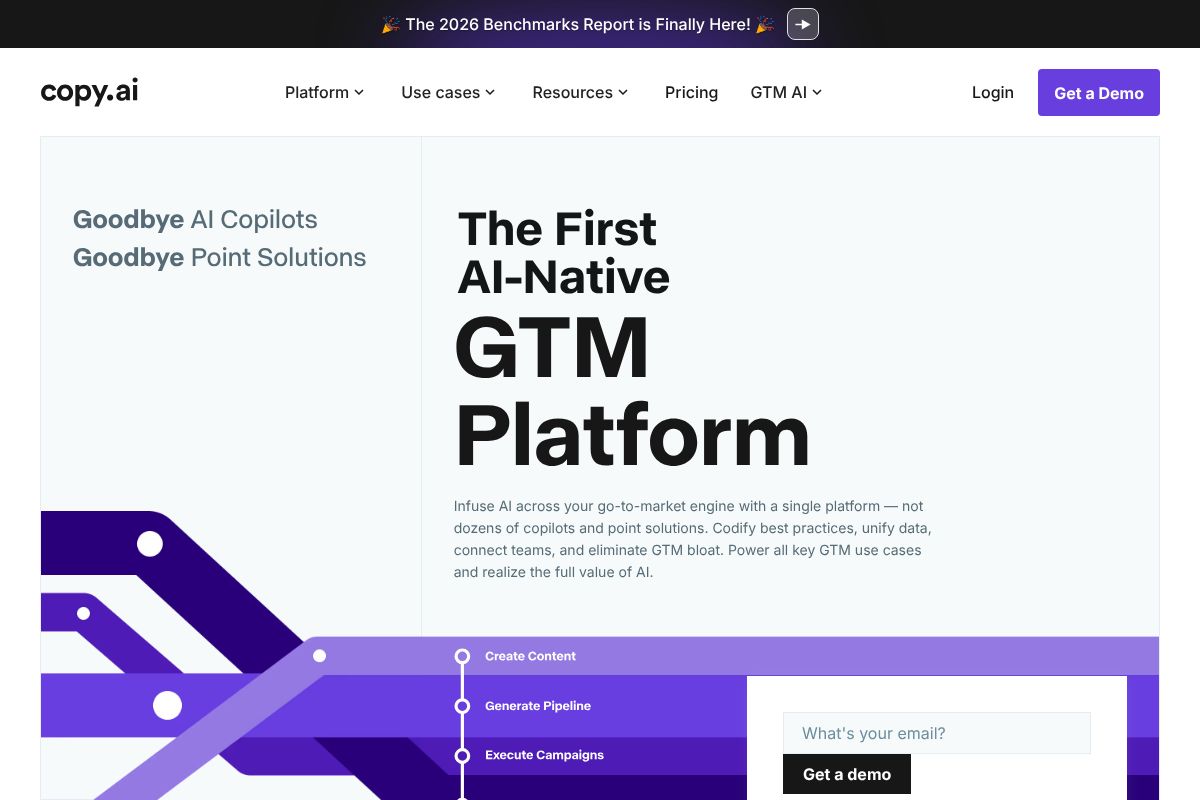
The interface is one of the most intuitive you’ll find — you don’t need to spend an afternoon learning how to use it. It performs especially well for shorter-form content like social media captions, email subject lines, product descriptions, and ad copy.
- Best use case: Social media content, email copy, and quick marketing assets
- Standout feature: Generous free tier with no credit card required
- Pricing: Free plan available; Chat plan at $29/month; Pro at $49/month for small teams
Honest trade-off: Copy.ai gives you less control over tone customization and brand voice training compared to higher-end competitors. If you need highly tailored output or manage complex content across multiple channels, you may find it limiting as you scale.
Jasper AI AI: Best for Marketing Teams
Jasper AI is built for small businesses that have moved past the “just me” stage and are managing a small content team or working with clients. It’s the most full-featured option in this lineup, and that depth shows up in ways that matter for content-heavy operations.
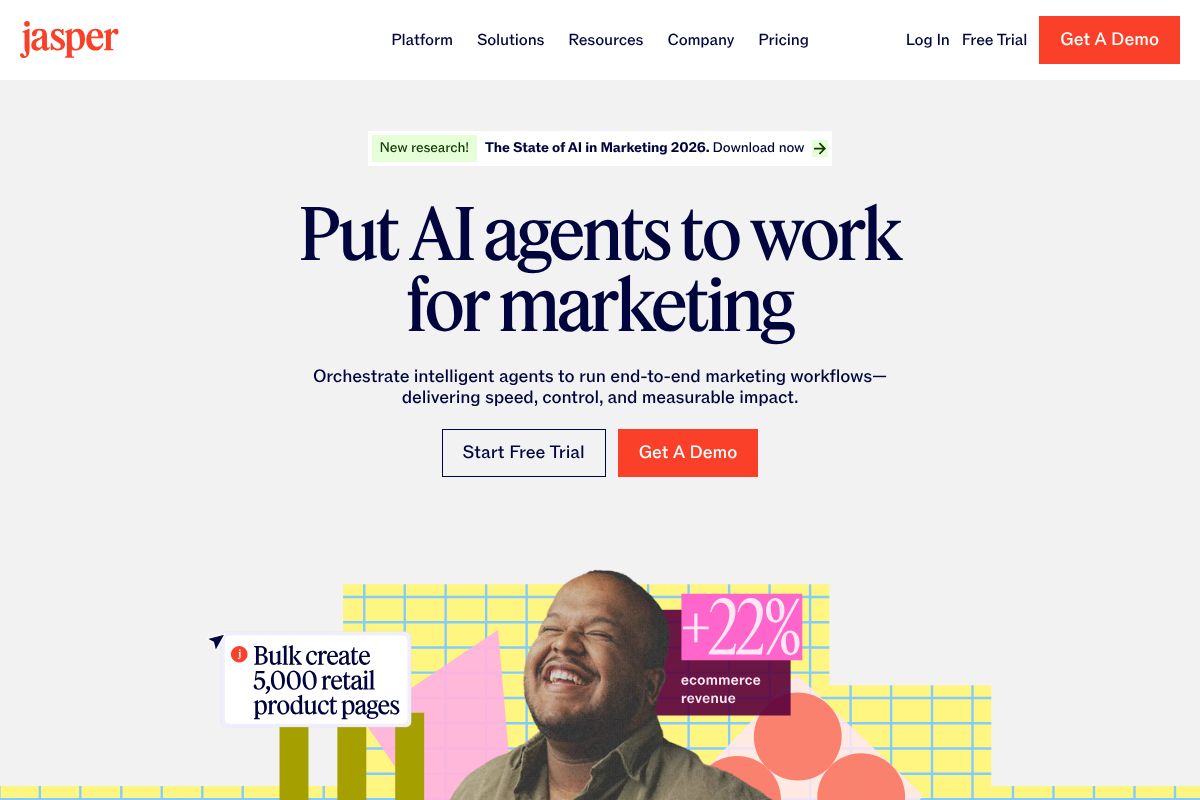
The brand voice training feature is a genuine differentiator — you can feed Jasper examples of your existing content and it learns your style, not just a generic tone setting. It also integrates with SEO tools and supports real collaboration, so multiple team members can work within shared projects.
- Best use case: Long-form content, agency work, and multi-person marketing teams
- Standout feature: Brand voice training and built-in collaboration tools
- Pricing: Plans start at $125/month for teams
Honest trade-off: Jasper is the most expensive option here by a significant margin, and it comes with a steeper learning curve. If you’re a solo operator or your content needs are modest, you’re likely paying for features you won’t use. It earns its price for agencies and growing businesses — but not for everyone.
Writesonic: Best for Blog and SEO
Writesonic sits in a strong middle ground between Copy.ai’s accessibility and Jasper’s depth, with a clear focus on blog content and search visibility. If driving organic traffic is a core part of your marketing strategy, it’s worth a close look.

The built-in SEO tools are more developed than what you’ll find in most competitors at this price range. Writesonic can pull in competitor research and help you structure content around what’s actually ranking — useful for small businesses trying to compete without a dedicated SEO specialist.
- Best use case: Blog writing, SEO content strategy, and long-form articles
- Standout feature: Integrated SEO tools with competitor research capabilities
- Pricing: Plans range from $39 to $99/month depending on volume and features
Honest trade-off: Writesonic is less focused on social media content than Copy.ai, and the output quality for short-form formats can feel inconsistent. If Instagram captions and email sequences are your primary need, it’s not the strongest fit — but for content built around search, it’s hard to beat at this price point.
Pros and Cons: What You Need to Know
AI writing tools can genuinely change how you produce content — but they’re not a magic solution. Before you commit to a subscription, it’s worth understanding both what you’ll gain and what you’ll still need to manage yourself.
The Real Benefits
- Saves significant time: First drafts that used to take hours can be ready in minutes. For a small business owner juggling multiple roles, that time adds up fast.
- Reduces writer’s block: Staring at a blank page is a productivity killer. AI tools give you a starting point — even an imperfect one — which makes it far easier to keep moving.
- Scales your content output: Whether you need five blog posts or fifty product descriptions, AI tools let you increase volume without proportionally increasing your workload or headcount.
- More affordable than hiring writers: A monthly subscription at $49–$99 is a fraction of what you’d pay a freelance writer for the same volume of content.
The Honest Trade-Offs
- You still need to edit and fact-check: AI tools can confidently produce inaccurate information. Every piece of output needs a human review before it goes live — no exceptions.
- Generic output without customization: Default settings often produce content that sounds like everyone else’s. You’ll need to invest time in training the tool on your brand voice to get results that feel authentic.
- There’s a learning curve: Getting genuinely useful output requires learning how to write effective prompts. Most users underestimate this upfront investment.
- Plagiarism and originality concerns: In 2026, best practice is to run AI-generated content through an originality checker before publishing, especially for SEO purposes. Most reputable tools have improved significantly, but verification is still a smart habit.
The bottom line: AI writing tools work best as a starting point, not a finished product. Treat them like a capable assistant who needs direction and oversight, and you’ll get real value. Expect them to replace your judgment entirely, and you’ll be disappointed.
Pricing Comparison and ROI
One of the first questions small business owners ask is whether these tools are actually worth the monthly cost. The short answer: for most content-active businesses, yes — often significantly so.
Here’s a straightforward look at how the major tools stack up on price:
| Tool | Free Tier | Starter Plan | Cost/Month | Best For |
|---|---|---|---|---|
| Jasper AI | 7-day trial | Creator | ~$49 | Marketing teams, long-form content |
| Copy.ai | Yes (limited) | Starter | ~$36 | Sales copy, social media |
| Writesonic | Yes (limited) | Individual | ~$20 | Budget-conscious solopreneurs |
| Rytr | Yes (10k chars/mo) | Saver | ~$9 | Freelancers, light users |
| Surfer SEO + AI | No | Essential | ~$89 | SEO-focused content strategies |
What’s the Real ROI?
Consider this: if you spend 10 hours per month on content creation — writing blogs, emails, social posts, product descriptions — you’re looking at roughly $500 to $1,500 in equivalent freelancer costs, depending on your market and content type. A $49/month AI subscription that cuts that workload in half pays for itself many times over.
A few things worth knowing before you commit:
- Annual plans save you 20–30% compared to paying month-to-month — worth it once you’ve confirmed a tool fits your workflow.
- Many tools offer 30% recurring discounts through affiliate or partner programs, so it’s worth checking before you pay full price.
- Free tiers are genuinely useful for testing, but most have word or feature limits that make them impractical for real business use beyond a trial period.
The smartest approach is to start with a free trial, run a real project through the tool, and evaluate based on actual output quality — not just feature lists.
Who Should Use Which Tool
There’s no single “best” AI writing tool — the right choice depends on your workflow, your budget, and the type of content you produce most. Here’s a practical way to think about it based on where you are right now.
If you’re a solo content creator just getting started, the Copy.ai free tier is worth trying first. You get access to core writing features without committing a dollar, which makes it a low-risk way to see if AI fits your process. If you outgrow it, upgrading is straightforward.
If you’re running a marketing team, Jasper is built for your use case. It handles brand voice consistency, multi-user collaboration, and campaign-scale content — things that matter when more than one person is producing output under the same brand umbrella.
If you’re a blogger who publishes regularly and wants to grow organic traffic, Writesonic’s SEO-aware features make it a strong fit. You can move from idea to draft to optimized post faster than doing it manually.
If you’re budget-conscious and just need the basics, Rytr is hard to beat at around $9/month. It won’t do everything, but for short-form content like emails, product descriptions, or social captions, it gets the job done without draining your budget.
- Solo creators: Start with Copy.ai’s free tier
- Marketing teams: Jasper for scale and brand consistency
- Bloggers: Writesonic for SEO-driven content
- Beginners on a budget: Rytr for affordable, no-fuss writing
The bottom line: match the tool to your actual needs, not the longest feature list.
Getting Started: Your Next Step
The easiest way to find the right AI writing tool is to actually use one — not just read about it. Most tools on this list offer free tiers or 7–14 day free trials on paid plans, so there’s no reason to commit money before you know it fits your workflow.
Here’s the simplest path forward:
- Start free. Try Copy.ai’s free tier or Rytr’s entry-level plan to get a feel for AI-assisted writing without spending anything.
- Test with real work. Don’t just play around — use it on an actual email, blog post, or product description you need to write this week.
- Upgrade if it saves you time. If you’re finishing content faster and the quality holds up, a paid plan pays for itself quickly.
If you’re ready to go beyond the basics, Jasper AI is worth exploring for team-based marketing work, and Writesonic is a strong pick if SEO content is your priority. Both offer trial periods so you can evaluate them on your own terms.
You don’t need to find the perfect tool — you need to find one that fits how you actually work. The best tool is the one you’ll actually use — start with a free trial today.
Frequently Asked Questions
What is the best AI writing tool for small business owners?
The best tool depends on your needs, but popular choices include Jasper, Copy.ai, and Writesonic. Each offers strong templates, affordable pricing, and small business-focused features. Compare free trials to find your ideal fit.
How much does an AI writing tool cost for small business?
Most AI writing tools range from twenty to one hundred dollars monthly. Entry-level plans start around twenty dollars, while comprehensive packages with advanced features cost fifty to one hundred dollars depending on usage limits.
Can AI writing tools help with SEO for small business websites?
Yes, many AI writing tools include built-in SEO optimization features like keyword suggestions, meta descriptions, and readability analysis. These help small businesses create search-engine-friendly content without hiring expensive SEO specialists.
Is AI-generated content good enough for small business marketing?
AI-generated content works well for first drafts, social media posts, and email marketing. However, small businesses should edit for brand voice and accuracy. AI tools accelerate writing, not replace human judgment entirely.
Related Reads
- Best AI Writing Tool for Content Creators in 2024
Find the best AI writing tool for your needs. Compare top options like Jasper, Copy.ai, and Writesonic with honest revie…
- Jasper AI Review 2026: Is It Worth the Cost?
Honest Jasper AI review for 2026. See pricing, features, pros/cons, and how it compares to Copy.ai and Writesonic for co…
- Jasper vs Copy.ai: Which AI Writer Fits Your Needs?
Compare Jasper and Copy.ai for AI writing. See pricing, features, and which tool works best for your content needs in 20…