You’ve got a proposal due by noon, three client emails sitting unanswered, and a LinkedIn post you’ve been meaning to write for two weeks. Sound familiar? Finding the right words fast — without sacrificing quality — is one of the biggest daily challenges for busy professionals and creators. That’s exactly why so many people are asking: which AI tool is best for business writing in 2026?
Several AI writing tools are now purpose-built for professional use, but the real challenge is matching the right one to your specific workflow, budget, and voice — we’ve done that comparison for you.
Key Takeaways
- AI writing tools streamline business communication by automating drafts, editing, and formatting tasks while maintaining professional tone and brand consistency.
- Top business writing AI tools offer distinct strengths: some excel at speed, others at customization, and some at industry-specific compliance requirements.
- Choosing the right tool depends on your team size, budget, integration needs, and whether you prioritize templates, collaboration features, or advanced customization.
- Most enterprise-grade AI writing platforms now include security certifications, data privacy controls, and compliance features essential for regulated industries.
- Effective implementation requires training your team on prompt engineering, output review processes, and establishing clear guidelines for AI-assisted content approval workflows.
In This Article
Why Your Business Needs an AI Writing Tool
Think about how much of your workday disappears into writing tasks. Drafting a follow-up email, polishing a project proposal, putting together a product description, or trying to come up with a compelling subject line — these things don’t sound like much individually, but they add up fast. For most professionals, writing-related work quietly eats two to three hours a day.
And it’s not just the time. There’s also the mental energy. Sitting down to write when you’d rather be closing deals, serving clients, or building your business is a real drain. Writer’s block isn’t just a novelist’s problem — it hits marketers staring at a blank email draft and small business owners trying to write their own website copy just as hard.
Here are some of the writing tasks that tend to slow professionals down the most:
- Client and sales emails that need to sound polished without being stiff
- Social media content across multiple platforms with different tones and formats
- Blog posts and articles that need to be informative, readable, and consistent
- Proposals and reports that require clear structure and professional language
- Ad copy and product descriptions that actually convert
AI writing tools don’t replace your voice or your ideas — they handle the heavy lifting so you can focus on the thinking that actually moves your business forward. Instead of agonizing over how to phrase something, you get a solid draft in seconds that you can tweak and send.
The result? Less time staring at a blank screen, more time doing the work only you can do. That’s the real value here — not just speed, but mental bandwidth.
What Makes a Good AI Writing Tool for Business?
Not all AI writing tools are built the same way — and what works for a novelist or a student isn’t necessarily what works for a business professional. When you’re evaluating tools for real-world work use, there are a handful of criteria that actually matter. Here’s what to look for before you commit to any platform.
- Speed: How quickly does it generate usable content?
- Output quality: Does the first draft need light editing or a complete rewrite?
- Brand voice consistency: Can it match your tone, not just produce generic text?
- Ease of use: Can a non-technical person get results without a learning curve?
- Pricing: Is the cost justified by the time it saves you?
- Integrations: Does it connect with the tools you already use?
- Customer support: When something breaks or confuses you, can you get real help?
Each of these factors plays a different role depending on how you work. A freelancer writing solo has different priorities than a marketing team producing content at scale. Keep your specific workflow in mind as you read through the comparisons ahead.
Speed and Output Quality
Time is the whole point. If an AI tool generates a draft that still needs an hour of heavy editing, you haven’t saved much. The good news is that 2026 tools are dramatically better at first-draft quality than earlier versions — most can produce publish-ready or near-ready copy in seconds, not minutes.
What you want is a tool that gets you 80 to 90 percent of the way there with a single prompt. That leaves you doing the finishing touches — not rebuilding from scratch. Speed without quality is just noise; the best tools give you both.
Brand Voice and Customization
Generic AI content is easy to spot — and easy to ignore. If every piece of content you publish sounds like it came from the same neutral, corporate template, it won’t build trust with your audience. That’s why brand voice customization has become one of the most important features to evaluate.
For agencies managing multiple clients, or marketing teams with strict style guidelines, the ability to train a tool on your specific tone, vocabulary, and messaging is a genuine game-changer. You want a tool that sounds like you — confident, consistent, and recognizable — not like a polished but forgettable press release. The stronger a tool’s customization options, the less time you spend correcting its output.
Top AI Writing Tools for Business (2026)
There’s no shortage of AI writing tools on the market right now, but a handful have pulled ahead for business use specifically. Whether you’re producing weekly blog content, drafting client proposals, or scaling a content operation across a team, these three tools cover the most common professional use cases. Here’s a quick look at what each one does best.
Jasper AI AI: Best for Marketing Teams
If you’re running a marketing department or agency, Jasper AI is built with you in mind. Its brand voice training lets you feed the tool your existing content, style guidelines, and tone preferences — so output actually sounds like your brand, not a generic AI template. That’s a significant advantage when you’re producing high volumes of content across multiple campaigns or clients.
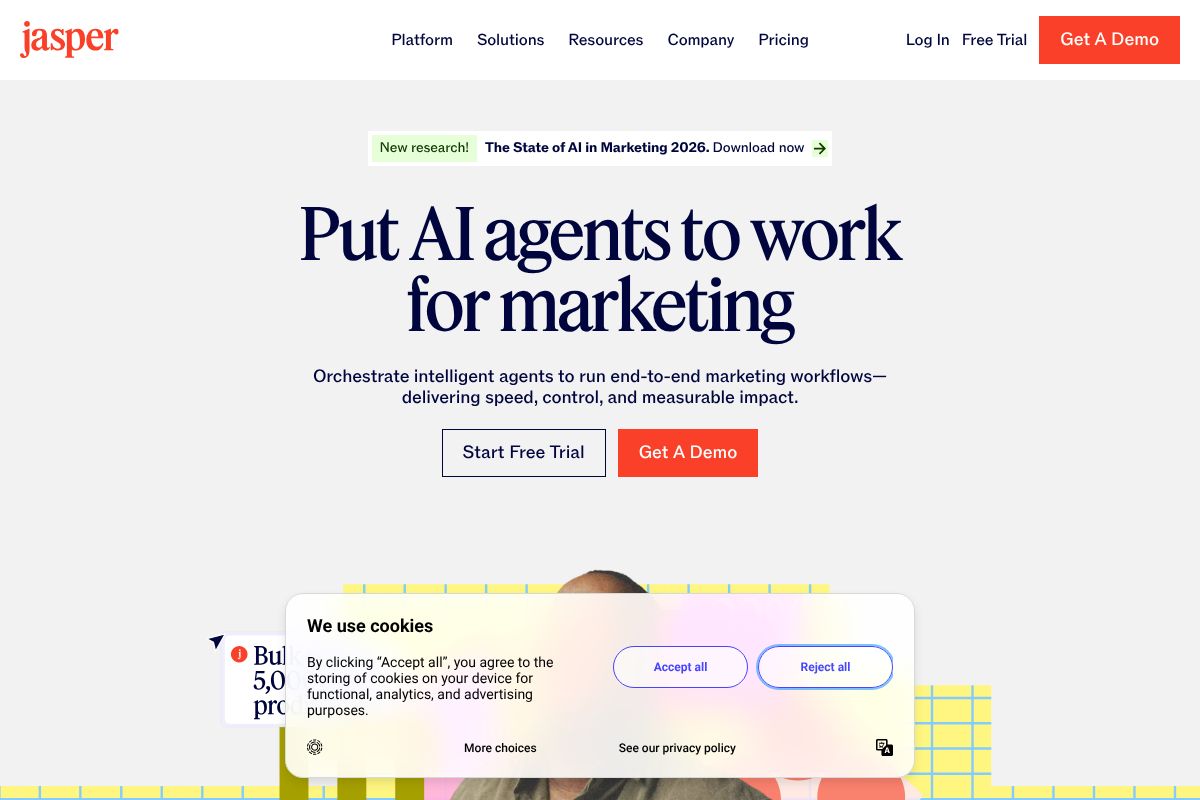
Jasper also supports team collaboration natively, with shared workspaces, user permissions, and campaign-level organization. Pricing starts at $49/month for Creator and $69/month for Pro, with a Teams plan at $125/month. It’s not the cheapest option, but for agencies and marketing teams that need consistency at scale, the investment tends to pay for itself quickly.
- Brand voice training across multiple profiles
- Team collaboration with shared workspaces
- High-volume content creation with strong first-draft quality
- Ideal for agencies and in-house marketing departments
Copy.ai: Best for Freelancers and Solo Creators
Copy.ai is one of the most accessible AI writing tools available right now, especially if you’re just getting started. It offers a free tier that’s genuinely usable — not a watered-down demo — which makes it a smart starting point if you want to test AI writing before committing any budget. Paid plans range from $29 to $249/month, scaling with your usage needs.
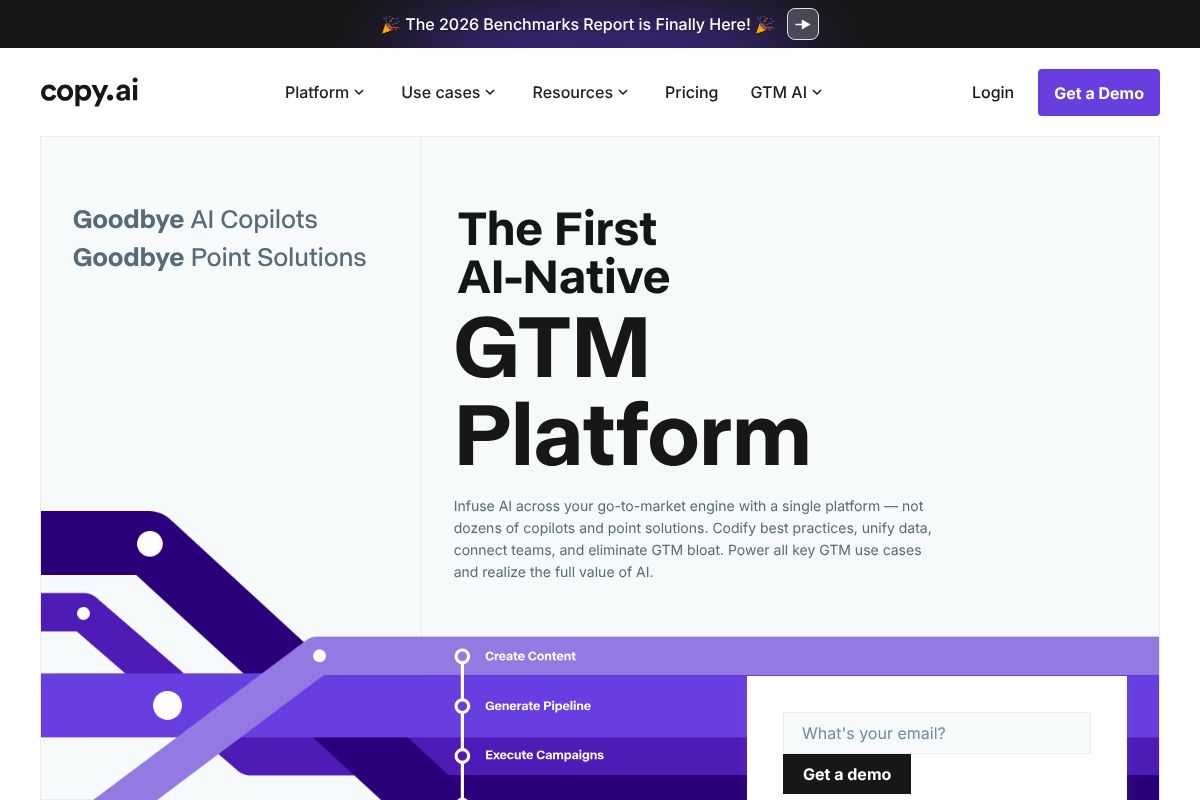
Onboarding is straightforward, and the interface doesn’t assume any technical background. For freelancers juggling multiple clients or solo creators producing regular content, Copy.ai offers solid output without a steep learning curve or a steep price tag.
- Free tier available with real functionality
- Flexible pricing that grows with your workload
- Fast, beginner-friendly onboarding
- Great for testing AI writing without financial commitment
Writesonic: Best for Content Creators and Bloggers
Writesonic stands out because it combines AI writing with built-in SEO optimization — something most competing tools treat as an afterthought. If you’re a blogger, content marketer, or creator who cares about search visibility, having those two workflows in one place saves real time. Pricing runs from $39 to $99/month depending on your output volume and feature needs.

Beyond SEO, Writesonic produces clean, readable long-form content that holds up well without excessive editing. It’s a strong choice if your primary goal is driving organic traffic and you want your writing tool to actively support that — not just generate words.
- Built-in SEO optimization tools
- Strong long-form content quality for blogs and articles
- Competitive pricing for the feature set offered
- Ideal for creators focused on search-driven content strategies
Key Features Comparison
Choosing the right AI writing tool often comes down to a handful of practical factors: what it costs, how fast you can get started, and whether the output actually saves you time. Here’s an honest breakdown across the criteria that matter most for business writing in 2026.
| Feature | Jasper AI | Copy.ai | Writesonic |
|---|---|---|---|
| Starting Price | $49/month | Free tier available | $39/month |
| Free Tier | No | Yes | No |
| Templates | 50+ | 90+ | 80+ |
| Brand Voice | Strong | Moderate | Moderate |
| SEO Tools | Via integrations | Limited | Built-in |
| Learning Curve | Low–Medium | Low | Low |
| Best Use Case | Brand-consistent copy | Quick marketing copy | SEO blog content |
Pricing and Free Tiers
Budget is often the deciding factor, especially for freelancers or small businesses watching their software spend. Copy.ai is the clear winner here — its free tier offers genuine functionality, not just a frustrating teaser. If you want to test AI writing before spending anything, that’s your starting point.
Writesonic starts at $39/month, which is reasonable given the built-in SEO toolset. Jasper AI starts at $49/month with no free option, positioning it as a more deliberate investment. If budget is tight, start with Copy.ai’s free tier. If you’re ready to commit and need brand consistency or SEO power, Jasper and Writesonic respectively justify their price points.
Ease of Use for Non-Technical Users
The good news: all three tools are genuinely beginner-friendly in 2026. None of them require any coding knowledge, and each has invested heavily in clean dashboards and guided onboarding. You won’t feel lost on day one with any of them.
Copy.ai edges ahead for pure simplicity — its interface is minimal and fast to navigate. Jasper AI has a slightly steeper onboarding curve because of its deeper customization options, but the payoff is greater control over output. Writesonic sits comfortably in the middle. All three offer support documentation and chat assistance, so getting unstuck is rarely a problem.
Output Quality and Editing Needs
Here’s the honest truth: no AI tool produces publish-ready content every time. All three generate solid first drafts, but how much editing you’ll need depends on your use case.
Jasper AI tends to produce the most consistent, brand-aligned output — especially useful if you’re writing for an established business voice. Copy.ai is fast and reliable for shorter copy like ads, emails, and social posts, though longer-form content can feel generic without some shaping. Writesonic shines for SEO-driven blog posts, where its built-in optimization features help structure content that actually ranks. Across all three, plan to spend some time editing — AI writing is a starting point, not a finish line.
Pros and Cons: Honest Trade-Offs
Every AI writing tool involves a trade-off between price, flexibility, and specialization. The right choice depends less on which tool is “best” in the abstract and more on what your specific workflow actually needs. Here’s a clear-eyed look at what you’re gaining — and giving up — with each option.
When to Choose Jasper AI
Jasper AI is the strongest choice if you’re running a business with an established brand voice, managing a content team, or producing high volumes of copy consistently. Its brand voice settings and team collaboration features are genuinely ahead of the competition, making it the go-to for agencies and growing businesses.
- Pros: Excellent brand voice consistency, built-in team workflows, handles high-volume output well
- Cons: Higher price point than competitors, and unlocking its more advanced features takes time to learn
If budget is tight or you’re a solo creator just getting started, the cost may be hard to justify. But for teams who need reliable, on-brand output at scale, Jasper AI earns its price tag.
When to Choose Copy.ai
Copy.ai makes the most sense if you want a low-commitment entry point into AI writing. Its free tier is genuinely usable, and its paid plans remain among the most affordable in the market. It’s flexible enough to handle a wide range of copy tasks without locking you into a narrow use case.
- Pros: Accessible free tier, affordable paid plans, easy to pick up and use immediately
- Cons: Less specialized than Jasper AI, fewer third-party integrations, can feel generic on longer or more nuanced content
Copy.ai is a smart starting point — just know you may outgrow it as your content needs become more complex.
Who Should Use Each Tool?
The “best” AI writing tool really comes down to who you are and what you’re trying to accomplish. A content strategist at a mid-size agency has very different needs than a freelance blogger or a first-time entrepreneur. Here’s a straightforward breakdown by persona.
For Marketing Agencies and Teams
Jasper AI is the clear choice if you’re managing content across multiple clients or coordinating a team of writers. Its brand voice settings mean everyone on your team produces copy that sounds consistent — whether it’s a junior copywriter or a contractor you hired last week. The Teams plan at $125/month unlocks collaboration features, shared brand assets, and user management that solo tools simply don’t offer. If content volume and brand consistency are non-negotiable for your agency, Jasper AI is built for exactly that.
For Freelancers and Small Business Owners
Your best pick here depends on what kind of content drives your business. If you’re a freelancer juggling multiple content types — social captions, email sequences, product descriptions, ad copy — Copy.ai gives you the flexibility to jump between formats without a steep learning curve. It’s affordable and practical for varied, everyday writing tasks.
But if blogging is your primary channel — say you’re a content creator, niche site owner, or small business owner who relies on organic search traffic — Writesonic is the stronger fit. Its SEO-focused article tools and integration with search data make it easier to produce blog content that’s structured to rank, not just read well.
- Marketing managers and agency leads: Jasper AI
- Freelancers handling varied copy: Copy.ai
- Bloggers and SEO-focused creators: Writesonic
How to Choose: A Simple Decision Framework
Still not sure which tool fits your situation? Run through these four questions in order. By the time you reach the end, the right pick should be pretty clear.
Step 1: What’s Your Budget?
Start here, because it narrows the field fast. If you’re on a tight budget or just testing the waters, Copy.ai’s free tier lets you get started without committing a dollar. If you have more flexibility and need serious output volume, Jasper AI or Writesonic are worth the investment.
Step 2: What Do You Write Most?
Your primary content type matters more than almost anything else:
- Blog posts and SEO articles: Writesonic
- Ads, emails, and short-form copy: Copy.ai
- Long-form campaigns and brand content: Jasper AI
Step 3: Do You Need Team Features?
If you’re working solo, any of these tools will serve you well. But if you’re managing a team — sharing brand guidelines, assigning workflows, or maintaining consistent tone across writers — Jasper AI is the only one here purpose-built for that.
Step 4: How Much Editing Are You Willing to Do?
No AI tool produces publish-ready copy every time. That said, some require heavier editing than others. If you want tighter first drafts with less cleanup, lean toward Jasper AI or Writesonic. If you’re comfortable shaping raw output into something polished, Copy.ai’s lower price point makes that trade-off worthwhile.
Answer those four questions honestly, and you’ll have a clear winner — not just the most popular tool, but the right one for you.
Final Verdict: Your Next Step
Here’s the honest truth: there is no single best AI writing tool for business in 2026. There’s only the best tool for your situation. Your budget, your content type, your team size, and your tolerance for editing all point toward different answers — and that’s completely fine.
What matters most right now is that you actually try something. Analysis paralysis is real, and every week you spend comparing tools is a week you’re not saving time on your writing.
A few practical suggestions to get you moving:
- Start with a free tier if you’re unsure — Copy.ai and Rytr both offer solid no-cost entry points
- If you’re leaning toward a paid plan, most tools offer 7–14 day trials — use them
- Commit to one tool for a full week before forming an opinion
- Track something concrete: hours spent writing, drafts completed, or content published
Pick the tool that best matched your answers in the previous section. Sign up today, run it through your real workload for seven days, and measure the time you get back. That’s the only benchmark that actually matters.
One week of testing will tell you more than any review — including this one.
Frequently Asked Questions
What is the fastest AI tool for writing business emails?
Tools like ChatGPT and Claude generate professional emails in seconds with minimal prompting. For maximum speed, use pre-built templates and one-click formatting features available in specialized business writing platforms.
Can AI writing tools maintain my company’s brand voice?
Yes. Most modern AI tools allow you to input brand guidelines, tone preferences, and style sheets. Training the tool with your existing content samples significantly improves brand consistency across all outputs.
Which AI writing tool is best for legal and compliance documents?
Enterprise tools like LawGeex and specialized legal AI platforms offer compliance-checked templates and industry-specific language. General tools like ChatGPT require careful human review for legal accuracy and regulatory adherence.
Do AI writing tools work with my existing software?
Most leading tools integrate with Microsoft Office, Google Workspace, Slack, and CRM platforms via APIs or browser extensions. Check integration compatibility before purchasing to ensure seamless workflow adoption.
Related Reads
- Best AI for Creative Writing in 2026: Top Tools Compared
Find the best AI writing tool for your creative work. Compare top options with pricing, features, and honest trade-offs …
- Best Free AI Writing Tool for 2026: Top Picks Reviewed
Find the best free AI writing tool for your needs. Compare top options, features, and pricing in 2026. Perfect for creat…
- Best AI Tool for Copywriting in 2026: Top Picks Compared
Find the best AI copywriting tool for your needs. Compare top options with pricing, features, and honest trade-offs for …