Editor’s note: Reviewed and updated in June 2026 to reflect current pricing, features, and 2026 tool releases.
If you’ve ever stared at a blank screen trying to come up with your fifth social media caption of the day, you already know the struggle. Keeping up with the constant demand for fresh, engaging content across Instagram, LinkedIn, TikTok, and X can feel like a full-time job on top of your actual full-time job. The good news? The best AI writing tools for social media in 2026 have gotten remarkably good at taking that pressure off your plate — without making your content sound robotic or generic.
Creating consistent social media content is exhausting—especially when you’re managing multiple brands or doing it solo. We’ve tested the AI writing tools that actually work for social creators and rounded up the ones worth your money and attention.
Key Takeaways
- AI writing tools for social media automate content creation, saving time while maintaining brand voice and audience engagement across platforms.
- Top features include multi-platform scheduling, tone customization, hashtag generation, and analytics integration to maximize social media performance.
- Pricing ranges from free basic plans to premium subscriptions, with most tools offering tiered options based on posting volume and features.
- Common mistakes include over-relying on AI without editing, ignoring platform-specific best practices, and failing to maintain authentic brand personality.
- Choose tools based on your platform focus, content volume needs, budget constraints, and whether you prioritize scheduling or content generation capabilities.
In This Article
What Is an AI Writing Tool for Social Media?
An AI writing tool for social media is software that helps you generate captions, posts, hashtags, ad copy, and other short-form content — fast. Instead of starting from scratch every time, you give the tool a little direction (a topic, a tone, a goal), and it produces ready-to-use drafts in seconds. Think of it less like a robot writing for you and more like a very fast, always-available creative collaborator.
For creators and marketers, the core appeal comes down to one thing: scale without burnout. Posting consistently is one of the biggest challenges in building an audience or growing a brand online. AI writing tools make it realistic to maintain that consistency without spending hours every day agonizing over copy. You get more output, in less time, while still keeping your voice intact.
These tools aren’t just for big teams or tech-savvy users, either. Most are designed to be genuinely approachable — no coding, no steep learning curve. If you can type a sentence, you can use one of these tools effectively.
How AI Writing Tools Work
Most AI writing tools are built on large language models — but you don’t need to understand any of that to use them. From your end, the experience usually looks like this: you fill in a prompt or answer a few questions (what’s the product, what’s the tone, who’s the audience?), and the tool generates several content options for you to choose from or tweak.
Many tools also let you set a brand voice — uploading examples of your existing content so the AI learns to write in your style rather than a generic one. Some offer pre-built templates for specific formats, like Instagram carousels, LinkedIn thought-leadership posts, or promotional tweets. The result is content that feels on-brand and intentional, not like it came off an assembly line.
Key Features to Look For
Not all AI writing tools are built the same, and when it comes to social media specifically, the feature set matters a lot. A general-purpose writing assistant might help you draft a blog post, but social media content has its own rules — character limits, hashtag strategies, platform culture, and algorithm preferences that change constantly. Here’s what separates a genuinely useful social media AI tool from one that just sounds impressive on a landing page.
In 2026, the best tools have moved well beyond basic text generation. You’re now looking at platforms that offer real-time trend detection, pulling in signals from across the web to suggest timely content angles before a trend peaks. Platform-specific optimization has also matured significantly — the tool doesn’t just write content, it actively tailors structure, tone, and length to what each platform’s algorithm currently rewards.
Other features worth prioritizing include:
- Multi-platform templates for Instagram, TikTok, LinkedIn, and Twitter/X
- Brand voice customization so your content stays consistent across channels
- Content calendar integration to plan and schedule without switching tools
- AI image generation built into the workflow, not bolted on as an afterthought
- Analytics integration that connects performance data to future content suggestions
- Collaboration tools for teams, agencies, or freelancers managing multiple clients
Platform-Specific Templates
What works on LinkedIn will fall flat on TikTok — and vice versa. A professional thought-leadership post needs a completely different structure than a short-form video caption or a punchy promotional tweet. Platform-specific templates give you a starting point that’s already formatted correctly for the context you’re posting in.
More importantly, top tools in 2026 don’t just format your content differently — they auto-optimize it for each platform’s algorithm. That means adjusting hook placement, sentence length, hashtag density, and even posting-time recommendations based on live platform data. You’re not just saving time; you’re actively improving your reach without having to become an algorithm expert yourself.
Brand Voice & Customization
Consistency is what turns casual followers into loyal customers, and brand voice is the engine behind that consistency. The best AI writing tools let you define your tone, vocabulary preferences, and style — and then apply that profile across every piece of content the tool generates.
For small businesses and agencies, this is especially critical. If you’re managing multiple clients or juggling several brand personas, the ability to switch between saved voice profiles instantly is a genuine time-saver. Some tools go further, letting you upload existing content samples so the AI can reverse-engineer your style rather than starting from a generic template. The result is output that actually sounds like you — not like every other brand using the same tool.
Top AI Writing Tools for Social Media
Not every AI writing tool is built the same way, and choosing the wrong one can mean paying for features you’ll never use — or missing the ones you actually need. The three tools below cover the most common use cases for social media content in 2026, from high-volume agency work to solo creators just getting started.
Jasper AI AI: Best for Marketing Teams
If you’re running a marketing team or managing content across multiple brands, Jasper AI is built with you in mind. Its biggest strength is brand consistency at scale — you can save detailed voice profiles, maintain style guides, and ensure every team member is generating content that sounds like it came from the same place. For agencies producing dozens of social posts a week, that kind of guardrail is invaluable.
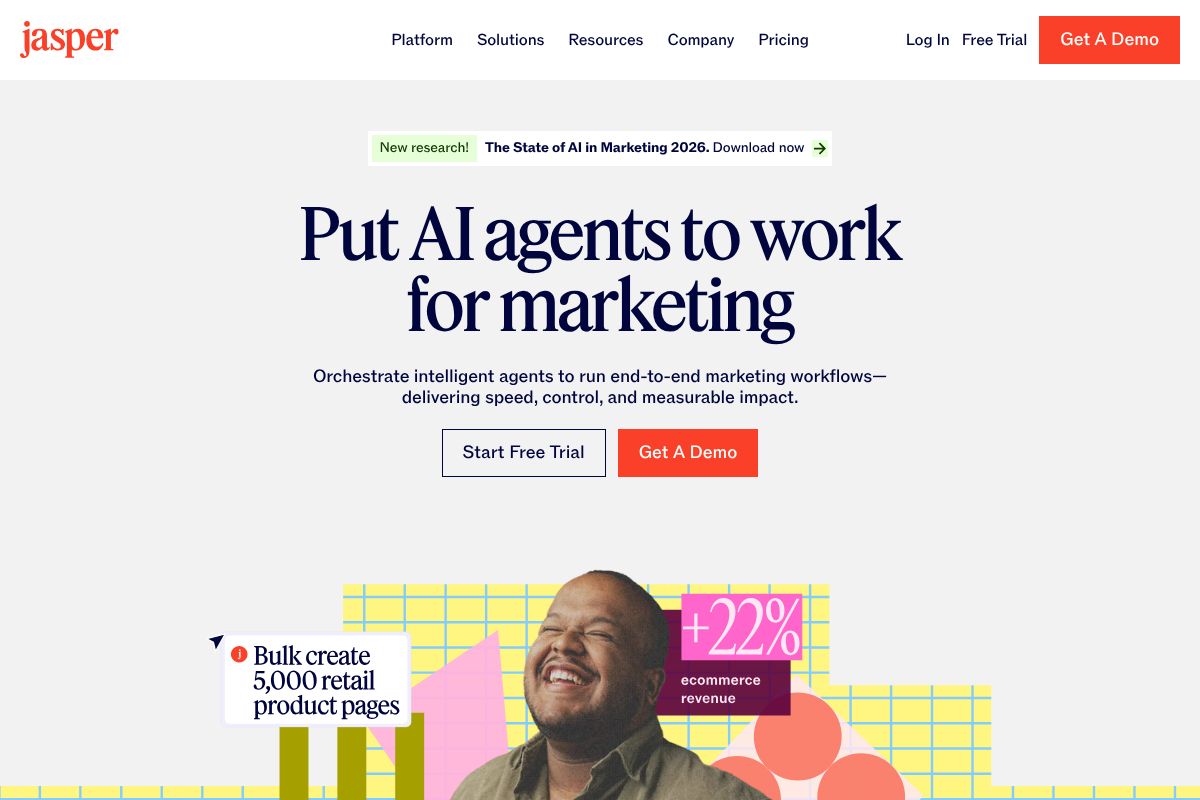
The Teams plan at $125/month is where Jasper really earns its keep. You get collaborative workflows, shared brand assets, and the ability to manage multiple client voices from a single dashboard. It’s a serious tool for serious output.
That said, be honest with yourself about the trade-offs:
- Steeper learning curve than most competitors — expect a few hours of onboarding
- Higher price point makes it hard to justify for solo creators or occasional users
- Best results come after you’ve invested time in setting up your brand profiles
Best for: Marketing teams, content agencies, and established brands that need consistent, high-volume social content across multiple channels.
Copy.ai: Best for Beginners & Solo Creators
If you’re just starting to explore AI writing tools, Copy.ai is one of the most accessible entry points available. The free tier lets you experiment without committing your budget, and the Chat plan at $29/month unlocks a surprisingly capable toolkit for solo creators and small business owners. Setup takes minutes, not hours — you can go from sign-up to your first social caption almost immediately.
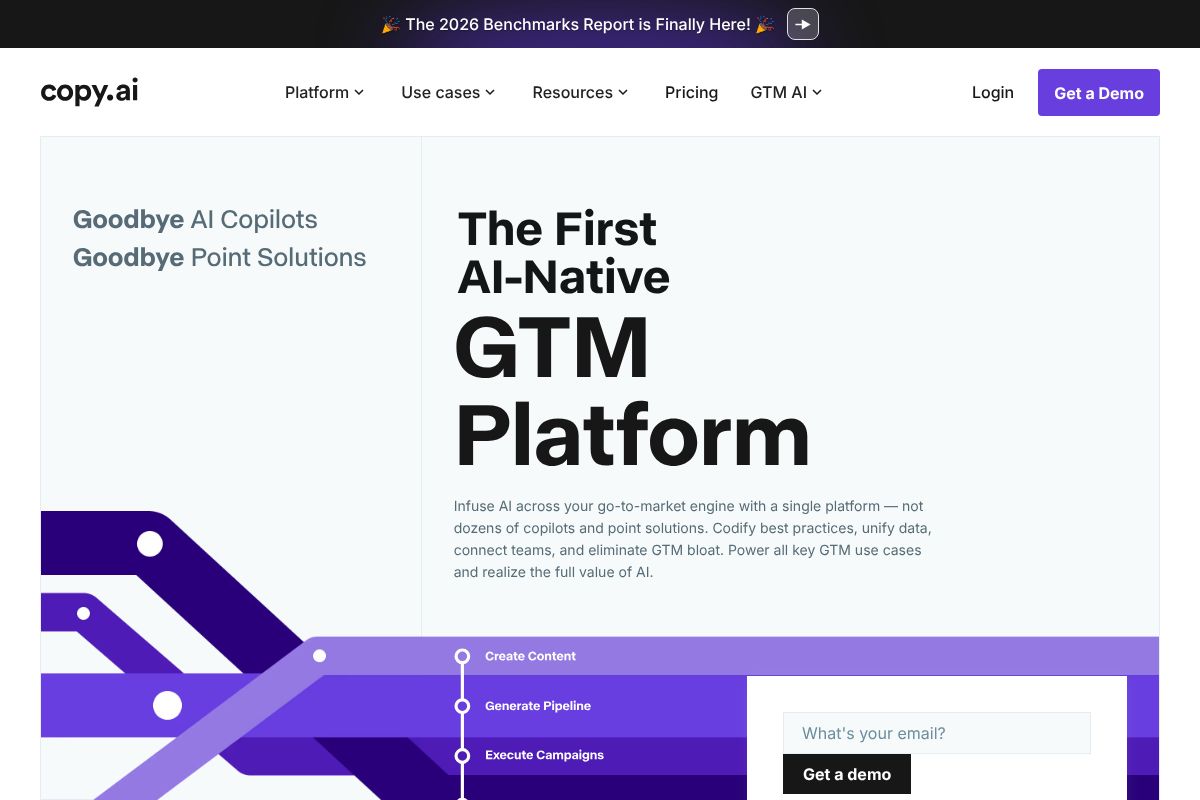
Copy.ai has also expanded into automation with its Agents plan, which lets more advanced users build multi-step content workflows. It’s a useful upgrade path once you outgrow the basics.
Where Copy.ai falls short:
- The free tier limits customization, so brand voice consistency takes a back seat
- Fewer native integrations than Jasper AI or Writesonic, which can slow down your workflow
- Less suited for teams managing multiple clients simultaneously
Best for: Solo creators, freelancers, and small business owners who want to test AI-assisted social content before making a larger investment.

Writesonic: Best for SEO-Focused Content
If your social media strategy is closely tied to your blog or organic search presence, Writesonic offers something the others don’t — built-in SEO optimization baked into the content generation process. At $39/month for the entry-level plan, it sits in a comfortable middle ground between Copy.ai’s affordability and Jasper’s premium pricing. You can generate social posts, captions, and long-form blog content from the same platform, which keeps your messaging aligned across channels.
The SEO features are genuinely useful if you’re trying to build visibility alongside engagement — keyword suggestions, readability scoring, and on-page recommendations are all part of the package.
A few honest caveats:
- Writesonic is more of a content generalist than a pure social media specialist
- Team collaboration features are less developed compared to Jasper AI
- If social is your only focus, some of the SEO tooling may feel like unnecessary overhead
Best for: Bloggers, content marketers, and creators who want their social content and SEO strategy to work together rather than in silos.
Pricing Breakdown & Value
One of the most welcome developments in 2026 is how competitive AI writing tool pricing has become. What used to cost $100+/month for a capable plan is now available at nearly half that price — and free tiers have gotten genuinely useful, not just teaser-level access. Here’s how the four main contenders stack up side by side.
| Tool | Entry Price | Best Plan for Most Users | Key Limits |
|---|---|---|---|
| Jasper AI | $39/month | Creator Plan | Single user; no team collaboration |
| Copy.ai | Free (paid from $36/month) | Starter Plan | Limited workflow runs per month |
| Writesonic | $39/month | Individual Plan | Word/generation credits can run out fast |
| Rytr | Free (paid from $9/month) | Saver Plan ($9/month) | 100,000 characters/month cap |
The value equation here isn’t just about monthly cost — it’s about time saved. If an AI tool helps you produce five days’ worth of social content in two hours, even a $39/month plan pays for itself quickly. Freelancers managing multiple clients will feel that ROI even faster.
Finding Your Budget Sweet Spot
If you’re just getting started, Rytr and Copy.ai both offer free tiers that let you test the workflow before spending a dollar. That’s a low-risk way to figure out whether AI-assisted writing actually fits how you work.
For most solo creators and small business owners, a mid-tier plan in the $9–$39/month range is genuinely sufficient. You don’t need Jasper’s top-tier plan with advanced brand voice controls unless you’re managing a large team or multiple brand accounts.
- Under $15/month: Rytr Saver Plan covers light-to-moderate social posting
- $36–$39/month: Copy.ai or Writesonic for more volume and automation
- $49+/month: Jasper AI when brand consistency and team features matter most
Most tools also offer annual billing discounts of 20–30%, so if you’ve tried the free trial and you’re happy, committing annually is usually the smarter financial move. The honest takeaway: start small, prove the value, then scale your plan accordingly.
Pros & Cons: What You Need to Know
AI writing tools have come a long way, but they’re not a magic solution. The 2026 generation of tools is significantly better at adapting to your brand voice and producing platform-specific content than earlier versions were — but they still work best when a human is steering the ship. Here’s an honest look at both sides of the equation.
Where AI Writing Tools Deliver Real Value
- Speed: Drafting a week’s worth of captions, threads, or LinkedIn posts takes minutes instead of hours.
- Consistency: Maintaining a regular posting schedule becomes much easier when content generation isn’t the bottleneck.
- Cost savings: For solopreneurs and small teams, AI can reduce or eliminate the need for a dedicated copywriter.
- 24/7 availability: No waiting on a freelancer — you can generate content whenever inspiration (or a deadline) strikes.
- A/B testing at scale: Need five variations of the same ad copy? AI tools can produce them in seconds, making split testing far more practical.
The Trade-Offs Worth Knowing About
- Generic output: Without careful prompting or brand voice setup, AI copy can feel bland and interchangeable.
- Needs human editing: Even the best tools produce drafts, not finished copy. Plan to review and refine everything before publishing.
- Learning curve: Getting genuinely good output requires learning how to prompt effectively — that takes some trial and error upfront.
- Brand voice mismatches: If your tone is highly specific or niche, AI tools may struggle to nail it without significant customization and training.
When AI Writing Tools Shine
The sweet spot for these tools is high-volume, repeatable content tasks. If you’re repurposing a blog post into a series of social captions, AI handles that beautifully. Brainstorming hooks, generating hashtag sets, or spinning up multiple caption variations for the same product image? That’s where you’ll feel the biggest productivity jump.
Maintaining a consistent posting schedule is another area where AI genuinely earns its keep. Rather than facing a blank screen every Monday morning, you can batch-create content in one focused session. Similarly, A/B testing copy variations — something most creators skip because it’s time-consuming — becomes surprisingly easy when generating alternatives takes thirty seconds instead of thirty minutes.
The honest summary: use AI to do the heavy lifting on volume and ideation, then bring your own judgment and voice to the final edit. That combination is where the real results happen.
Who Should Use These Tools?
AI writing tools aren’t a one-size-fits-all solution, but they do solve real problems for several distinct groups. Here’s how to know if you’re a good fit — and what you’ll actually get out of them.
Content Creators
If you’re managing a YouTube channel, Instagram presence, or personal brand, the pressure to post consistently is relentless. Coming up with fresh angles, captions, and hooks day after day leads to creative burnout fast. AI tools give you a starting point so you’re never staring at a blank screen, and they’re especially useful for repurposing long-form content into platform-specific snippets quickly.
Marketers
For marketers, the challenge is usually volume and consistency across multiple channels simultaneously. You might need ten ad variations, five email subject lines, and a week’s worth of social posts — all by Thursday. AI tools let you maintain a consistent brand voice at scale without needing to grow your team. The time savings on repetitive copy tasks alone can justify the monthly subscription.
Small Business Owners
You’re wearing too many hats already. Writing compelling social content often falls to the bottom of the priority list, which means your online presence suffers. AI tools are designed to be approachable for non-writers, with templates and guided prompts that don’t require any copywriting background. Most affordable plans are built with exactly this audience in mind.
Freelancers
Your income is directly tied to how much you can produce. AI tools let you take on more clients without working longer hours by dramatically cutting first-draft time. The efficiency gains are real — many freelancers report completing social media packages in a fraction of the time, which means better margins and room to grow.
Common Mistakes to Avoid When Using AI Writing Tools
AI writing tools can genuinely transform your social media workflow — but only if you use them the right way. A few common missteps can undermine the quality of your content or, worse, damage your brand’s credibility.
- Publishing AI output without editing it. Even the best tools produce generic phrasing, factual errors, or tone mismatches. Always read through the output and rewrite it in your brand voice before hitting publish.
- Ignoring platform-specific best practices. A caption that works on Instagram won’t necessarily land on LinkedIn. Character limits, tone, hashtag usage, and audience expectations vary significantly across platforms — don’t let AI flatten those differences.
- Copy-pasting the same content everywhere. Repurposing is smart; copy-pasting is lazy. Adapt each piece of content for the platform it’s going on, even if the core message stays the same.
- Skipping the review step entirely. AI tools can confidently state inaccurate information. If your post includes stats, claims, or product details, verify them independently before going live.
- Treating AI as a replacement for strategy. These tools are assistants, not decision-makers. They can’t tell you what your audience actually needs or whether your campaign direction is sound.
The professionals who get the most out of AI writing tools are the ones who stay in the driver’s seat. Use the output as a strong first draft, then apply your own judgment, expertise, and brand knowledge to make it genuinely useful.
Final Verdict: Which Tool Should You Choose?
After weighing features, pricing, and real-world usability, the right choice comes down to where you are in your business and what you actually need day-to-day.
- Jasper AI is the strongest fit for marketing teams and agencies managing multiple brands, high content volume, and collaborative workflows. It’s a premium investment, but it earns its place at scale.
- Copy.ai is the go-to for solo creators and beginners who want fast, low-friction results without a steep learning curve. It’s approachable, affordable, and genuinely useful from day one.
- Writesonic is the smart pick if SEO is central to your strategy. Its built-in optimization features give content creators and small business owners a meaningful edge when organic visibility matters.
If you’re still on the fence, don’t overthink it. Most of these tools offer free trials ranging from 7 to 30 days, so you can test the workflow before committing a single dollar. Start with the tool that matches your current budget and use case, run it for a week on real content, and let your results guide the decision.
The honest truth? The best AI writing tool isn’t necessarily the most powerful one — it’s the one you’ll actually open every day and use consistently.
Your Next Step
Pick one tool from this list and start a free trial today. Don’t aim for perfect — aim for progress. Run it through a real week of content creation: write a few captions, draft a post or two, and see how it fits into your existing process.
If budget is your primary concern, start with the most affordable plan available and upgrade only when you’ve outgrown it. If you’re managing a team or agency workload, go straight to Jasper AI and explore its collaboration features during the trial period.
Every tool covered here has a no-risk entry point. There’s no reason to wait. Start your free trial, test it against your actual content needs, and commit to the one that clicks. Consistency with a good tool will always outperform occasional use of a great one.
Frequently Asked Questions
What is the best AI writing tool for social media in 2026?
The best tool depends on your needs, but top options include those offering multi-platform support, advanced customization, and strong analytics. Compare features like scheduling, tone control, and pricing to find your ideal fit.
Can AI writing tools really save time on social media content?
Yes, AI tools significantly reduce content creation time by generating captions, posts, and hashtags instantly. However, you should still review and edit output to ensure quality and brand alignment before publishing.
Are AI-generated social media posts authentic?
AI posts can feel authentic when properly customized with your brand voice and edited for personality. The key is using AI as a starting point rather than publishing unedited content directly to maintain genuine audience connection.
How much do AI writing tools for social media cost?
Most AI writing tools offer free plans with limited features, while premium plans range from $10-100+ monthly depending on posting volume and features. Enterprise solutions cost significantly more with custom pricing.
Related Reads
- Copy.ai Alternatives: 5 Best AI Writing Tools in 2026
Explore the best Copy.ai alternatives for 2026. Compare AI writing tools for content creators, marketers, and small busi…
- Best Jasper AI Alternatives in 2026
Compare top Jasper AI alternatives for 2026. Find the best AI writing tool for your needs with honest reviews and pricin…
- Copy.ai vs Writesonic: Which AI Writer Wins in 2026?
Compare Copy.ai and Writesonic in 2026. See pricing, features, and which AI writing tool fits your content needs best.…