If you’ve been using Copy.ai for a while, you’ve probably hit a wall — maybe the output feels repetitive, the templates don’t quite fit your workflow, or you’re simply not getting the value you expected from your subscription. You’re not alone. The search for solid Copy.ai alternatives has exploded in 2026, and honestly, the competition has never been stronger.
The good news? There are AI writing tools out there that might suit your specific needs far better — whether you’re a freelancer cranking out client content, a marketer managing campaigns, or a small business owner trying to do more with less time.
Looking for a Copy.ai alternative? We’ve identified the 5 best AI writing tools available right now, breaking down what each one excels at, where it stumbles, and which creator or team it’s actually built for.
Key Takeaways
- Copy.ai alternatives offer specialized features for different writing needs, from long-form content to email campaigns and social media.
- Top AI writing tools in 2026 prioritize accuracy, customization, and integration capabilities over basic template-driven content generation.
- Pricing varies significantly across platforms, with options ranging from free tiers to enterprise plans exceeding $500 monthly.
- Feature comparison reveals distinct strengths: some excel at SEO optimization while others focus on brand voice consistency and team collaboration.
- Selecting the right alternative depends on your specific use case, budget constraints, and required integrations with existing business tools.
In This Article
Why Look for Copy.ai Alternatives?
The AI writing tool market has matured significantly, and what works perfectly for one person can feel completely wrong for another. That’s not a flaw in the tools — it’s just the reality of a space that’s grown to serve wildly different use cases, budgets, and workflows.
Here are some of the most common reasons creators and marketers start shopping around:
- Pricing doesn’t match output. As your content needs scale up — or down — your tool’s pricing model might stop making sense. Some platforms charge per word, others per seat, and others offer flat monthly rates. Finding the right fit for your budget matters.
- Specific use cases need specialized tools. A long-form blogger has very different needs than a social media manager or an e-commerce copywriter. Some tools are built with particular workflows in mind, and that specialization can make a real difference in output quality.
- Team collaboration requirements. If you’re working with a content team, you need more than just good writing — you need shared workspaces, brand voice consistency, approval workflows, and user management. Not every tool is built for that.
- Output quality and tone control. The more content you produce, the more you notice patterns — and sometimes a fresh tool with a different underlying approach gives you noticeably better results for your niche.
The bottom line is that no single AI writing tool is the best choice for everyone. Exploring your options isn’t a sign that something’s wrong — it’s just smart. Let’s look at what else is out there.
What Makes a Great AI Writing Tool?
With dozens of options on the market, it’s easy to get distracted by flashy feature lists. But the tools that actually stick are the ones that fit naturally into how you already work — and deliver consistent results without a steep learning curve. Here’s what to look for before you commit.
Core Criteria to Evaluate
- Ease of use. If you’re spending more time figuring out the tool than writing with it, that’s a problem. Look for clean interfaces, helpful prompts, and a short learning curve — especially if you’re onboarding a team.
- Output quality. This is the big one. Test the tool on your actual content types — blog posts, ad copy, product descriptions — before committing. Generic output might look impressive in demos but fall flat in practice.
- Pricing flexibility. Some tools charge per word, others per seat, and others offer unlimited plans. Make sure the pricing model matches how you actually use AI — not how you think you will.
- Brand voice customization. The ability to train a tool on your tone, terminology, and style is increasingly non-negotiable — especially for agencies and businesses with established brand guidelines.
- SEO features. If organic traffic matters to your business, look for built-in keyword optimization, content scoring, or integrations with tools like Surfer SEO or Semrush.
- Team collaboration. Shared workspaces, user roles, and approval workflows are essential if you’re managing content at scale.
- Integrations. Does it connect with your CMS, Slack, Google Docs, or project management tools? Fewer manual steps means more time writing.
- Customer support. Especially important for small teams without an in-house tech person — responsive support can save hours of frustration.
What Should You Prioritize?
Your role shapes everything here. Marketers should weight brand voice control and SEO features heavily. Bloggers and content creators will care most about long-form output quality and ease of use. Freelancers often need flexible pricing and fast turnaround — not enterprise-level collaboration tools they’ll never use.
Keep your specific workflow in mind as you read through the alternatives below. The “best” tool is the one that solves your problems, not someone else’s.
Best Copy.ai Alternatives: Top 5 Tools
Each tool below has been evaluated based on real-world use cases, current pricing, and honest trade-offs. Whether you’re a solo creator or managing a content team, there’s a strong option here for you.
1. Jasper AI AI — Best for Marketing Teams
Jasper AI has firmly established itself as the go-to AI writing platform for marketing teams that need consistent, high-volume content output. It’s built from the ground up with brand consistency in mind — not just as a feature, but as a core philosophy. If your team produces dozens of blog posts, ad variations, emails, and social captions every month, Jasper is designed for exactly that workload.
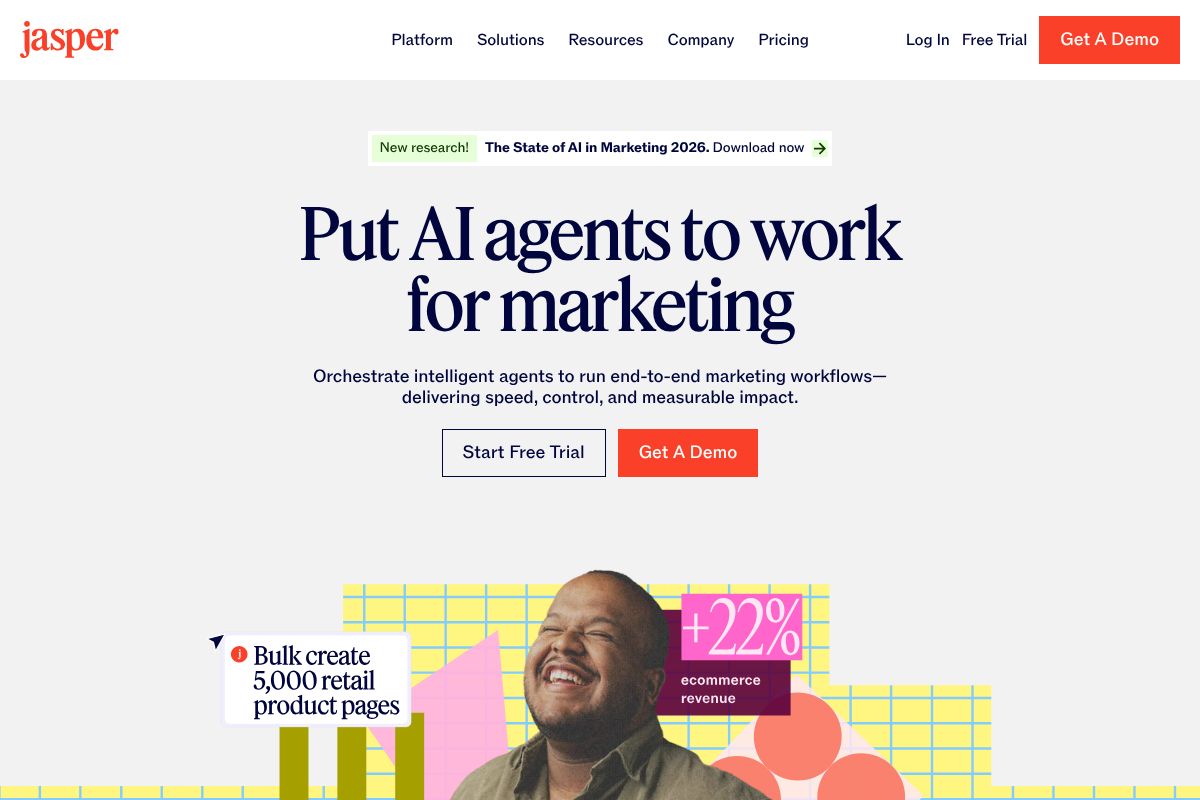
What sets Jasper apart is its Brand Voice feature, which lets you upload existing content, style guides, or brand documents so the AI learns your tone, vocabulary, and messaging. The result is output that actually sounds like your brand — not generic filler. Add in 50+ content templates, a powerful document editor, and integrations with tools like Surfer SEO, Google Docs, and HubSpot, and you have a serious production environment for content at scale.
Best for: Marketing teams, agencies, and businesses managing multi-channel content strategies.
- Brand voice training across your entire team’s workspace
- 50+ templates covering ads, blogs, emails, and more
- Collaborative workflows with user roles and shared campaigns
- Native integrations with Surfer SEO, Chrome, and major CMS platforms
Pricing: Creator plan starts at $49/month, Pro at $69/month, and Teams at $125/month — all billed annually. Monthly billing is available at slightly higher rates.
Honest trade-off: Jasper’s depth is also its downside for solo users. The platform has a steeper learning curve than Copy.ai, and it can feel overwhelming if you’re just trying to knock out a few social posts a week. It rewards users who invest time in setup — but that investment isn’t always practical for freelancers or beginners.
If brand consistency and team output are your priorities, Jasper AI is worth a serious look.
2. Writesonic — Best for SEO-Focused Creators
Writesonic has carved out a strong niche among bloggers and content marketers who care deeply about search visibility. While many AI writing tools treat SEO as an afterthought, Writesonic bakes it into the content creation process — making it a smart choice if organic traffic is central to your strategy.

The platform’s standout feature is its AI Article Writer, which generates long-form blog posts optimized for search intent from the start. Writesonic also integrates directly with Google Search Console and offers built-in content scoring to help you gauge how well your article is likely to perform before you hit publish. For creators who live and die by keyword rankings, that kind of real-time feedback loop is genuinely useful.
Best for: Bloggers, content marketers, and SEO professionals focused on driving organic traffic.
- AI Article Writer with built-in SEO optimization
- Google Search Console integration for data-driven content
- Real-time content scoring and readability analysis
- Landing page and ad copy tools alongside long-form content
- Chatsonic — a ChatGPT-style assistant with web access
Pricing: Plans range from $39/month for the Individual tier up to $99/month for the Standard plan, with word generation limits scaling accordingly. Annual billing reduces costs noticeably.
Honest trade-off: Writesonic’s collaboration features are noticeably thinner than Jasper’s. If you’re managing a team of writers with shared workflows and approval processes, you’ll hit limitations quickly. It’s best suited for solo creators or very small teams where collaboration complexity is low.
Writesonic is a strong contender if SEO is your primary lens for content creation and you want tools that actively support that goal.
3. Rytr — Best for Budget-Conscious Beginners
Not every content creator needs an enterprise-grade writing suite. If you’re just getting started with AI writing — or you need a lightweight tool for occasional use — Rytr offers a refreshingly simple and affordable entry point.
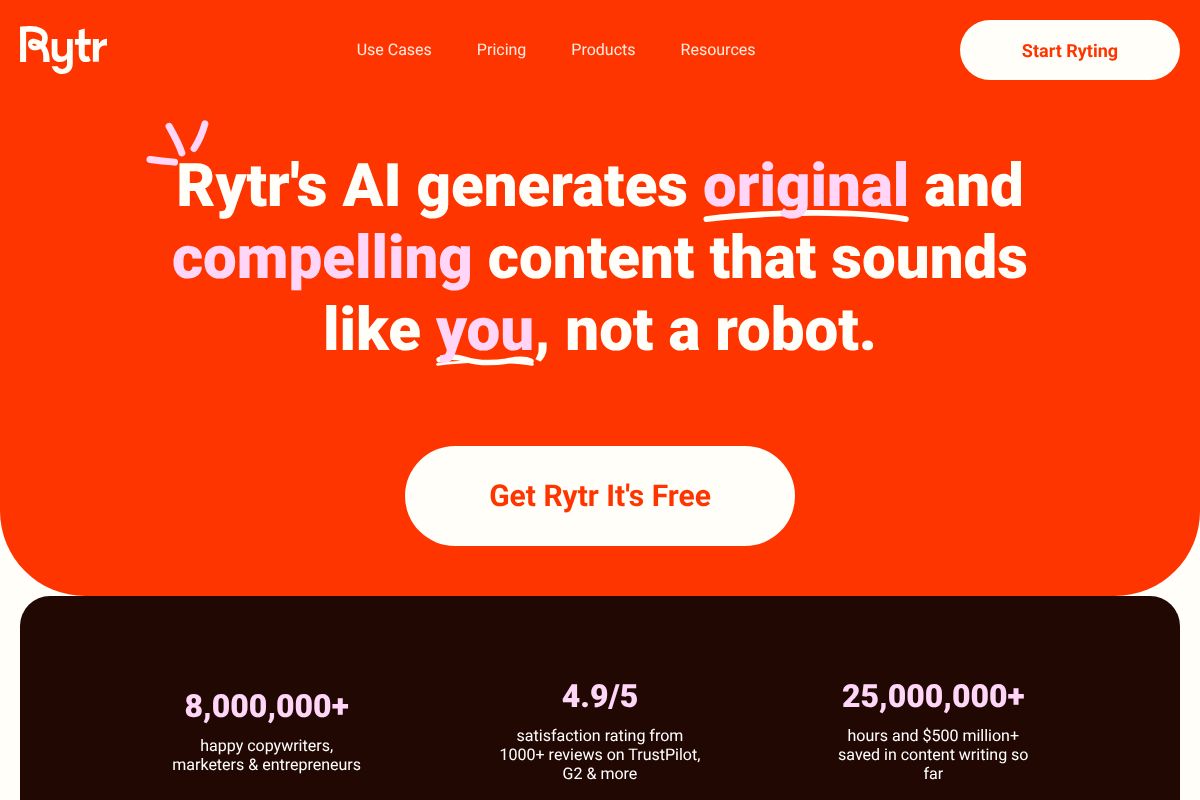
Rytr’s free tier is genuinely usable, not just a teaser. You get access to 40+ writing use cases, multiple tones of voice, and support for over 30 languages — all without spending a cent. The interface is clean and intuitive, so you can go from sign-up to generating content in under five minutes. That low barrier to entry makes it a great fit for solopreneurs, students, or anyone dipping their toes into AI writing for the first time.
Best for: Freelancers, beginners, and budget-conscious creators who need quick, no-fuss content generation.
- Generous free tier with no credit card required
- 40+ templates covering emails, blogs, ads, and social content
- Tone selector with 20+ options for voice variety
- Simple, clean interface with minimal learning curve
Pricing: Free plan available. Paid plans start at $9/month (Saver) and go up to $29/month (Unlimited) for unlimited character generation.
Honest trade-off: Rytr’s simplicity comes at a cost. You won’t find advanced brand voice training, deep SEO integrations, or sophisticated team workflows here. If your content needs grow quickly, you may outgrow it faster than you’d like.
4. Other Notable Alternatives Worth Exploring
The three tools above cover most use cases well, but depending on your workflow, a few other platforms might be worth your attention in 2026.
Claude (by Anthropic) has become a favorite among writers who prioritize nuanced, long-form output. Its ability to handle complex instructions and maintain context across lengthy documents is impressive — and it’s particularly strong for research-heavy or thought leadership content. It’s less template-driven than Copy.ai, but the raw output quality is hard to beat.
Perplexity AI occupies a slightly different space — it’s more of a research and ideation engine than a pure writing tool. But if your content process starts with deep research, Perplexity’s real-time web access and cited sourcing can significantly speed up your pre-writing phase.
Notion AI is worth a look if you already live inside Notion for project management and documentation. Its AI features are tightly embedded in the workspace, which reduces context-switching — a real productivity win for solo operators who don’t want another standalone tool to manage.
None of these are direct Copy.ai replacements, but each serves a distinct need. Explore them if the top three don’t quite fit your workflow.
Feature Comparison: Copy.ai vs. Top Alternatives
Choosing the right tool often comes down to a few key factors: price, team support, and where each platform genuinely excels. The table below gives you a side-by-side look at how Copy.ai stacks up against its top competitors — without the marketing spin.
| Tool | Best For | Starting Price | Free Tier | Key Strength | Best For Teams? |
|---|---|---|---|---|---|
| Copy.ai | Short-form copy, quick drafts | ~$49/mo | Yes (limited) | Workflow automation & templates | Yes — team plans available |
| Jasper AI | Brand-consistent marketing content | ~$49/mo | No (trial only) | Brand voice & long-form quality | Yes — built for collaboration |
| Writesonic | SEO-focused blog & web content | ~$16/mo | Yes (limited credits) | Real-time SEO optimization | Moderate — growing team features |
| Rytr | Budget-conscious solo creators | ~$9/mo | Yes (generous) | Affordability & ease of use | No — primarily solo-focused |
A few things stand out here. Jasper AI leads on brand consistency and team collaboration, making it the stronger pick for marketing departments. Writesonic punches above its price point if SEO is your priority. Rytr is the clear winner on affordability, though it trades off depth and team functionality to get there.
Copy.ai sits comfortably in the middle — solid automation features and team support, but not the cheapest option and not the most powerful for long-form work. Use this table as your starting point, then factor in your specific workflow before committing.
Pricing Breakdown: What You’ll Actually Spend
Sticker price only tells part of the story. What matters more is how much value you’re extracting per dollar — and whether a tool’s pricing structure actually fits how you work.
Solo Creator
If you’re a freelancer or independent creator, Rytr is the hardest to beat at around $9/month. You get solid output for everyday writing tasks without breaking your budget. Writesonic is worth the step up to ~$16/month if SEO content is central to your work — the real-time optimization features alone can save you a separate Surfer SEO subscription.
Small Team (2–5 People)
Copy.ai becomes more competitive here. Its team plans spread the cost across users, and the workflow automation features start paying dividends when multiple people are producing content regularly. Jasper AI at ~$49/month is a bigger investment, but teams that need consistent brand voice across writers will likely find it justifies the cost quickly.
Agency or Scaling Business
At agency scale, you’re looking at higher-tier plans across the board. Jasper AI and Copy.ai both offer plans designed for larger teams with collaboration, user permissions, and brand controls built in. The per-seat cost drops as you scale, but budget accordingly — you could easily spend $100–$300+/month depending on team size and output volume.
- Rytr: ~$9/mo — best value for solo use
- Writesonic: ~$16/mo — strong ROI for SEO-focused creators
- Copy.ai: Mid-tier — scales well for small teams
- Jasper AI: ~$49/mo — premium pricing, premium team features
The honest takeaway: don’t just pick the cheapest option. Pick the one whose specific strengths align with where you spend the most time writing.
Who Should Use Each Tool?
Not every AI writing tool fits every workflow. Here’s a honest breakdown of which tool makes the most sense depending on how you actually work.
Content Creators and Bloggers
If you’re publishing blog posts regularly and care about search traffic, Writesonic is your best match. Its built-in SEO optimization and long-form article builder directly address the two biggest pain points for creators: ranking and speed. You’re not just generating text — you’re producing content that’s structured to perform.
Small Business Owners
Rytr is the obvious fit here. You need to write product descriptions, email campaigns, social captions, and the occasional landing page — but writing isn’t your full-time job. Rytr’s simple interface and low price point (~$9/month) mean you can get polished copy done quickly without a steep learning curve or a bloated tool you’ll only use 20% of.
Marketing Teams
Jasper AI was built with marketing teams in mind. If your team is producing campaigns across multiple channels and brand consistency is non-negotiable, Jasper’s brand voice controls and collaborative features solve a real problem. It’s the tool that scales with a team’s output without letting quality drift between writers.
Freelancers
Freelancers sit in an interesting middle ground. If you’re juggling multiple clients across industries, Writesonic gives you the range and output speed to stay profitable. If you’re working with tighter margins and smaller volumes, Rytr keeps costs low while still covering the core use cases most clients need.
- Bloggers and SEO creators: Writesonic
- Small business owners: Rytr
- Marketing teams: Jasper AI
- Freelancers: Writesonic or Rytr depending on volume
Final Verdict: Which Alternative Is Right for You?
Choosing the right Copy.ai alternative comes down to four things: your budget, how many people are using the tool, what you’re actually writing, and which features matter most to your workflow. There’s no single winner here — just the right fit for your situation.
- Best if you’re on a tight budget: Rytr keeps costs low without sacrificing the essentials.
- Best if you run a content-heavy blog or need SEO output: Writesonic gives you the speed and structure to scale.
- Best if brand consistency across a team is your priority: Jasper AI’s brand voice controls are hard to beat.
- Best if you want long-form quality with minimal editing: Look for tools that prioritize document-level coherence over snippet generation.
Before you commit to a paid plan, take advantage of free tiers — most of these tools offer enough access to tell whether the output matches your voice and use case. A week of real testing beats any review.
If you’re not sure where to start, Writesonic covers the widest range of use cases and offers a generous free tier that doesn’t require a credit card. Start with Writesonic’s free tier today and see how it fits into your actual workflow — not just a demo scenario.
Frequently Asked Questions
What is the best free alternative to Copy.ai?
Several platforms offer free tiers with limited monthly credits, including Jasper’s trial and Writesonic’s free plan. However, free versions typically restrict output volume and advanced features compared to paid subscriptions.
Is Copy.ai still worth using in 2026?
Copy.ai remains competitive for quick social media content and basic copywriting, but alternatives now offer superior long-form capabilities, better SEO integration, and more customizable brand voice features for professional teams.
Which AI writing tool is best for SEO content?
Tools like Surfer AI and Jasper excel at SEO-optimized long-form content with keyword research integration and SERP analysis. They outperform Copy.ai specifically for ranking-focused blog posts and comprehensive content strategies.
Can I use Copy.ai alternatives for email marketing?
Yes, most alternatives including Jasper, Writesonic, and Anyword include dedicated email copywriting features with A/B testing capabilities and tone customization, making them suitable for email marketing campaigns.
Related Reads
- Copy.ai Review 2026: Free AI Writing Tool Worth Your Time?
Honest Copy.ai review for 2026. See features, pricing, pros/cons, and how it compares to Jasper, Writesonic, and Rytr fo…
- Best AI Writing Tools for Social Media in 2026
Find the best AI writing tools for social media. Compare features, pricing, and performance for creators and marketers i…
- Jasper AI Review 2026: Is It Worth the Cost?
Honest Jasper AI review for 2026. See pricing, features, pros/cons, and how it compares to Copy.ai and Writesonic for co…