If you’ve ever stared at a blank screen wondering how to write a compelling product description, email subject line, or social media caption — you’re not alone. The demand for high-quality copy has never been higher, and keeping up manually is exhausting. That’s exactly why so many creators, marketers, and small business owners are turning to AI writing tools in 2026.
Most AI copywriting tools make the same promises; the winners prove it with speed, flexibility, and pricing that doesn’t require a venture capital round. We’ve separated the performers from the pretenders.
Key Takeaways
- Jasper AI AI dominates marketing teams and agencies with advanced brand voice customization and multi-channel campaign generation capabilities.
- Copy.ai and Rytr deliver affordable, user-friendly solutions perfect for solo creators and startups launching their first content projects.
- Writesonic excels at SEO-optimized blog content and long-form articles, making it ideal for content marketers prioritizing search rankings.
- Feature comparison reveals pricing ranges from free tiers to enterprise plans, so budget and team size determine best fit.
- Selecting the right AI copywriting tool requires evaluating your content type, team size, budget constraints, and specific feature requirements.
In This Article
- What Makes a Great AI Copywriting Tool?
- Top AI Writing Tools for Copy in 2026
- Jasper AI: Best for Marketing Teams & Agencies
- Copy.ai-rytr-best-for-solo-creators-startups”>Copy.ai & Rytr: Best for Solo Creators & Startups
- Writesonic: Best for Bloggers & SEO-Focused Content
- Feature & Pricing Comparison Table
- How to Choose: Questions to Ask Yourself
- The Verdict: Your Next Step
What Makes a Great AI Copywriting Tool?
Before diving into specific tools, it’s worth getting clear on what “best” actually means — because it depends entirely on how you work and what you need. A freelance copywriter juggling ten clients has very different priorities than a small business owner writing their first product page. The right tool for you is the one that fits your workflow, not the one with the longest feature list.
When evaluating any AI copywriting tool, there are a handful of core factors worth weighing:
- Speed: How quickly can you go from prompt to usable output?
- Brand voice consistency: Can the tool learn and replicate your unique tone over time?
- Ease of use: Is the interface intuitive, or does it require a steep learning curve?
- Output quality: Does the copy actually sound human, or does it need heavy editing?
- Flexibility: Can it handle different formats — ads, emails, long-form content, product descriptions?
No single tool checks every box perfectly. Some excel at speed but produce generic-sounding copy. Others deliver nuanced, brand-aligned writing but take more time to set up and fine-tune. Understanding these trade-offs upfront will save you a lot of frustration down the line.
Speed vs. Quality Trade-offs
Many AI tools are built for volume — they can generate a dozen variations of an ad headline in seconds. That’s genuinely useful when you’re brainstorming or working under a tight deadline. But faster output often means less nuance, and you may find yourself spending as much time editing as you would have writing from scratch.
Premium tools tend to offer more customization options — things like brand voice profiles, tone controls, and memory features that help the AI understand your audience over time. These capabilities come with a higher price tag and a slightly steeper setup process, but the payoff is copy that actually sounds like you. If output quality is your top priority, it’s usually worth investing the extra time to configure the tool properly rather than defaulting to the fastest option available.
Top AI Writing Tools for Copy in 2026
The AI writing tool market looks very different today than it did just a few years ago. What was once a crowded field of generalist tools trying to do everything has matured into a more focused ecosystem where the best products have carved out distinct niches. If you’ve been overwhelmed by the sheer number of options, that’s understandable — but the good news is that narrowing down your choice is actually easier now than it used to be.
In this guide, we’ll take a close look at the tools that consistently rise to the top for copywriting specifically. These aren’t general-purpose AI assistants — they’re platforms built with copy output, conversion goals, and workflow integration in mind. Whether you’re running a lean solo operation or managing copy for a growing team, there’s a strong option here for you.
Among the tools we’ll cover, Jasper AI stands out as the go-to choice for marketing teams and agencies that need consistent, brand-aligned output at scale. We’ll also look at strong alternatives that serve different budgets and use cases.
Why the Market Has Shifted
By 2026, the “one tool to rule them all” promise has largely faded. Users got smarter, and so did the platforms. Instead of competing on breadth, today’s leading AI writing tools compete on depth — and that’s actually a win for you as a buyer.
Different professionals now have very different needs when it comes to AI copy tools:
- Agencies and marketing teams prioritize brand consistency, collaboration features, and scalable workflows.
- Solopreneurs and freelancers want affordable pricing, fast output, and minimal setup time.
- Bloggers and content marketers look for deep SEO integration and long-form content support.
This specialization means no single tool is objectively the best — it depends entirely on how you work and what you’re trying to produce. The sections below will help you match the right tool to your specific situation.
Jasper AI: Best for Marketing Teams & Agencies
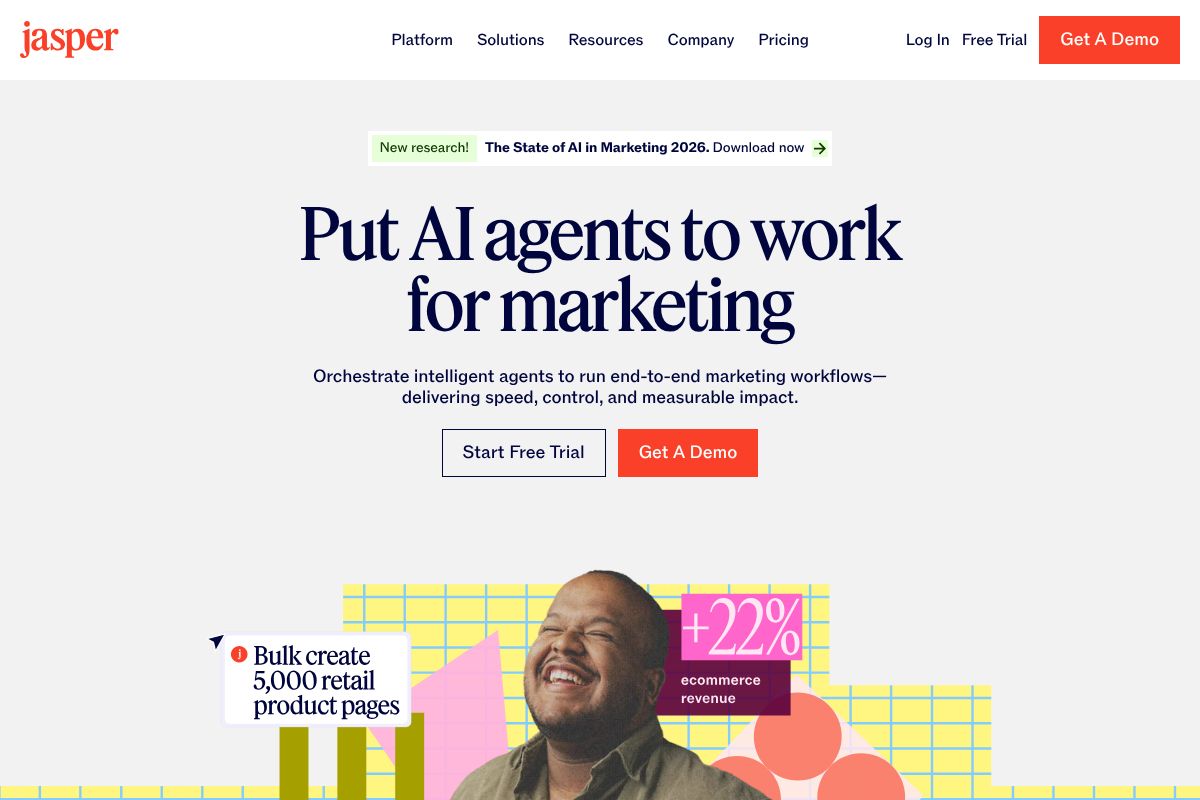
If you’re managing copy across multiple clients or coordinating content production with a team, Jasper AI is the most purpose-built option on the market right now. It’s not the cheapest tool in this guide, but for teams that need consistent, on-brand output at volume, the premium is easy to justify.
Where Jasper AI separates itself from the competition is brand voice memory. You can train the platform on your client’s tone, terminology, and messaging guidelines — and it applies that context across every piece of content it generates. For agencies juggling five or ten different brand voices, that’s not a nice-to-have. It’s a workflow essential.
Key Features for Teams
Jasper AI is designed around the reality of how marketing teams actually work — multiple people, multiple clients, tight deadlines. Here’s what makes it stand out in that context:
- Brand Voice Templates: Store distinct voice profiles for each client so every writer on your team produces consistent output without lengthy briefing documents.
- Multi-User Collaboration: Team members can work inside shared projects, leave comments, and access the same brand assets — no more copy-pasting guidelines into every session.
- Content Calendar Integration: Plan, assign, and track content production directly within the platform, reducing the need for separate project management tools.
- Batch Processing: Generate multiple ad variations, email sequences, or social posts in a single workflow — useful when you’re producing high volumes of copy for campaigns.
For an agency managing even three or four active clients, these features can meaningfully reduce the time spent on briefing, revisions, and quality checks. Brand consistency stops being something you manually enforce and becomes something the tool handles by default.
Pricing & Value
Jasper AI offers three main tiers. The Creator plan runs $49/month and suits solo users who want brand voice features. The Pro plan at $69/month adds more brand voices and user seats. For teams of three or more, the Teams plan at $125/month unlocks full collaboration, advanced permissions, and priority support — and at that level, the per-seat cost becomes genuinely competitive.
The Teams tier is where the value proposition clicks. If you’re splitting that cost across a small agency team, you’re paying roughly what you’d spend on one decent freelance revision per month — except the tool works around the clock.
| Plan | Price/Month | Best For |
|---|---|---|
| Creator | $49 | Solo marketers & freelancers |
| Pro | $69 | Small teams, multiple brands |
| Teams | $125 | Agencies, 3+ users, full collaboration |
Best for: Marketing teams, agencies, and multi-person workflows where brand consistency and collaboration features are non-negotiable.
Copy.ai & Rytr: Best for Solo Creators & Startups
Not every copywriting project needs enterprise-level firepower — or an enterprise-level price tag. If you’re a freelancer, solopreneur, or early-stage startup, Copy.ai and Rytr are two of the most accessible AI writing tools available right now. Both offer free tiers, beginner-friendly interfaces, and pricing that won’t make your accountant nervous.
Copy.ai: Flexibility & Growth
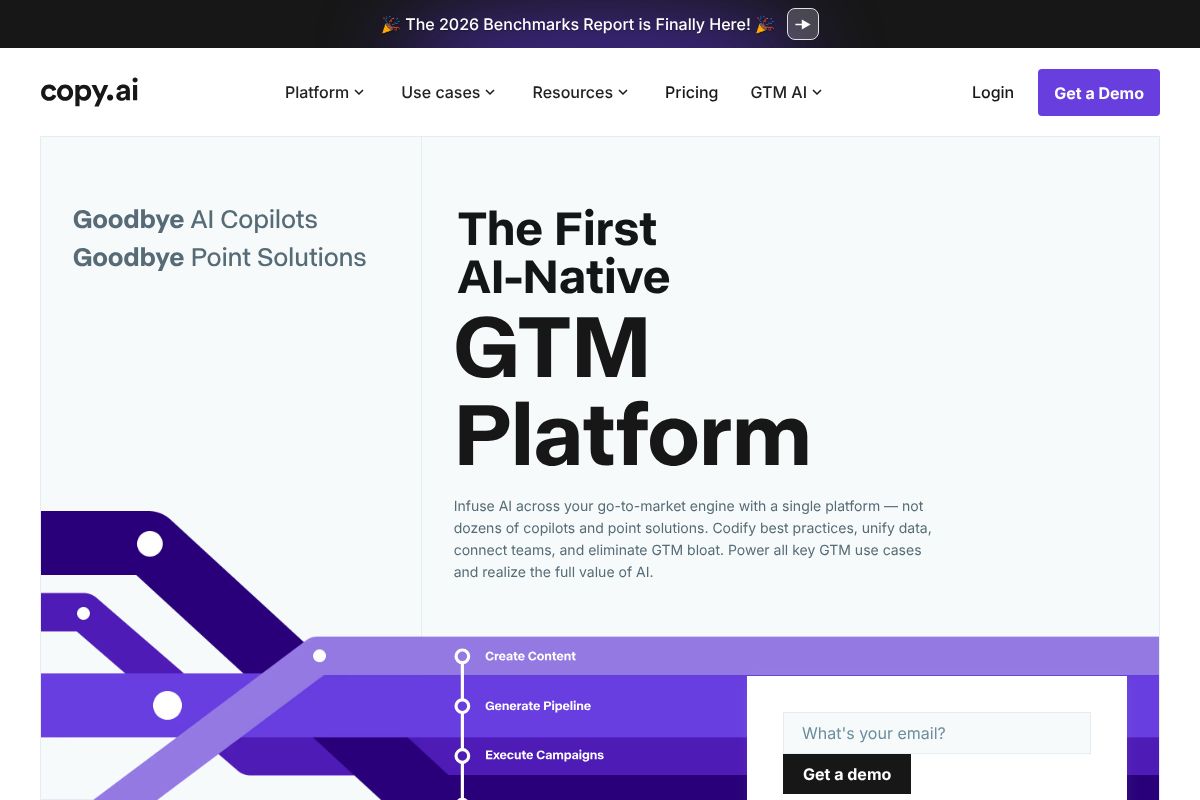
Copy.ai has evolved significantly and now positions itself as more than just a copy generator. The free Chat tier gives you a solid taste of the platform without committing a dollar — a genuinely useful way to test whether the tool fits your workflow before upgrading.
When you’re ready to scale, the Pro plan at $49/month unlocks unlimited words, more templates, and priority access. The standout 2026 addition is AI Agents — automated workflows that can research, draft, and publish content with minimal input from you. For a small business owner wearing five hats at once, that’s a meaningful time-saver.
- Free Chat tier available — no credit card required
- Pro plan at $49/month for unlimited output
- AI Agents for automated, multi-step content workflows
- Scales up to $249/month for larger teams and advanced automation
Best for: Small business owners and growing teams who want room to scale without switching tools.
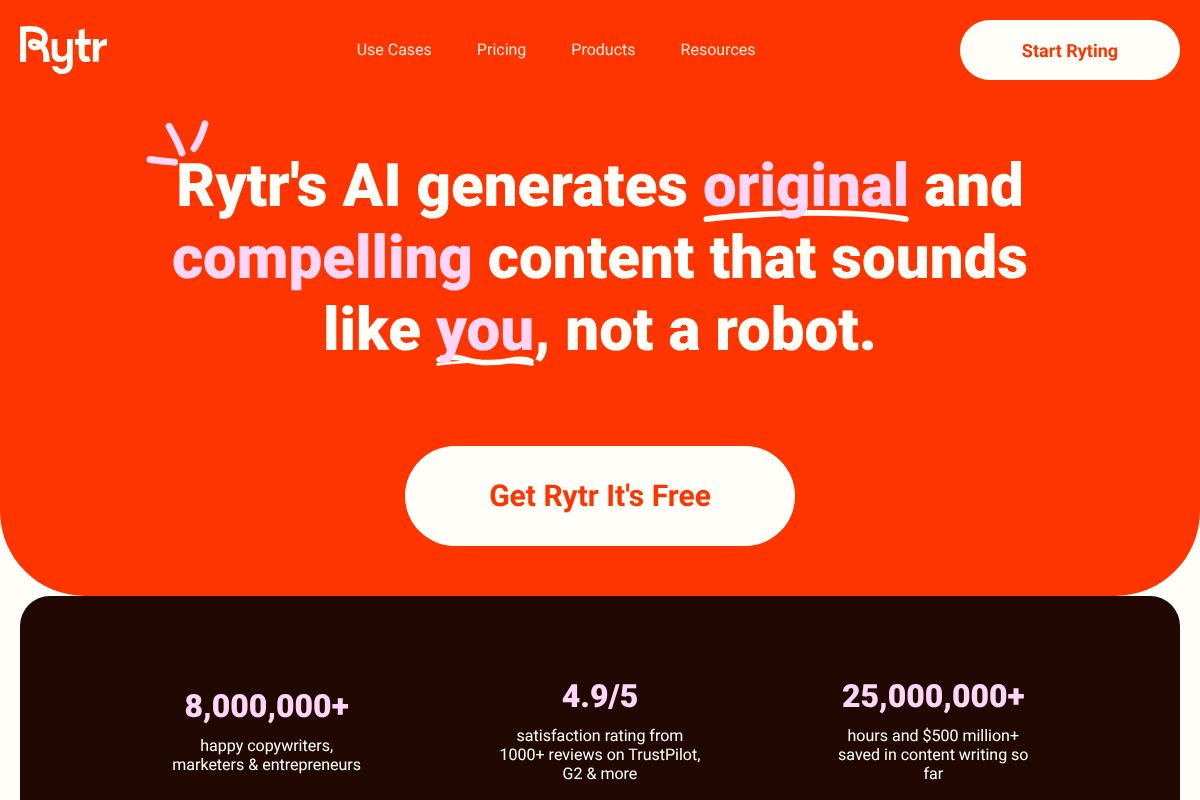
Rytr: Maximum Affordability
If your priority is getting started with as little financial risk as possible, Rytr is hard to beat. Its free plan includes a monthly credit allowance that’s genuinely usable — enough to write product descriptions, short emails, or social captions on a regular basis.
The paid plan tops out at just $29/month, making it the lowest barrier to entry of any serious AI writing tool in this guide. You get access to 40+ use cases, multiple tones, and a clean editor that beginners can navigate without a tutorial.
- Free plan with limited but real monthly credits
- Paid plan at $29/month — no complex tiers to decode
- 40+ content templates covering ads, emails, blogs, and more
- Simple interface ideal for first-time AI writing users
Rytr won’t replace a dedicated content strategist, but for freelancers or creators who need fast, affordable copy output, it punches well above its price point.
Best for: Freelancers, beginners, and budget-conscious creators who want reliable AI writing without a steep learning curve or monthly commitment.
Writesonic: Best for Bloggers & SEO-Focused Content
If organic search traffic is central to your content strategy, Writesonic deserves a serious look. Unlike general-purpose writing tools, it’s built with bloggers and content marketers specifically in mind — combining AI copy generation with features designed to help your content actually rank.
Plans run from $39/month up to $99/month, depending on output volume and feature access. That positions it in the mid-range of the market, but the SEO-specific capabilities help justify the cost if search visibility is your primary goal.
- Tiered pricing from $39–$99/month based on usage needs
- Long-form article and blog post generation built in
- Optimized for content creators focused on organic growth
- Clean, structured editor suitable for non-technical users
One thing worth noting: Writesonic offers a 30% recurring commission through its affiliate program, which has made it popular in the creator and marketing community — so you’ll see it recommended frequently. That said, the tool earns its reputation on features, not just promotion.
SEO Integration & Content Planning
Where Writesonic really pulls ahead is in its built-in SEO layer. Rather than writing content and then manually checking it against keyword targets, Writesonic weaves optimization recommendations directly into the content creation process.
You can input target keywords before you generate, and the tool structures headings, suggests related terms, and flags opportunities to improve search relevance as you write. It’s not a replacement for a dedicated SEO platform like Ahrefs or Semrush, but for bloggers who want a streamlined workflow without toggling between multiple tools, it removes a lot of friction.
- Keyword input before generation shapes content structure
- Related term suggestions improve topical coverage
- SEO scoring helps you gauge content strength before publishing
- Content planning features support editorial calendar workflows
Best for: Bloggers, content marketers, and anyone whose success depends on organic search performance rather than just fast copy output.
Feature & Pricing Comparison Table
Not sure which tool fits your workflow? This side-by-side breakdown cuts through the noise. Each tool has a distinct sweet spot — the goal here is to match the right one to your specific situation, budget, and skill level.
| Tool | Starting Price | Best For | Free Tier | Key Strength | Learning Curve |
|---|---|---|---|---|---|
| Jasper AI | $49/month | Marketing teams, brand-driven copy | No (7-day trial) | Brand voice consistency, templates | Moderate |
| Copy.ai | $49/month | Sales teams, GTM workflows | Yes (limited) | Automated GTM pipelines | Low–Moderate |
| Rytr | $9/month | Freelancers, solo creators on a budget | Yes (generous) | Affordability, ease of use | Very Low |
| Writesonic | $16/month | Bloggers, SEO-focused content marketers | Yes (limited) | Built-in SEO integration | Low |
How to Read This Table
Price alone shouldn’t drive your decision. A $9/month tool that slows your workflow costs more in lost time than a $49/month tool that gets it right the first time.
- Tight budget or just starting out? Rytr’s free tier lets you test the waters with zero commitment.
- Running a content-heavy blog? Writesonic’s SEO layer gives you a meaningful edge over plain text generators.
- Managing a brand with multiple contributors? Jasper AI’s voice controls are worth the premium.
- Building sales or outreach sequences? Copy.ai’s workflow automation is purpose-built for that use case.
The good news: three of these four tools offer a free tier or trial, so you can pressure-test your top pick before committing to a paid plan.
How to Choose: Questions to Ask Yourself
Before you commit to any tool, it helps to run through a few honest questions about your situation. The “best” AI writing tool is really just the one that fits your workflow, budget, and output goals — not the one with the longest feature list.
Here are the key questions worth asking before you spend a dollar.
- What’s your monthly budget for AI tools?
- Are you a solo creator or part of a team?
- How much content do you produce each month?
- Does brand voice consistency matter to your business?
- Is SEO performance a primary goal?
- How comfortable are you with slightly more complex tools?
Your answers will naturally filter out two or three options and point you toward one clear fit. There’s no need to overthink it — the trade-offs between tools are real, but so is the fact that most of these platforms are genuinely good at what they do.
Budget First
Budget is the most practical filter, so start here. If you’re spending under $30 a month, you don’t need to compromise much. Rytr’s paid plan sits at $9/month and covers a surprising amount of ground for solo creators and freelancers. Copy.ai’s free tier is also worth exploring — it’s generous enough to handle light, regular use without a subscription.
If your budget lands between $30 and $70 a month, you’re in a stronger position. Copy.ai Pro unlocks workflow automation that’s hard to replicate elsewhere, and Writesonic brings built-in SEO tools that justify the step up in price for content marketers.
Above $70 a month — especially if you’re managing a team — Jasper AI earns its price tag. Brand voice controls, multi-user access, and consistent output at scale are hard to put a number on when they’re saving you editing hours every week.
The honest trade-off: higher price tiers offer more control and consistency, but they’re overkill if you’re writing occasional social posts or a weekly newsletter solo.
The Verdict: Your Next Step
There’s no single best AI writing tool — and that’s actually good news. It means the right answer is the one that fits your workflow, budget, and goals, not someone else’s shortlist.
Here’s the quick summary to take with you:
- Jasper AI — Best for teams that need brand consistency and scale
- Copy.ai — Best for flexible, workflow-driven copy at a mid-range price
- Rytr — Best for solo creators and freelancers watching their budget
- Writesonic — Best for content marketers who want built-in SEO muscle
The smartest move right now? Start with the free tiers. Most of these tools offer enough access to get a genuine feel for the interface, output quality, and whether the writing style clicks with yours. A 20-minute test drive will tell you more than any review can.
If you’re ready to go deeper, try running the same brief through two or three tools side by side — same prompt, same goal, different outputs. The differences become obvious fast.
No pressure to commit today. Bookmark this guide, pick one tool that caught your attention, and give it a real task. That’s the only test that actually matters.
Frequently Asked Questions
What is the cheapest AI tool for writing copy?
Copy.ai and Rytr offer free tiers and affordable paid plans starting under $50/month, making them ideal for budget-conscious creators and startups testing AI copywriting before committing to premium solutions.
Can AI copywriting tools write SEO-optimized content?
Yes, Writesonic specializes in SEO-focused content generation with keyword optimization, meta descriptions, and blog post structuring built-in, helping creators rank higher in search results.
Which AI writing tool is best for marketing agencies?
Jasper AI is purpose-built for agencies with team collaboration features, brand voice templates, and multi-campaign management tools that streamline client work and maintain consistent messaging.
Do AI copywriting tools replace human writers?
AI copywriting tools accelerate content creation and overcome writer’s block, but human editing ensures brand authenticity, fact-checking, and strategic alignment that AI alone cannot guarantee.
Related Reads
- Best AI Writing Tools for Small Business in 2026
Find the best AI writing tools for small business owners in 2026. Compare features, pricing, and real-world benefits for…
- Jasper AI Review 2026: Is It Worth the Cost?
Honest Jasper AI review for 2026. See pricing, features, pros/cons, and how it compares to Copy.ai and Writesonic for co…
- Best Free AI Writing Tool for 2026: Top Picks Reviewed
Find the best free AI writing tool for your needs. Compare top options, features, and pricing in 2026. Perfect for creat…