If you’ve ever stared at a blank screen wondering how you’re going to produce another blog post, email sequence, or social media caption — you’re not alone. The demand for quality written content has never been higher, but time and creative energy don’t always cooperate. That’s exactly why so many creators, marketers, and business owners are turning to AI writing tools to close the gap.
Popularity isn’t a reliable guide to finding your AI writing partner—your workflow and specific needs are. This breakdown shows you exactly what each top contender does best and where it stumbles.
Key Takeaways
- Best AI writing tools in 2026 combine advanced language models with intuitive interfaces for professional content creation across industries.
- Pricing varies significantly between free trials and enterprise plans, requiring careful evaluation of your specific writing needs and budget.
- Top performers excel at different tasks: some dominate long-form content, others specialize in marketing copy or technical documentation.
- Key differentiators include customization options, integration capabilities, plagiarism detection, and real-time collaboration features for team workflows.
- Selecting the right tool depends on your use case, budget constraints, and whether you prioritize speed, creativity, or accuracy.
In This Article
What Counts as the Best AI for Writing?
Before diving into specific tools, it’s worth getting clear on what “best” actually means — because the answer looks different depending on who you are and what you’re trying to accomplish. A freelance copywriter juggling client briefs has very different needs than a small business owner trying to keep up with weekly blog posts or a marketer managing a content calendar across five channels.
That said, there are a few core criteria that matter across almost every use case:
- Accuracy and tone consistency: Does the tool produce content that’s factually grounded and reads like a human wrote it? Can it maintain a consistent voice across multiple pieces, or does every output feel like it came from a different writer?
- Speed and workflow integration: How quickly can you go from prompt to polished draft? And does the tool plug into the apps you already use — your CMS, email platform, or browser — or does it live in its own isolated silo?
- SEO capabilities: For anyone publishing online, the ability to optimize content around target keywords, structure headings correctly, and support on-page best practices is increasingly non-negotiable.
- Brand voice customization: Can the tool learn your style, or are you constantly editing outputs to sound less generic?
- Pricing-to-value ratio: A tool that costs $100/month needs to save you significantly more in time or resources to justify the spend.
Throughout this comparison, we’ll evaluate each tool against these benchmarks. No single platform wins across every category — and that’s the point. The goal is to help you identify which trade-offs you’re willing to make so you can choose the tool that fits your workflow, not just the one with the loudest marketing.
Key Features That Matter Most
Not all AI writing tools are built the same, and the gap between a good one and a great one often comes down to a handful of specific capabilities. Before we get into individual product comparisons, it’s worth understanding what features actually move the needle for creators and marketers in 2026 — and why.
Here are the must-have features worth evaluating in any AI writing tool:
- Real-time fact-checking: As AI-generated content becomes more prevalent, accuracy matters more than ever. Tools that can verify claims against live data sources help you avoid publishing embarrassing — or damaging — errors.
- Multi-language support: If you’re reaching global audiences or working with international clients, the ability to write fluently in multiple languages (not just translate) is a genuine differentiator.
- AI detection resistance: Many publishers, platforms, and clients now screen for AI-generated content. Tools that produce more natural, varied outputs help your content pass those checks without heavy manual editing.
- Template libraries: Pre-built frameworks for blog posts, email sequences, ad copy, and social content dramatically cut down on setup time and decision fatigue.
- Collaboration tools: For teams and agencies, the ability to share projects, leave comments, and manage multiple users in one workspace is increasingly essential.
- API access: If you want to embed AI writing capabilities into your own tools, workflows, or client portals, API availability is a hard requirement — not a nice-to-have.
- Custom brand voice training: The ability to feed a tool your existing content so it learns your specific tone, vocabulary, and style is what separates truly useful tools from glorified autocomplete.
Speed and Output Quality
In a professional setting, speed isn’t just a convenience — it’s a competitive advantage. The best tools in 2026 can generate a solid first draft in seconds, but raw speed means little if you’re spending an hour cleaning up the output. What you’re really evaluating is the total time from prompt to publish-ready content.
Look for tools that consistently produce well-structured, coherent drafts with minimal factual drift. The fewer revision cycles required, the more time you reclaim. A tool that’s slightly slower but delivers cleaner output will almost always outperform a faster one that requires heavy editing — especially at scale.
Brand Voice and Customization
Generic AI content is easy to spot, and audiences are getting better at tuning it out. The ability to train a tool on your existing content — your blog posts, email copy, brand guidelines — so it mirrors your actual voice is one of the most valuable capabilities available in 2026.
This goes beyond just selecting a tone like “professional” or “casual” from a dropdown. The strongest tools let you upload style guides, define vocabulary preferences, and lock in specific formatting rules so every output feels like you wrote it. For freelancers managing multiple clients, this customization per project or brand profile is especially critical to maintaining quality without constant manual correction.
Top AI Writing Tools for 2026
With dozens of AI writing tools competing for your attention, narrowing down the field can feel overwhelming. The three tools below consistently stand out for different reasons — and understanding what each does best will help you match the right tool to your specific workflow.
Jasper AI AI: Best for Marketing Teams
Jasper AI has cemented its position as the go-to choice for marketing teams that need to produce high volumes of on-brand content without sacrificing consistency. If you’re managing campaigns across multiple channels, it’s built with that complexity in mind.
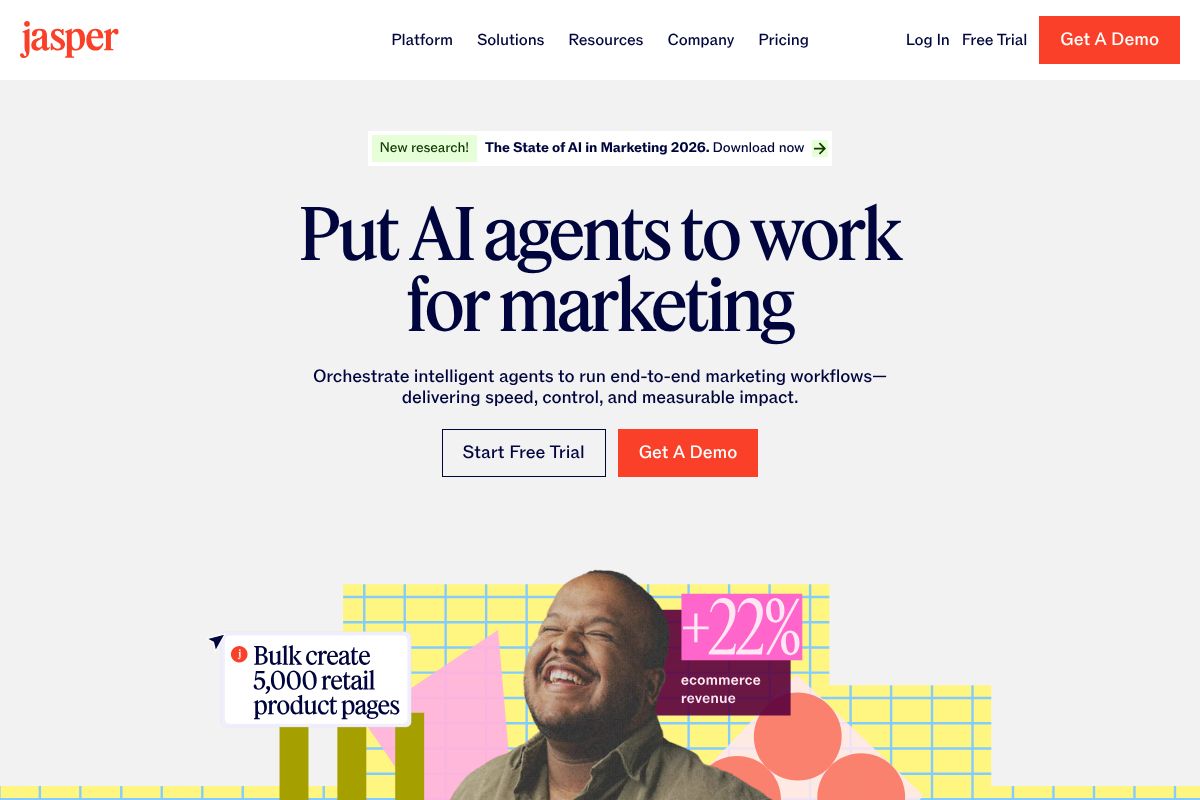
- Brand Voice training: Upload your existing content and style guides so every output sounds like your brand, not a generic AI
- Marketing-specific templates: Dozens of pre-built frameworks for ads, landing pages, email sequences, and social copy
- Team collaboration tools: Shared workspaces, user permissions, and campaign organization — ideal for agencies on the Teams plan
- High-volume output: Handles large content operations without a drop in quality or consistency
Jasper AI is best suited for marketing professionals, content teams, and agencies managing multiple clients. Pricing scales with usage, and the Teams plan is worth a look if you’re running an agency. Jasper also offers a 30% recurring affiliate commission, making it a popular recommendation in the creator community.
Copy.ai: Best for Starting Free
Copy.ai is the most accessible entry point in this roundup, offering a genuinely useful free tier that lets you explore AI-assisted writing without committing to a subscription. It’s a smart starting point if you’re new to AI tools and want to test the waters.
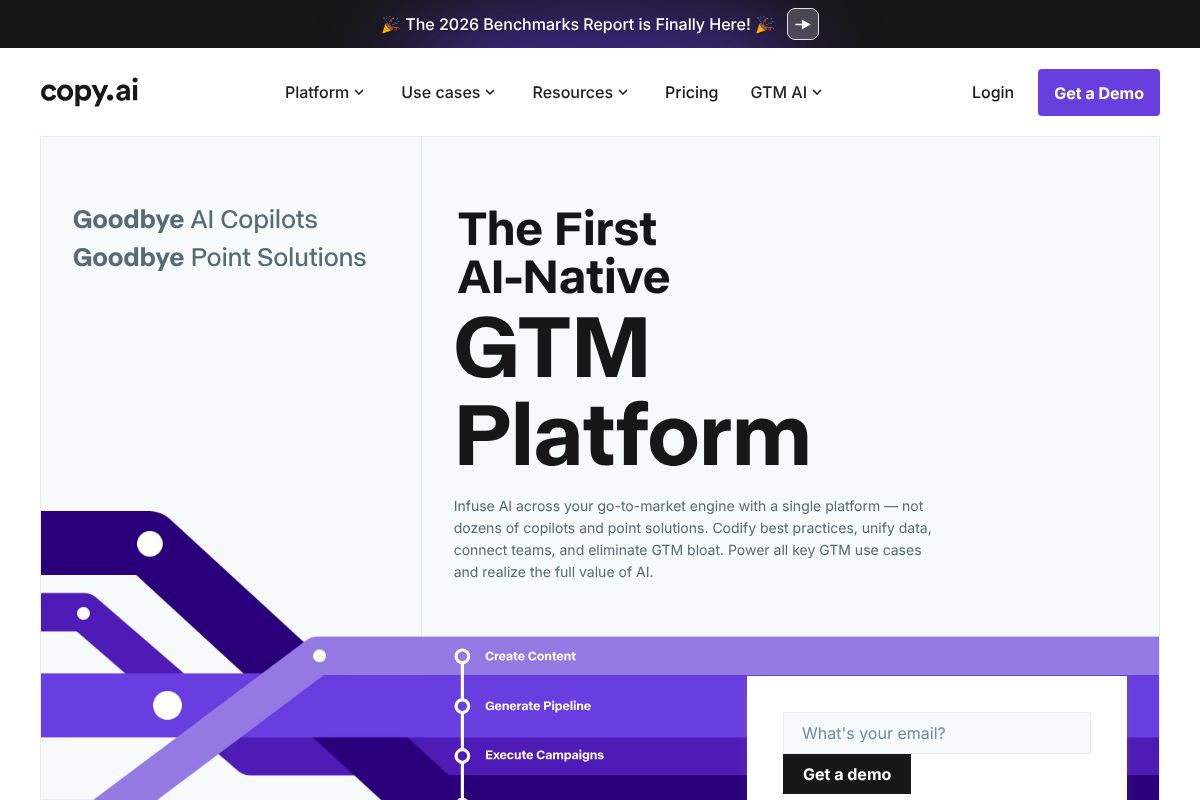
- Free tier available: Get real work done without pulling out your credit card
- Intuitive Chat interface: Feels familiar — like talking to a knowledgeable writing assistant
- Pro upgrade path: Unlocks unlimited runs and more advanced workflows when you’re ready to scale
- Solo creator-friendly: Minimal learning curve, clean interface, no technical setup required
Copy.ai works especially well for freelancers, solopreneurs, and anyone just getting started with AI writing. It’s not the most feature-rich option, but its simplicity is genuinely a strength. Copy.ai offers a 30% recurring commission through its affiliate program.
Writesonic: Best for SEO-Driven Content
Writesonic is the strongest pick in this group if search visibility is a core part of your content strategy. It integrates SEO tools directly into the writing workflow, so you’re not constantly switching between platforms.
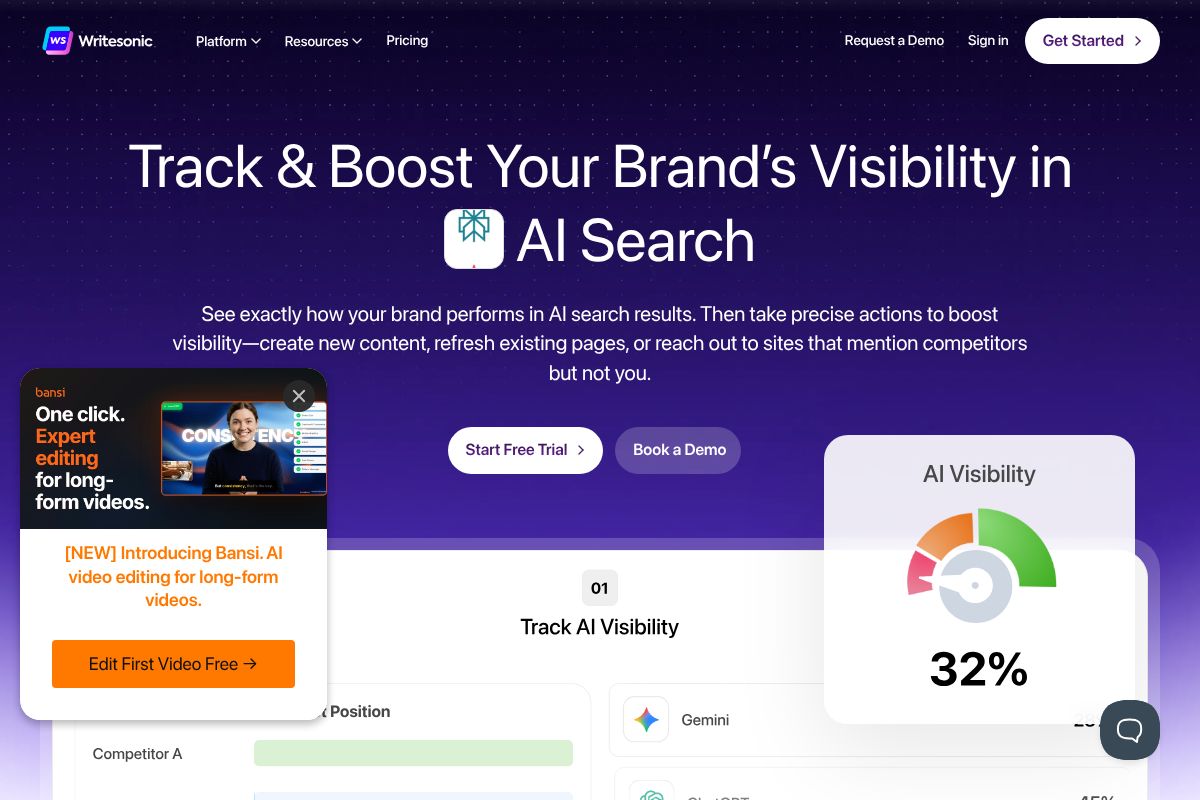
- Built-in SEO optimization: Keyword suggestions and on-page guidance baked into the editor
- Blogger-friendly interface: Designed for long-form content like articles, blog posts, and landing pages
- Flexible pricing: Choose between annual and monthly billing to match your budget and commitment level
- Search-focused templates: Structured around content formats that perform well in organic search
Writesonic is a natural fit for bloggers, content marketers, and small business owners focused on growing organic traffic. Its 30% recurring affiliate commission makes it a frequently recommended option among SEO-focused creators. Full pricing details are covered in the section below.
Pricing Breakdown: What You’ll Actually Pay
Understanding what each tool actually costs — and what you get for that cost — can save you from a frustrating surprise on your first billing cycle. Here’s a clear side-by-side look at how these four tools stack up on price.
| Tool | Free Tier | Entry Plan | Mid Tier | Top Tier |
|---|---|---|---|---|
| Jasper AI | No | $49/mo (Creator) | $69/mo (Pro) | $125/mo (Teams) |
| Copy.ai | Yes (limited) | Paid from ~$49/mo | ~$249/mo (Teams) | Custom (Enterprise) |
| Writesonic | Trial only | $39/mo | $99/mo | Custom (Enterprise) |
| Rytr | Yes (10K chars/mo) | $9/mo (Saver) | $29/mo (Unlimited) | — |
One thing to watch: some tools charge extra for add-ons like plagiarism checking, API access, or additional user seats. Always review what’s included at your specific tier before committing.
Budget-Friendly Options
If you’re just testing the waters, Rytr and Copy.ai are the most accessible starting points. Rytr’s free tier gives you 10,000 characters per month — enough to evaluate whether AI writing fits your workflow before spending a dollar. Its $29/mo Unlimited plan is one of the most affordable no-cap options on the market. Copy.ai also offers a free tier with limited runs, making it easy to explore without commitment. For solo creators or freelancers on a tight budget, either of these tools delivers real value without a steep upfront investment.
Premium Plans Worth the Investment
For agencies, growing teams, or content-heavy businesses, upgrading to a premium tier pays off quickly. Jasper AI’s Teams plan at $125/mo unlocks collaboration features, brand voice controls, and multi-user access — tools that genuinely reduce back-and-forth on content projects. Writesonic’s higher-tier plans make sense if SEO content is your primary revenue driver, since the built-in optimization features can replace separate tools you’re already paying for. If you’re producing content at volume and billing clients for it, the ROI on a $69–$125/mo plan becomes obvious within the first few weeks.
Pros and Cons: Honest Trade-Offs
No AI writing tool is a silver bullet. The best ones genuinely save time and spark ideas — but they also have real limitations that can catch you off guard if you’re not prepared. Here’s an honest look at both sides of the equation.
Where AI Writing Tools Excel
The biggest wins are speed and volume. What might take you two hours to draft — a blog post, a product description, a week’s worth of social captions — an AI tool can produce in minutes. That’s not hype; it’s a genuine workflow shift for creators and marketers juggling multiple projects.
- Rapid ideation: Stuck on an angle or headline? AI generates dozens of options in seconds, giving your creative process a jumpstart.
- Content repurposing: Turn a long-form article into email snippets, social posts, and ad copy without starting from scratch.
- Multilingual content: Most leading tools support 20+ languages, making global content far more accessible for small teams.
- 24/7 availability: No waiting on a contractor or colleague — you can produce a first draft at midnight if that’s when inspiration hits.
- Cost reduction: Even a mid-tier plan often costs less than a single hour of professional copywriting.
For high-volume, deadline-driven work, these tools deliver consistent, measurable time savings.
Where They Fall Short
AI writing tools are pattern-matching engines, not subject-matter experts. They can — and do — confidently state inaccurate information. Hallucinations (fabricated facts, fake statistics, misattributed quotes) are a real risk, especially with tools that don’t cite sources. You should always fact-check any output before publishing.
- Nuance and tone: Capturing a distinctive brand voice consistently requires heavy editing, even with voice-training features.
- Original research: AI can’t interview sources, analyze proprietary data, or offer genuine expert insight.
- Deep expertise: In specialized fields — legal, medical, technical — output often sounds plausible but lacks accuracy.
- Output consistency: The same prompt can produce noticeably different results on different days.
- Learning curve: Getting quality output reliably requires prompt-writing skill that takes time to develop.
Think of these tools as a capable first-draft assistant — not a replacement for human judgment, editing, or expertise.
Who Should Use Which Tool?
Not every AI writing tool is built for the same person. The best fit depends on how you work, what you’re creating, and how much you’re willing to spend. Here’s a quick breakdown to help you self-identify before diving into the full reviews.
If you’re a content creator focused on SEO, Writesonic’s built-in keyword optimization and article generation workflows are hard to beat. If you’re just getting started and want something low-commitment, Rytr’s free tier is one of the most accessible entry points in the market — limited, but genuinely useful for short-form content.
For Agencies and Marketing Teams
Jasper AI is the clear frontrunner for teams producing content at scale. Its Brand Voice feature lets you train the tool on your existing content, so every piece — whether written by you or a colleague — stays on-brand. Collaboration features, campaign workflows, and role-based access make it practical for multi-person teams. If your agency manages content for multiple clients, Jasper’s ability to store separate brand profiles is a genuine operational advantage. The higher price point is easier to justify when output volume is high and consistency is non-negotiable.
For Solo Creators and Freelancers
If you’re working independently, Copy.ai and Writesonic offer the best balance of flexibility and affordability. Copy.ai’s workflow builder suits freelancers who need to produce varied content types quickly — social posts, emails, product descriptions — without switching tools. Writesonic edges ahead if SEO-driven blog content is your primary output. Both offer plans that make sense on a solo budget, and neither requires a steep learning curve to get useful results from day one.
The bottom line: match the tool to your workflow, not the other way around.
The Verdict: Your Next Step
There’s no single best AI writing tool in 2026 — there’s only the best one for you. Your goals, budget, and daily workflow matter more than any feature comparison chart. A solo blogger optimizing for SEO has different needs than a marketing team cranking out campaign copy across five clients.
What is true across the board: these tools are mature enough for real production use. The quality gap between AI-assisted writing and fully manual drafting has narrowed significantly. If you haven’t revisited these platforms recently, you may be underestimating what they can do today.
Here’s the most practical advice: don’t commit to a paid plan before you’ve tested at least two or three tools. Start with the free tiers — Copy.ai and Rytr both offer no-credit-card entry points that give you a genuine feel for the experience. Use them on real projects, not toy examples.
As you test, track three things:
- Time saved — How much faster are you producing first drafts?
- Output quality — How much editing does the content actually need?
- Workflow fit — Does the tool slot into how you already work, or does it create friction?
After two to three weeks of honest use, the right tool usually becomes obvious. Then commit — consistency with one platform builds familiarity that compounds over time. The writers and marketers getting the most out of AI in 2026 aren’t tool-hopping. They’ve picked their stack and gotten good at it.
Start free. Test seriously. Then go all in on what actually works for your output.
Frequently Asked Questions
Which AI writing tool is best for beginners in 2026?
Tools with free tiers and simple interfaces work best for beginners. Look for platforms offering templates, guided workflows, and minimal learning curves to start generating quality content immediately without technical expertise.
Can AI writing tools detect plagiarism automatically?
Many top AI writing tools now include built-in plagiarism detection powered by advanced scanning algorithms. This feature checks your content against billions of web pages and academic databases to ensure originality and authenticity.
What’s the difference between ChatGPT and specialized AI writing software?
ChatGPT excels at conversational tasks, while specialized writing tools offer industry-specific templates, SEO optimization, tone customization, and workflow features designed for professional content creation at scale.
Is it worth paying for premium AI writing tools or use free versions?
Premium versions offer advanced features like unlimited word counts, priority support, and specialized tools for SEO or brand voice consistency. Free versions suit casual users; professionals typically need paid plans for production-level work.
Related Reads
- Best AI Writing Tools for Social Media in 2026
Find the best AI writing tools for social media. Compare features, pricing, and performance for creators and marketers i…
- Jasper vs Writesonic: Which AI Writer Wins in 2026?
Compare Jasper vs Writesonic in 2026. See pricing, features, and which AI writing tool fits your content needs best.…
- Best AI Writing Tools for Small Business in 2026
Find the best AI writing tools for small business owners in 2026. Compare features, pricing, and real-world benefits for…