If you’ve ever stared at a blank screen wondering how to turn a vague topic idea into a polished, publish-ready blog post, you’re not alone. The good news? AI writing tools have gotten remarkably good — and in 2026, the real question isn’t whether to use one, it’s which AI is best for blog posts given your specific workflow, budget, and goals.
The problem is that the market is crowded. Dozens of tools claim to be the best, but they’re built for very different use cases. Some excel at long-form SEO content, others shine for speed and simplicity, and a few are genuinely better left for other tasks entirely.
The right AI blogging tool depends entirely on what slows you down: blank-page paralysis, research time, or editing cycles. Here’s an honest comparison of the tools that actually address each bottleneck.
Key Takeaways
- Different AI blog tools excel at different tasks; choosing the best depends on your specific writing needs and budget constraints.
- Top 2026 AI blog writers combine advanced language models with user-friendly interfaces, SEO optimization, and affordable pricing tiers.
- Key features distinguishing premium AI tools include customizable tone, fact-checking capabilities, plagiarism detection, and multi-language support.
- Most AI blog platforms offer free trials or freemium versions, allowing writers to test functionality before committing financially.
- Successful blog writers pair AI tools with human editing to ensure brand voice consistency, accuracy, and authentic audience engagement.
In This Article
What Makes an AI Tool Great for Blog Writing?
Not all AI writing tools are created equal — and that gap becomes very obvious when you’re trying to produce blog content consistently. A tool that’s great for drafting emails or summarizing documents might completely fall apart when you need a 1,500-word post with a clear structure, a natural tone, and keywords woven in thoughtfully.
When evaluating AI tools specifically for blog writing, five criteria stand out as the most important:
- SEO optimization: Can the tool help you target keywords, structure headers correctly, and write meta descriptions — or does it ignore search intent entirely?
- Tone consistency: Does the output sound like a coherent voice throughout, or does it drift between formal and casual mid-article?
- Research capabilities: Can it pull in accurate, current information, or will you spend more time fact-checking than writing?
- Speed: How quickly can it take you from a topic idea to a full draft you can actually work with?
- Ease of use: Is the interface built for writers, or does it feel like it was designed for engineers?
These aren’t just nice-to-haves. For creators publishing regularly, each of these factors directly affects how much time you save — and how much editing you’re stuck doing afterward.
Why Blog-Specific Features Matter
General-purpose AI tools like base-level chatbots are impressive, but they weren’t designed with the blogging workflow in mind. They’ll give you words, but they won’t think about keyword placement, internal linking opportunities, or whether your introduction actually hooks a reader who found you through search.
Blog-focused AI tools solve for these gaps directly. They typically include built-in SEO guidance, long-form document editors, and content templates structured around how blog posts actually work — introduction, body sections, conclusion, and call to action. For creators who publish multiple times a week, that difference in structure and intent can save hours of reformatting and rewriting every single time.
Top AI Tools for Blog Posts in 2026
With dozens of AI writing tools on the market, narrowing down the right one for blogging specifically comes down to what you actually need day-to-day. Some tools are built around SEO and search visibility. Others prioritize brand consistency across a team. And some are designed to get you writing as fast as possible with minimal setup.
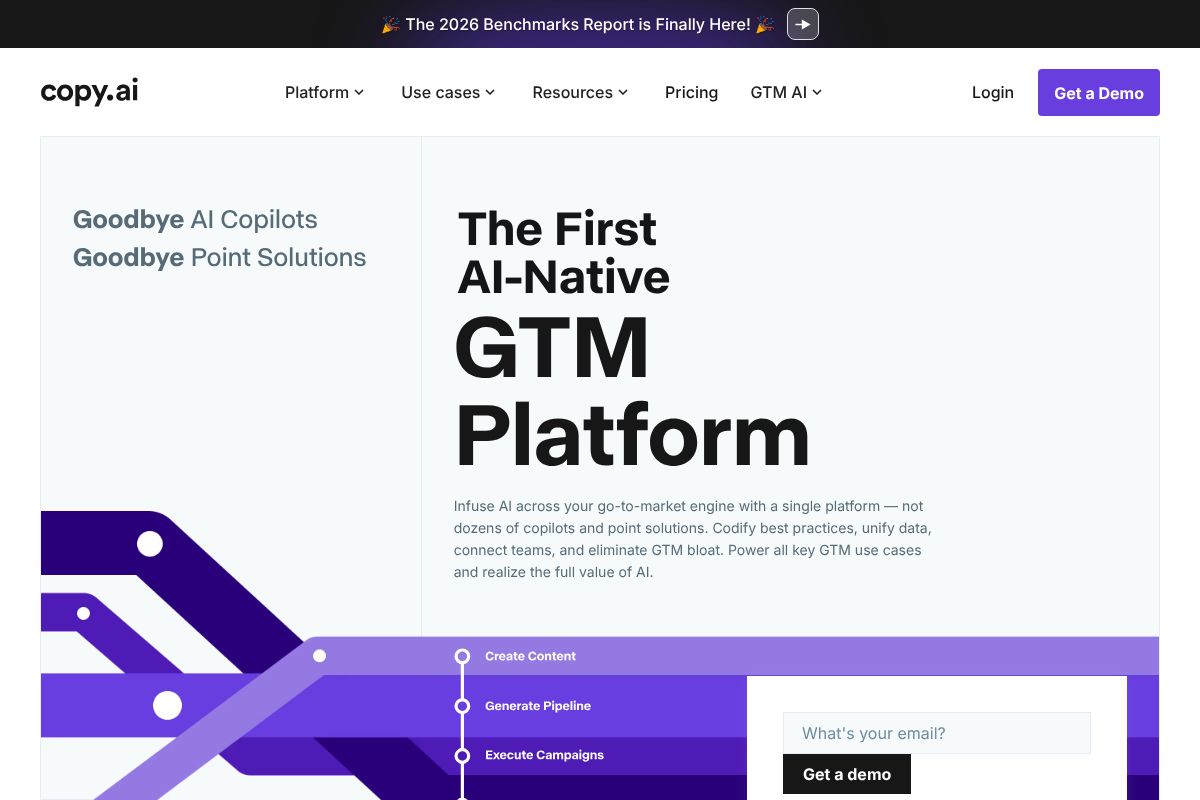
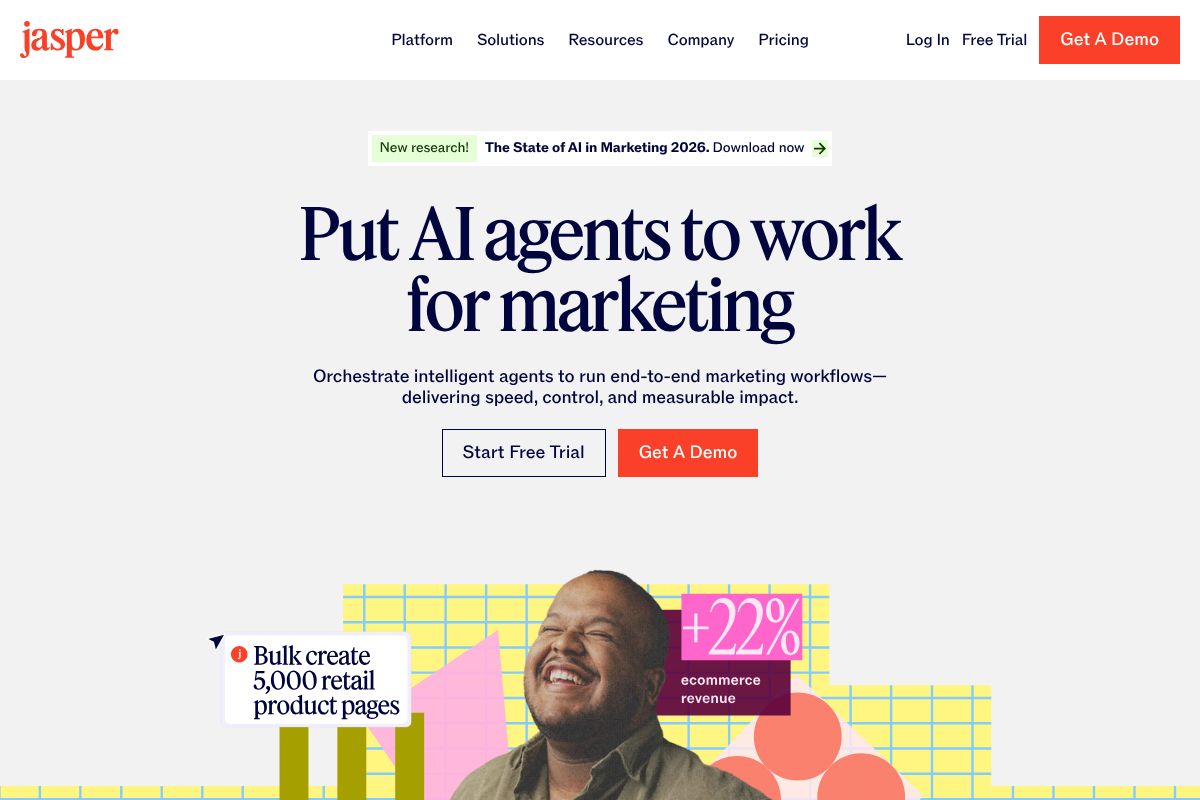
The three tools covered in this guide — Writesonic, Jasper AI AI, and Copy.ai — each take a different approach to the blogging workflow. Here’s a quick look at what makes each one worth considering, before we get into the deeper comparisons.

Writesonic: Built for SEO-Driven Bloggers
If your primary goal is ranking on Google, Writesonic is designed with that outcome in mind. It integrates keyword research and on-page SEO guidance directly into the writing process, so you’re not toggling between a separate tool and your draft just to hit the right terms.
Writesonic’s long-form editor lets you build out full blog posts with structure and search intent already baked in. Key features include:
- Built-in keyword integration and SEO scoring
- AI Article Writer optimized for search visibility
- Real-time web research to keep content current
- SERP-based content briefs
Pricing runs from $39 to $99 per month depending on your usage tier. For bloggers who treat content as a traffic channel, it’s one of the more focused options available.
Jasper AI: For High-Volume Content Teams
Jasper AI has built its reputation around brand voice consistency — something that matters enormously when multiple writers or team members are producing content under the same name. You can train Jasper on your brand’s tone, style guidelines, and terminology so output stays recognizable regardless of who’s using it.
It also comes with a strong library of marketing-focused templates purpose-built for blog workflows. Standout features include:
- Custom brand voice training
- Team collaboration tools and shared workspaces
- Marketing-specific content templates
- Integrations with SEO tools like Surfer SEO
Individual plans run $49 to $69 per month, while the Teams plan comes in at $125 per month. It’s best suited for agencies, in-house marketing teams, or any operation where content consistency at scale is a real priority.
Key Features to Look For
Not every AI writing tool is built with bloggers in mind. Some are designed for short-form copy, others for internal documents or code. When you’re evaluating options specifically for blog content, a handful of features separate genuinely useful tools from ones that just sound impressive on a landing page.
Here’s what actually moves the needle for bloggers and content creators:
- SEO optimization and keyword integration — helps your content rank, not just read well
- Tone and voice control — keeps your brand recognizable across every post
- Research integration — pulls in current, accurate information so you’re not working from stale data
- Outline generation — gives your posts structure before you start writing, saving significant time
- Plagiarism checking — protects your credibility and your site’s standing with search engines
- Revision and editing tools — lets you refine drafts without jumping between multiple apps
- Export options — makes it easy to move content into WordPress, Google Docs, or your CMS of choice
The best tools handle most of these within a single workflow. The more you can do in one place, the less time you spend context-switching and the more time you spend actually publishing.
SEO and Keyword Integration
An AI tool that writes beautifully but ignores search intent isn’t doing you many favors if organic traffic is part of your strategy. The strongest tools go beyond simple keyword insertion — they help you understand what a searcher actually wants to find, then structure your content to deliver it. Look for features like keyword density guidance, meta description generation, and SERP-aware content briefs. These details directly influence whether your posts show up in search results or get buried on page four.
Brand Voice and Consistency
If you’re publishing regularly, consistency isn’t optional — it’s how you build authority and reader trust over time. The better AI tools let you define your tone, set style preferences, and even upload examples of your existing writing so the output actually sounds like you. This matters especially if you’re managing multiple contributors or delegating content to a team. Without voice controls in place, AI-generated posts can start to feel generic fast, which erodes the personality that makes your blog worth reading in the first place.
Pricing and Value Comparison
Price tags alone don’t tell the whole story. A $99/month tool that saves you 20 hours of work per month is a bargain. A free tool that produces content you have to rewrite from scratch isn’t saving you anything. Here’s how the three leading options stack up — and more importantly, what you actually get for your money.
| Tool | Plan | Monthly Cost | What You Get | Best For |
|---|---|---|---|---|
| Copy.ai | Free | $0 | Limited monthly credits, core templates, 1 seat | Beginners testing AI writing |
| Copy.ai | Starter | $49/month | Unlimited words, priority support, brand voice | Solo creators publishing consistently |
| Copy.ai | Advanced | $249/month | Team seats, workflow automation, API access | Agencies and content teams |
| Writesonic | Individual | $39/month | AI Article Writer, SEO integrations, Chatsonic | Bloggers focused on SEO content |
| Writesonic | Professional | $99/month | Higher word limits, brand voice, priority queue | High-volume creators and marketers |
| Jasper AI | Creator | $49/month | 1 seat, unlimited words, SEO mode, browser extension | Individual content professionals |
| Jasper AI | Pro | $69/month | 3 seats, brand voice profiles, campaign tools | Small teams and freelancers with clients |
| Jasper AI | Teams | $125/month | Collaboration features, advanced analytics, custom workflows | Content agencies and marketing departments |
It’s also worth noting that all three tools offer 30% recurring affiliate commissions — which tells you something about how confident they are in long-term customer retention. These aren’t tools people tend to cancel quickly.
Free vs. Paid: Where to Start
If you’re brand new to AI writing tools, Copy.ai’s free tier is the most sensible starting point. You get access to core templates and enough output to understand whether AI-assisted writing fits your process — without committing a dollar. For casual bloggers publishing once or twice a month, the free plan might honestly be enough.
That said, free tiers have real limits. You’ll hit credit caps quickly if you’re producing longer posts, and features like brand voice, SEO guidance, and workflow automation are locked behind paid plans. Ask yourself a simple question: Am I publishing often enough that these limitations slow me down? If the answer is yes — even occasionally — a paid plan pays for itself fast.
- Free is enough if: You publish infrequently, you’re still experimenting, or you just need short-form content help
- Paid is worth it if: You publish weekly or more, SEO matters to your strategy, or you need consistent brand voice across posts
ROI for Content Creators
Here’s a practical way to think about cost: if your time is worth $50/hour and a good AI tool saves you three hours per blog post, that’s $150 in recovered time — per post. At $39–$69/month, most of these tools pay for themselves with a single article.
A more useful question than “can I afford this?” is: how many posts per month do I need to publish for this to break even? For most creators, the answer is one or two. If you’re targeting consistent organic traffic, you’re almost certainly publishing more than that — which means the ROI case is straightforward.
Pros and Cons: Honest Trade-Offs
AI writing tools have come a long way, but they’re not magic. The best results come from understanding what these tools genuinely do well — and where they still fall short. Being clear-eyed about both will save you frustration and help you get more out of whatever tool you choose.
When AI Blog Writing Shines
There are specific scenarios where AI doesn’t just help — it genuinely transforms your workflow. If you’ve ever stared at a blank document for twenty minutes, you already know the value of having a solid first draft appear in seconds.
- Breaking writer’s block: Even a rough AI-generated outline gives you something to react to, which is far easier than starting from nothing
- First drafts at speed: A 1,500-word draft in under two minutes means you spend your energy editing and refining, not generating
- Batch content creation: Need ten blog posts this month? AI makes that workload manageable for a solo creator or small team
- Repurposing existing content: Turn a podcast transcript, webinar, or long-form guide into a polished blog post without starting from scratch
- Consistent structure: AI keeps your intros, subheadings, and CTAs structured — especially useful when you’re publishing at volume
For high-output creators and marketers, these wins are real and repeatable.
Where You’ll Still Need a Human Touch
AI is a capable assistant, not a replacement for your expertise. There are areas where leaning too heavily on it will show — and cost you credibility.
- Fact-checking: AI can confidently state outdated or incorrect information. Always verify statistics, quotes, and claims independently
- Unique insights and opinions: Your personal experience and perspective are what make readers return. AI can’t replicate that authentically
- Niche expertise: The deeper and more specialized your topic, the more likely AI outputs will feel generic or miss the mark
- Brand storytelling: Your brand’s voice, history, and values need human shaping — AI can approximate, but rarely nails it without significant guidance
Think of AI as a talented first-draft writer who needs a knowledgeable editor. You are still the expert in the room.
Who Should Use Which Tool?
Not every AI writing tool is built for the same person or workflow. The best way to choose is to match the tool to how you actually work — your budget, your output goals, and how much time you’re willing to spend learning a new platform. Here’s a quick breakdown by reader type.
Solo Creators and Freelancers
If you’re running a blog on your own or juggling multiple client projects, flexibility and cost matter most. Copy.ai is a strong starting point — its free tier lets you test the waters before committing, and paid plans scale affordably as your workload grows. If SEO is central to your strategy and you want built-in optimization tools alongside your content generation, Writesonic gives you more firepower without a steep learning curve. Either way, both tools are designed to save you time without requiring a technical background.
- Best for budget-conscious beginners: Copy.ai (start free, upgrade when ready)
- Best for SEO-focused solo bloggers: Writesonic
Small Business Owners
Your priority is probably consistency — publishing regularly without it consuming your whole week. Writesonic is worth considering if search visibility is a core part of your growth strategy, since its SEO-focused features help your posts rank without hiring a specialist. If you’re more focused on general content output and want a straightforward, affordable upgrade, Copy.ai Pro delivers solid results across blog posts, social captions, and email copy in one place.
- SEO-driven growth: Writesonic
- All-around content consistency on a budget: Copy.ai Pro
Quick Comparison Table
Not sure where to start? This table gives you a fast, side-by-side look at the four tools covered in this guide. Use it to narrow down your options before diving into the details.
| Tool | Best For | Starting Price | Key Strength |
|---|---|---|---|
| Writesonic | SEO-focused bloggers and small businesses | Free plan available; paid plans from ~$16/month | Built-in SEO tools and long-form content generation |
| Jasper AI | Marketing teams and professional content creators | From ~$49/month | Brand voice consistency and advanced workflow features |
| Copy.ai | Solo creators and freelancers | Free tier available; Pro from ~$49/month | Flexible templates and an accessible free starting point |
| Rytr | Budget-conscious beginners | Free plan; paid from ~$9/month | Low cost with surprisingly capable output for basic blog content |
Keep in mind that pricing can shift with promotions or plan updates, so it’s worth checking each tool’s website directly before committing. The tiers listed here reflect standard monthly billing as of 2026.
The Verdict: Choose Your Best AI Blog Partner
There’s no single “best” AI writing tool — only the best one for your specific situation. The right choice comes down to what you’re optimizing for: search rankings, team collaboration, budget, or simply getting started without friction.
Here’s a quick decision framework to cut through the noise:
- SEO is your top priority? Writesonic gives you the most built-in optimization muscle, making it the strongest pick for bloggers chasing organic traffic.
- You’re managing a content team? Jasper AI’s brand voice controls and workflow features make it worth the higher price tag for agencies and marketing departments.
- You’re just starting out? Copy.ai’s free tier and intuitive templates let you learn the ropes without spending a dollar upfront.
- Budget is tight? Rytr delivers solid results for basic blog content at a price that’s hard to argue with.
The honest truth is that all four tools are capable enough to improve your content output. What separates them is fit — not quality alone. A tool you actually enjoy using will always outperform the “objectively best” option that frustrates you every session.
Next Steps: Getting Started
The lowest-risk move you can make right now is to sign up for a free tier and run one real test post. Don’t just click around the dashboard — actually write something you’d publish. That single hands-on session will tell you more than any review can.
- Pick the tool that matches your priority from the framework above.
- Sign up for the free plan or trial — no credit card required on most.
- Write a full blog introduction and one section using the AI.
- Compare the output to what you’d normally produce on your own.
If it saves you time and the quality holds up, you’ve found your tool. If it doesn’t click, move to the next option on your shortlist. Most of these platforms offer enough on the free tier to make a confident decision before spending anything.
Start writing smarter, not harder — your next blog post is one free sign-up away.
Frequently Asked Questions
What is the best free AI tool for writing blog posts?
Several AI tools offer robust free tiers in 2026, including ChatGPT’s free version and Jasper’s limited plan. Free versions typically provide basic writing assistance, though premium features like advanced SEO optimization and plagiarism detection require paid subscriptions.
Can AI write entire blog posts automatically?
Yes, modern AI tools can generate complete blog posts from outlines or prompts. However, human review remains essential for fact-checking, brand voice consistency, and ensuring content meets your specific audience needs and editorial standards.
Which AI is fastest for generating blog content?
GPT-4 based tools and specialized platforms like Copy.ai deliver blog drafts in seconds. Speed varies by content length and complexity, but most premium AI writers produce 1000-word posts within 2-5 minutes of processing.
Do AI blog writing tools help with SEO optimization?
Leading AI blog tools include built-in SEO features like keyword integration, meta description generation, and readability analysis. Tools like Surfer AI and Jasper specifically optimize content for search rankings while maintaining natural, engaging writing quality.
Related Reads
- Best AI Writing Tools for Social Media in 2026
Find the best AI writing tools for social media. Compare features, pricing, and performance for creators and marketers i…
- Best AI for Writing in 2026: Top Tools Compared
Find the best AI writing tool for your needs in 2026. Compare features, pricing, and performance across top platforms.…
- Jasper vs Writesonic: Which AI Writer Wins in 2026?
Compare Jasper vs Writesonic in 2026. See pricing, features, and which AI writing tool fits your content needs best.…