If you’ve ever stared at a blank page wondering why your content isn’t ranking — despite putting in the hours — you’re not alone. SEO has gotten more competitive, more technical, and frankly more exhausting than ever. The good news? The best AI tools for SEO in 2026 are leveling the playing field for creators, marketers, and small business owners who don’t have a dedicated SEO team backing them up.
Keyword research, real-time content optimization, competitive analysis, and strategy building are all possible without a technical background — here are the AI tools that actually deliver on that promise.
Key Takeaways
- AI SEO tools automate keyword research, content optimization, and performance tracking, saving creators hours of manual work monthly.
- The best AI SEO tool depends on your specific needs: content creation, technical SEO, rank tracking, or comprehensive all-in-one solutions.
- Modern AI SEO platforms use machine learning to identify search intent patterns and optimize content for both users and search algorithms.
- Pricing varies significantly from free tiers to enterprise plans; ROI depends on implementation strategy and how actively you use features.
- Top performers in 2026 combine natural language processing with real-time SERP data to deliver competitive advantages over traditional SEO tools.
In This Article
Why AI-Powered SEO Tools Matter in 2026
SEO used to be a game where the biggest budgets and the largest teams almost always won. That’s changed. AI has fundamentally shifted what’s possible for a solo creator or small business owner working with limited time and resources — and the gap between “doing SEO manually” and “using AI to do it smarter” has never been wider.
Think about what traditional keyword research actually looks like: hours of spreadsheet work, cross-referencing search volumes, guessing at competitor strategies, and still not being sure if your content will land. AI tools now compress that process into minutes. You get data-backed keyword suggestions, content briefs, optimization scores, and competitive insights — all without needing to interpret a single line of code or dig through a 40-tab spreadsheet.
The time savings alone are significant. But the real advantage is strategic clarity. Instead of publishing content and hoping for the best, you’re making decisions based on what’s actually working in your niche right now. That’s a meaningful edge, especially in crowded markets.
Here’s what modern AI SEO tools are handling that used to require either deep expertise or a full agency:
- Keyword research — surfacing high-opportunity, low-competition terms tailored to your content goals
- Content optimization — real-time suggestions to improve relevance, readability, and topical depth
- Competitor analysis — understanding what’s ranking and why, without manual digging
- Content briefs and outlines — giving you a roadmap before you write a single word
The bottom line: you don’t need to become an SEO expert to compete like one. You just need the right tools in your corner.
What Makes an AI SEO Tool Actually Useful?
Not every tool that slaps “AI” on its homepage deserves your attention or your money. The difference between a genuinely useful AI SEO tool and an overhyped one usually comes down to a few practical questions: Is the data accurate and current? Does it actually help you create better content, or just generate more of it? And can you figure it out without a tutorial marathon?
The best tools do something specific well — they close the gap between knowing what to write and knowing how to make it rank. That requires more than a keyword list. It means surfacing real competitor insights, giving you optimization guidance that sounds human (not stuffed with repetitive phrases), and fitting into the way you already work.
Ease of use matters more than most reviews admit. If a tool requires you to configure API keys, interpret raw data exports, or learn a new dashboard every time you want a simple keyword suggestion, you’re not saving time — you’re trading one headache for another. The best AI SEO tools are built for people who make content, not people who build software.
Integration is the other underrated factor. A tool that lives in a silo — disconnected from your CMS, your writing workflow, or your analytics — adds friction instead of removing it. Look for tools that connect to platforms you already use.
The Core Features You Actually Need
When you strip away the marketing language, a solid AI SEO tool should cover these five areas:
- Keyword research — Finding terms your audience is actually searching for, with enough volume to matter and enough specificity to be winnable. Broad keywords are vanity; targeted ones drive real traffic.
- Content optimization — Real-time feedback on your draft that improves topical coverage and relevance without turning your writing into a keyword-stuffed mess.
- Rank tracking — Knowing where your pages stand in search results over time, so you can see what’s working and double down on it.
- Competitor analysis — Understanding which topics your competitors are winning on, and where the gaps are that you can realistically target.
- Content briefs — A structured outline before you write, so you’re not starting from a blank page and guessing at what Google wants to see.
None of these features need to be complicated to be effective. The right tool makes each one feel like a natural part of your workflow — not a separate research project.
Top AI SEO Tools for Content Creators & Marketers
With so many options on the market, it helps to know which tools are actually worth your time. The three picks below cover different parts of the SEO workflow — from deep competitor research to real-time writing optimization to building out topical authority at scale. Depending on where you spend most of your time, one of these will likely feel like a natural fit.
Here’s a quick look at each one, and who they’re best suited for.
Semrush: Best for Competitive Intelligence & Rankings
If you want to understand the competitive landscape before you create a single piece of content, Semrush is the tool most SEO professionals reach for first. It gives you a comprehensive view of where you rank, where your competitors rank, and — crucially — where the gaps are that you can realistically target.
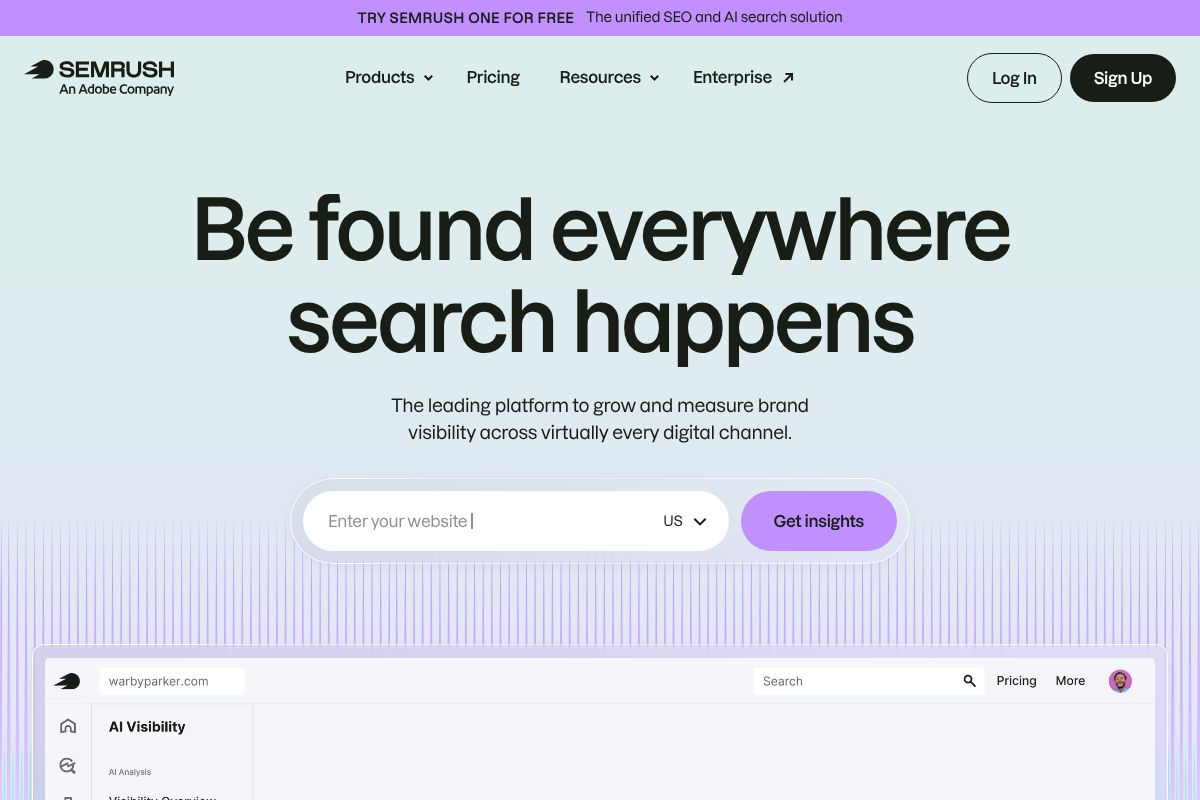
The 2026 updates have added AI-powered insights that surface keyword opportunities and traffic trends without requiring you to dig through endless data tables. That’s a meaningful upgrade for marketers who want answers, not spreadsheets.
Key strengths include:
- Rank tracking across desktop and mobile, with historical trend data
- Competitor keyword analysis — see exactly which terms are driving traffic to rival sites
- Keyword research with difficulty scores, search intent labels, and related term clusters
- AI-generated recommendations that prioritize your highest-impact opportunities
Semrush is best for content marketers and SEO professionals who need detailed, reliable data to inform their strategy. The Pro plan starts at $117/month on an annual billing cycle — it’s an investment, but one that pays off quickly if you’re managing multiple sites or competing in a crowded niche.
Surfer SEO SEO: Best for Real-Time Content Optimization
Surfer SEO takes a different approach — instead of helping you plan before you write, it helps you optimize while you write. The AI content editor scores your draft in real time, showing you exactly what topics to cover, how thoroughly to cover them, and how your content stacks up against the top-ranking pages for your target keyword.

This makes a real difference for writers who want to hit SEO targets without bouncing between five different tabs. You stay in your flow, and the tool keeps you on track.
What makes Surfer SEO stand out:
- Real-time content scoring as you write, based on live SERP analysis
- AI content editor that suggests headings, terms, and structure automatically
- SERP analyzer to understand what Google is rewarding for any given query
- Google Docs and WordPress integrations so you don’t have to change your workflow
The Essential plan runs $79/month on annual billing, which is reasonable for freelancers and small teams producing content regularly. If you’re tired of optimizing after the fact and want SEO baked into your writing process, Surfer is hard to beat.
NeuralText: Best for Content Teams & Topical Authority
NeuralText is the most affordable of the three, and it punches well above its price point for teams focused on building topical authority. Rather than optimizing individual pieces, it helps you think in clusters — grouping related keywords together so your content strategy covers a topic thoroughly enough to earn real authority in search.
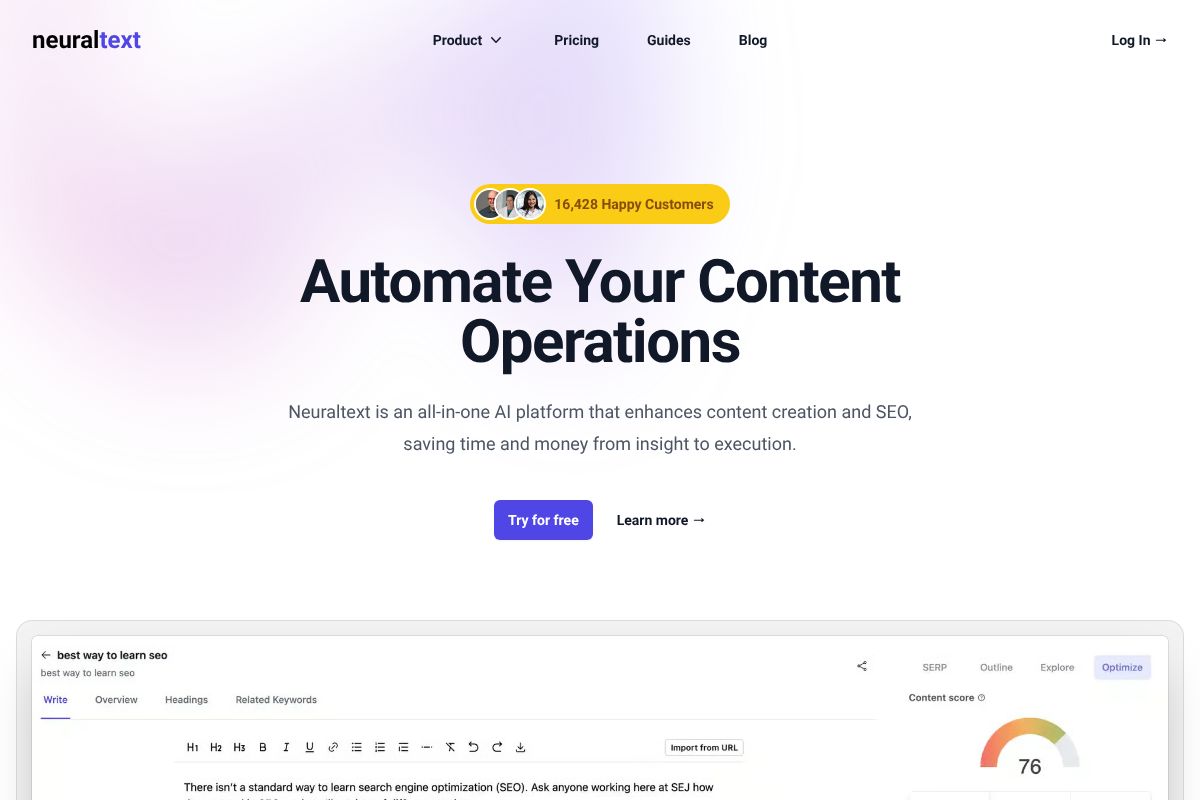
Content briefs are a particular strength here. NeuralText generates structured briefs that tell your writers exactly what to cover, reducing back-and-forth and speeding up production without sacrificing quality.
Where NeuralText delivers:
- Keyword clustering to map out topical coverage before you start writing
- Automated content briefs that give writers clear direction from the start
- SERP analysis to understand what’s already ranking and why
- Team-friendly workflow built for scaling content production efficiently
With an entry price of just $19/month, NeuralText is an easy starting point for content teams that want to get more strategic without a major budget commitment. It’s particularly well-suited for agencies and in-house teams managing a high volume of content across multiple topics.
Pros, Cons & Real Trade-Offs
No single AI SEO tool does everything well — and anyone who tells you otherwise is selling something. The honest reality is that most successful creators and marketers use two or three tools in combination, each covering a different part of the workflow. Here’s how the trade-offs actually break down.
Semrush is the most powerful option in this lineup, but that power comes with a cost — literally and figuratively. At its price point, it’s a serious investment for solo creators or small teams. And with so many features packed in, the learning curve is real. Expect to spend time getting comfortable before you’re extracting full value from it.
Surfer SEO excels at what it’s built for — real-time content optimization — but it’s lighter when it comes to competitive intelligence and backlink analysis. If you need deep dives into what your competitors are doing across the board, you’ll likely need to pair it with another tool. For writers and content teams focused on output, though, it’s hard to fault.
NeuralText is the most budget-friendly option, and it earns its place in any content team’s stack. That said, it doesn’t match Semrush or Surfer on advanced features, rank tracking depth, or the breadth of its data. It’s a strategic starting point, not a full replacement for either of the others.
When to Choose Each Tool
Use this as a quick decision framework before committing to a subscription:
- Choose Semrush if competitor analysis, rank tracking, and technical site audits are central to your strategy. It’s the right fit for marketers managing multiple clients or brands where comprehensive data matters.
- Choose Surfer SEO if you publish frequently and want SEO guidance woven directly into your writing process. It’s ideal for content creators and bloggers who prioritize speed and on-page optimization.
- Choose NeuralText if you’re working with a tighter budget and want to build out topical authority through keyword clustering and structured content briefs. It’s a smart pick for growing teams scaling their content output.
In practice, a common setup is Surfer for writing and NeuralText for planning — with Semrush added when competitive research becomes a priority. Start with what fits your workflow now, and layer in more tools as your needs grow.
Pricing Breakdown & ROI
Understanding what you’re paying — and what you’re getting back — is just as important as the feature list. All three tools offer monthly and annual billing, and the savings on annual plans are worth factoring in if you’re committing long-term.
Here’s a quick look at how the pricing stacks up across the board:
| Tool | Monthly Billing | Annual Billing (per month) | Entry-Level Plan |
|---|---|---|---|
| Semrush | ~$139.95/mo | ~$117.33/mo | Pro Plan |
| Surfer SEO | ~$99/mo | ~$79/mo | Essential Plan |
| NeuralText | ~$49/mo | ~$39/mo | Starter Plan |
From an ROI standpoint, each tool pays for itself differently. Semrush delivers the most value when you’re managing multiple clients or running campaigns where competitive intelligence directly influences revenue. Surfer SEO saves content teams hours each week by eliminating the guesswork in on-page optimization — if you’re publishing several articles a month, that time savings adds up fast. NeuralText offers the most accessible entry point, making it easy to justify even on a freelancer’s budget.
Which Fits Your Budget?
A simple way to think about it: match the tool to where you are right now, not where you hope to be in a year.
- Under $100/month: Start with NeuralText. It covers keyword clustering, content briefs, and basic optimization without stretching your budget.
- $100–$200/month: Surfer SEO is the sweet spot for active content creators who want real-time SEO guidance built into their writing workflow.
- $200+/month: Semrush makes sense when you need deep competitor data, technical audits, and rank tracking across multiple projects.
Many creators start with one tool and layer in others as their content operation grows. There’s no pressure to go all-in immediately — the smartest move is matching your investment to your current output and scaling from there.
Quick Comparison Table
Not sure which tool fits your situation at a glance? Here’s a side-by-side breakdown of all three options so you can make a faster, more confident decision.
| Tool | Best For | Starting Price (2026) | Key Strength | Best If You… |
|---|---|---|---|---|
| Semrush | Agencies & serious marketers | ~$139/month | All-in-one SEO suite with deep competitive intelligence | Manage multiple clients or need full-spectrum SEO data |
| Surfer SEO | Active content creators & writers | ~$99/month | Real-time on-page optimization inside your writing workflow | Publish regularly and want data-driven content guidance |
| NeuralText | Freelancers & solo creators | ~$19/month | Affordable keyword clustering and content brief generation | Are budget-conscious but still want smart SEO support |
No single tool wins across every category — the right pick depends entirely on your workflow, publishing volume, and how much SEO depth you actually need day to day.
The Verdict: Which AI SEO Tool Should You Use?
Here’s the honest truth: there’s no single “best” AI SEO tool in 2026. The right choice depends almost entirely on who you are, what you’re building, and how much you’re willing to invest to get there.
If you’re an SEO professional, agency owner, or marketer managing multiple clients, Semrush is the most complete solution on the market. Yes, it’s the priciest of the three — but the depth of competitive data, keyword research, and site auditing you get justifies that investment at scale.
If you’re a content creator or writer who publishes consistently and wants real-time guidance while you write, Surfer SEO fits naturally into your workflow. It won’t overwhelm you with data you don’t need, and it’s purpose-built to help you rank the content you’re already creating.
If you’re just starting out, freelancing, or working with a tight budget, NeuralText punches well above its price point. You get solid keyword clustering and content brief tools without committing to a triple-digit monthly subscription.
That said, the most successful creators rarely rely on just one tool. A common setup looks something like this:
- Use Semrush for strategy, keyword research, and competitor analysis
- Use Surfer SEO for on-page optimization during the writing process
- Use NeuralText for fast content briefs and topic clustering on a budget
Start with the tool that solves your biggest bottleneck right now — and build from there. Ready to take the next step? Explore each tool using the links below and see which one clicks for your workflow.
Get Started With Your AI SEO Tool Today
The hardest part isn’t choosing the perfect tool — it’s actually getting started. Every week you spend doing keyword research manually or publishing content without optimization guidance is time and traffic you won’t get back.
The good news? All three of these tools make it easy to test the waters before committing:
- Semrush offers a free trial so you can explore its full feature set risk-free
- Surfer SEO has entry-level plans that let you optimize content from day one
- NeuralText is one of the most affordable ways to get started with AI-assisted SEO
Remember: the best AI SEO tool is the one you’ll actually open and use consistently. Start with the lowest-tier plan that covers your current needs, build the habit, and scale up when you’re ready. Investing a little time now saves you countless hours of guesswork later.
Frequently Asked Questions
Which AI tool is best for SEO content creation?
Tools like Jasper and Copy.ai excel at generating SEO-optimized content at scale. They integrate keyword research and automatically structure content for search visibility while maintaining readability and engagement quality.
Can AI tools actually improve my search rankings?
Yes, when used strategically. AI tools optimize on-page elements, identify ranking opportunities, and help create content matching search intent. Results depend on implementation quality and competitive landscape, typically showing improvements within 4-8 weeks.
What’s the difference between AI SEO tools and traditional SEO software?
AI tools use machine learning to predict trends and automate optimization decisions, while traditional software primarily reports metrics. AI provides actionable recommendations and content generation; traditional tools focus on monitoring and analysis.
Is it worth paying for premium AI SEO tools?
Premium tools offer advanced features like competitor analysis, real-time rank tracking, and unlimited content generation. For serious marketers, the ROI typically justifies costs through time savings and improved rankings within 3-6 months of consistent use.
Related Reads
- Best AI for Content Writing in 2026: Top Tools Compared
Find the best AI for content writing in 2026. Compare top tools, features, pricing & honest trade-offs for creators and …
- Surfer SEO vs NeuralText: Which AI Tool Wins in 2026?
Compare Surfer SEO and NeuralText in 2026. See pricing, features, and which AI SEO tool fits your content strategy best.…
- Best AI SEO Tool for 2026: Top Picks for Creators & Marketers
Find the best AI SEO tool for your needs in 2026. Compare Semrush, Surfer SEO, and NeuralText with honest reviews and pr…