Writesonic built a solid reputation as a fast, budget-friendly AI writing tool, but plenty of users hit a ceiling with it — clunky long-form output, credit systems that run dry mid-project, or a chatbot feature (Chatsonic) that feels bolted on rather than built in. If you’re a marketer churning out product descriptions all day or a freelancer drafting client blog posts on deadline, those friction points add up fast. The good news: 2026’s AI writing market has matured well past “one tool does everything.” Some alternatives write cleaner long-form drafts. Others handle brand voice better, or cost less per seat, or skip the credit-hoarding entirely. Picking the best Writesonic alternative depends less on hype and more on what you actually write every week. Here’s where each option actually wins — and where it quietly falls short.
Key Takeaways
- Jasper AI excels for marketing teams requiring brand consistency and scalable content production across multiple campaigns.
- Copy.ai and Rytr deliver budget-friendly solutions perfect for solo creators and freelancers managing tight content schedules.
- Alternative tools now match Writesonic’s speed while offering superior customization for niche workflows and specialized industries.
- Switching platforms requires testing output quality and integration compatibility before fully committing your content workflow.
- Role-specific alternatives exist for creators, marketers, and freelancers, each optimizing different aspects of AI writing performance.
In This Article
- Why Creators Are Looking Beyond Writesonic in 2026
- What Makes a Strong Writesonic Alternative for Your Workflow
- Jasper AI: Best for Marketing Teams Needing Brand Consistency at Scale
- Copy.ai & Rytr: Budget-Friendly Alternatives for Solo Creators
- How These Alternatives Stack Up Against Writesonic’s Strengths
- Content Quality & Output Speed: What You’ll Notice Switching Tools
- Which Alternative Fits Your Role: Creator, Marketer, or Freelancer
- Ready to Switch? How to Test Before Committing
Why Creators Are Looking Beyond Writesonic in 2026
Writesonic still has a loyal user base, and for good reason — it’s fast, cheap to start, and handles short-form copy well. But a lot of people searching for alternatives right now aren’t unhappy so much as they’ve outgrown it. Their workflows changed. Writesonic’s pricing and feature set didn’t always keep pace.
Take a marketing manager running a five-person content team. She needs shared brand voice profiles, approval workflows, and a way to see who edited what before a blog post goes live. Writesonic’s team features exist, but they feel like an afterthought bolted onto a tool built for solo users. That gap alone sends a lot of agencies shopping.
Then there’s the credit system. Writesonic’s per-word or per-generation credits can vanish mid-project, especially if you’re generating multiple drafts to compare tone or angle. A freelancer writing 15,000 words a month for three clients doesn’t want to babysit a credit meter — she wants to write, revise, and move on.
Other common friction points pushing people to look elsewhere in 2026:
- Pricing tiers that jumped noticeably over the past year, narrowing the gap with premium competitors
- SEO integrations that feel shallow compared to tools built specifically around search intent and SERP data
- Long-form output that needs heavy editing to sound less templated
- Chatsonic’s chatbot layer feeling separate from the core writing experience instead of integrated
None of this makes Writesonic a bad tool. It just means the “best” AI writer depends entirely on what you’re producing and how your team works. Below is where the real alternatives pull ahead — and where they don’t.
What Makes a Strong Writesonic Alternative for Your Workflow
Before you jump to a comparison table, it helps to know what you’re actually evaluating. Not every “AI writing tool” solves the same problem, and the right pick depends on whether you’re a solo creator juggling five clients or a marketing lead managing a team of six.
A few criteria matter more than the marketing copy suggests:
- Ease of use — can you get a usable draft in your first session, or does it take a week of prompt tinkering?
- Pricing flexibility — flat monthly rates versus credit systems that punish experimentation
- Content quality — does the output need light editing or a full rewrite?
- Brand voice consistency — can it hold a tone across 50 pieces, not just one?
- Team features — shared workspaces, approval steps, version history
- SEO tools — built-in keyword and SERP data, or a bolt-on afterthought
- Integrations — WordPress, Google Docs, Surfer, HubSpot, Shopify — wherever your work actually lives
Speed vs. Customization: The Trade-off You’ll Face
Every AI writing tool leans one way or the other. Faster tools — think one-click blog generators — get you a draft in under a minute, but you’ll spend that saved time fixing generic phrasing and factual gaps. Customizable tools, the ones with brand voice training and multi-step workflows, take longer to set up and longer to generate output, but need far less cleanup afterward.
A solopreneur pumping out quick product descriptions for an Etsy store probably wants speed. A content agency writing client blog posts under strict brand guidelines needs customization, even if it means a slower first week. Know which one you are before you pick a tool — it’ll save you a subscription cancellation later.
Jasper AI AI: Best for Marketing Teams Needing Brand Consistency at Scale
Jasper AI is built for a different problem than Writesonic solves. Instead of asking “how fast can I generate a draft,” Jasper asks “how do I get five writers and two freelancers to sound like the same brand.” That focus shows up in the pricing and the feature set, and it’s why agencies and in-house marketing teams tend to land here after outgrowing simpler tools.
How Jasper’s Brand Voice Feature Keeps Your Content Consistent
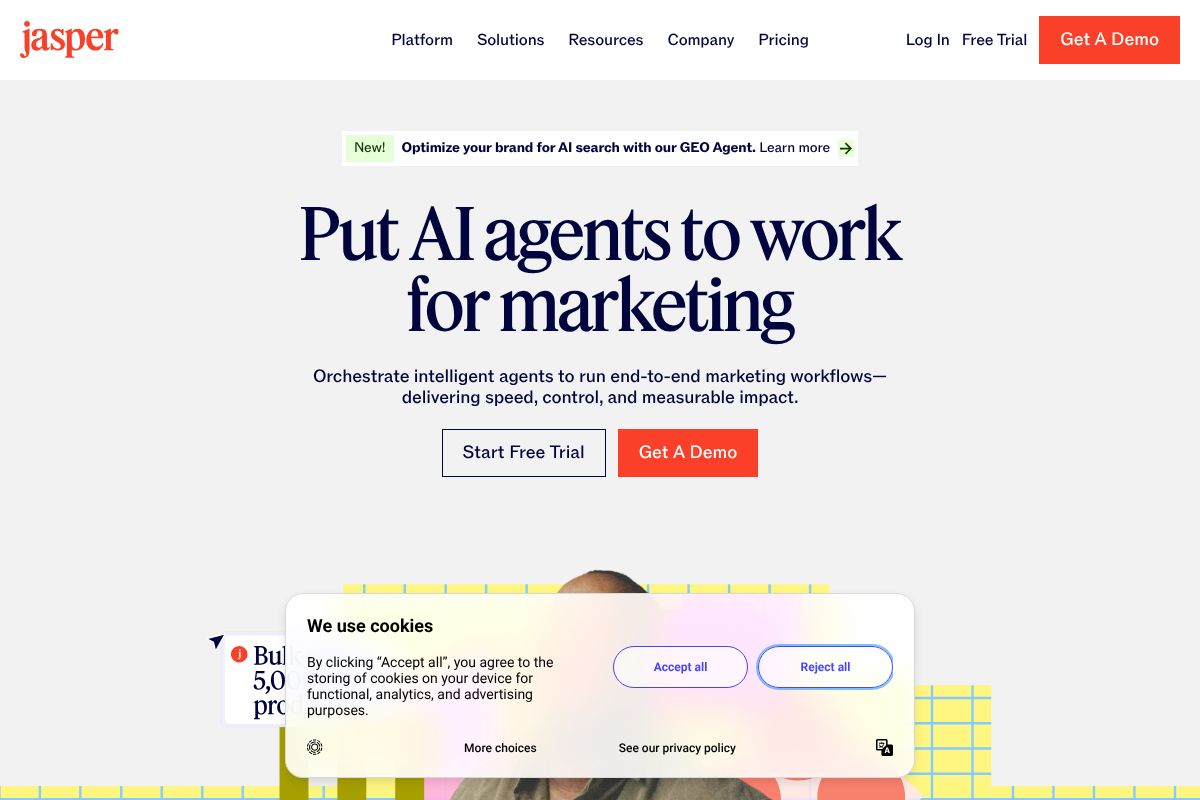
Jasper’s Brand Voice tool lets you feed it existing content — blog posts, product pages, past campaigns — and it extracts tone, vocabulary, and sentence structure into a reusable profile. Every team member generating content then pulls from that same profile, so a junior copywriter and a senior strategist produce work that reads like it came from one person.
Writesonic offers tone settings too, but they’re more like presets (“professional,” “casual”) than a trained model of your actual brand. That distinction matters once you’re past a one-person operation. A 10-person content team at a SaaS company, for example, can have every writer draft onboarding emails, help docs, and landing pages that all sound consistent — without a single group Slack thread arguing about adjective choices. That consistency is the actual product Jasper is selling, more than speed.
Pricing and Who Should (and Shouldn’t) Pay for It
Jasper’s Creator plan runs $49/month and covers one seat with unlimited words, solid for a solo marketer or freelance copywriter. The Pro plan, at $69/month, adds Brand Voice, multiple seats, and campaign workflows — this is the tier most small teams actually need. Teams pricing starts at $125/month and adds SEO tools, more brand voice slots, and admin controls for agencies managing multiple clients.
Be honest with yourself about the learning curve. Jasper has more menus, templates, and settings than Writesonic, and new users often spend their first week feeling like they’re generating okay content instead of great content. It’s worth the ramp-up if you’re managing a team or a client roster. If you’re a solo blogger writing two posts a month, it’s overkill — you’ll pay for capability you won’t touch. Jasper also runs a 30% recurring affiliate commission for anyone promoting it, which partly explains why it shows up so often in “best AI writer” roundups — worth knowing as you read reviews across the web, including this one.
Copy.ai & Rytr: Budget-Friendly Alternatives for Solo Creators
Not everyone needs Jasper-level firepower or a Writesonic subscription with SEO bells attached. If you’re a solo creator, a side-hustler running an Etsy shop, or a small business owner who writes a handful of product descriptions a week, Copy.ai and Rytr both offer real free tiers — not just seven-day trials dressed up as “free plans.”
Copy.ai’s Free Tier: What You Actually Get Without Paying
Copy.ai’s free plan gives you access to its core templates — product descriptions, social captions, basic blog outlines — with a generous enough monthly word allowance to actually test the tool on real work, not just a demo prompt. A solo Etsy seller writing 15–20 product descriptions a week can realistically live on the free tier for months.
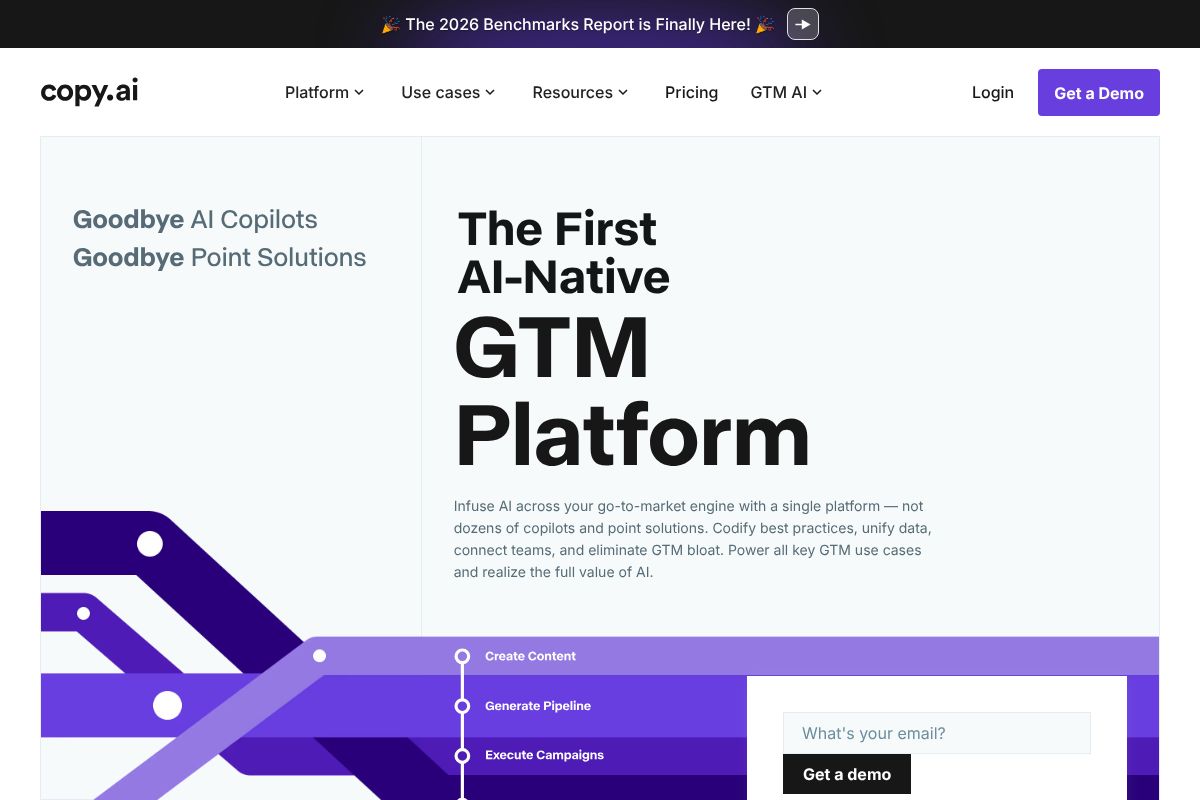
The limitations show up once you need consistency across a brand or want the newer conversational workflows. That’s where Chat, at $29/month, becomes useful — it adds a chat-based interface for iterating on copy instead of regenerating from scratch each time. Pro, at $49/month, unlocks unlimited words and stronger long-form quality control. Skip Agents ($249/month) unless you’re automating multi-step workflows for a team; it’s built for a different buyer entirely, and most solo creators will never touch half its functionality.
Rytr for Beginners: Learning AI Writing Without the Price Tag
Rytr is the simplest tool in this comparison, and that’s the point. The interface has fewer settings, fewer templates, and a shorter learning curve than Jasper AI, Copy.ai, or Writesonic — you pick a tone, pick a use case, and generate. For someone who’s never used an AI writing tool before, that simplicity matters more than raw output quality.
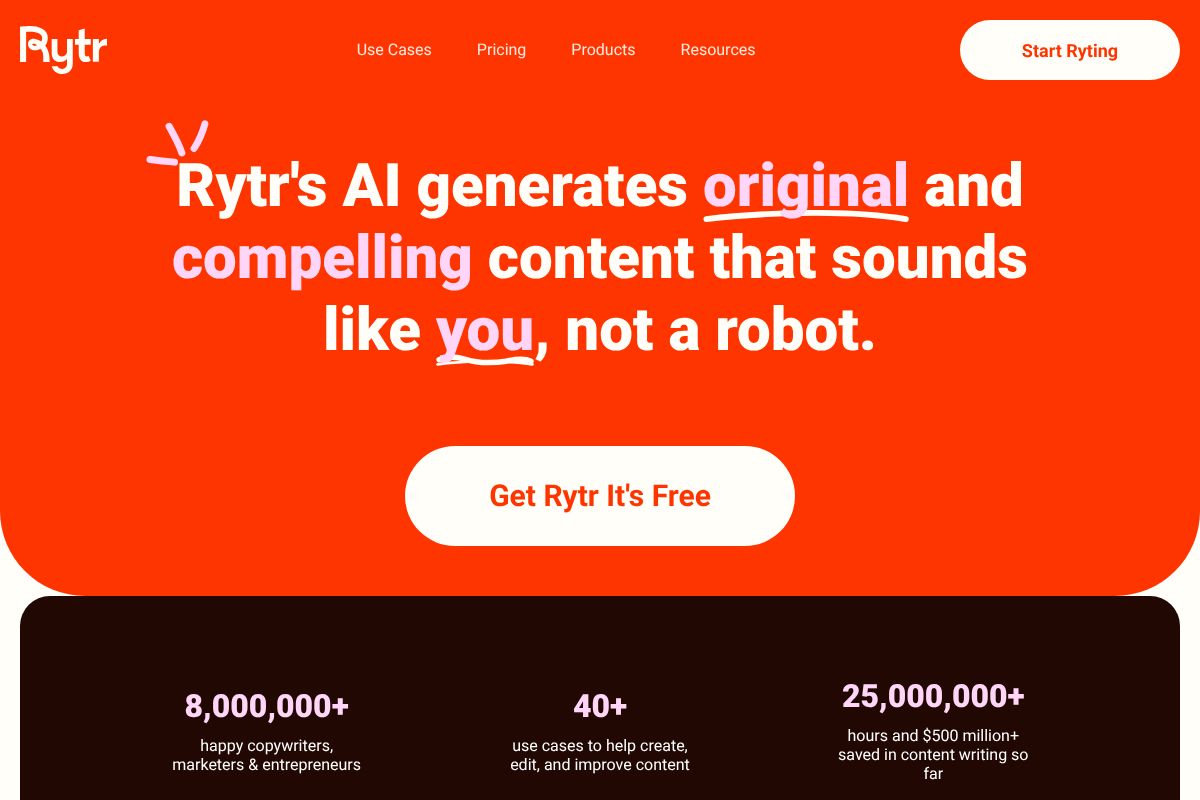
The free plan caps you at roughly 10,000 characters a month, enough for a few blog intros, email drafts, or social captions, but not enough to run a content calendar. Once you’re consistently hitting that ceiling, the $29/month plan removes the cap entirely and adds access to more tone and use-case templates. Rytr fits first-time AI users, students, and freelancers testing whether AI writing fits their workflow before committing to a pricier tool — it’s not going to out-write Jasper AI on long-form content, but for $29 a month, it doesn’t need to.
How These Alternatives Stack Up Against Writesonic’s Strengths
Writesonic built its reputation on baked-in SEO tools — SurferSEO-style content scoring, keyword integration, and article writers aimed squarely at bloggers who need to rank, not just write. That’s a real strength, and none of the three alternatives here match it feature-for-feature. Jasper AI, Copy.ai, and Rytr take different bets: brand consistency, team automation, and simplicity, respectively.
If you’re a solo blogger who lives and dies by search rankings, Writesonic’s SEO integration is still worth considering on its own merits. But if your priority is content quality at scale, chat-based iteration, or team workflows that touch more than just blog posts, the alternatives start pulling ahead.
Comparison Table: Feature & Pricing at a Glance
| Tool | Starting Price | Free Option | Team Collab | Best Suited For |
|---|---|---|---|---|
| Writesonic | ~$39/month | Limited trial | Moderate (Business plan) | SEO-focused bloggers |
| Jasper AI | $49/month (Pro) | 7-day trial only | Strong, brand voice controls | Marketing teams, agencies |
| Copy.ai | $29/month (Chat) | Yes, capped credits | Strong at Agents tier | Workflow automation, sales copy |
| Rytr | $29/month | Yes, ~10k characters/month | Minimal | Beginners, freelancers testing AI |
A few things jump out. Jasper AI has no real free tier, which stings if you want to test drive it first — but its brand voice consistency is unmatched once you’re paying. Copy.ai’s free plan is more generous than Writesonic’s trial, useful for a marketer who wants to draft twenty product descriptions before committing a dollar. Rytr wins on price and simplicity, not power. Writesonic still holds its ground on SEO tooling, but its team features and free access lag behind Copy.ai’s newer Chat and Agents tiers.
Content Quality & Output Speed: What You’ll Notice Switching Tools
Switch tools and the first thing you’ll notice isn’t a feature — it’s tone. Every AI writing tool has a “default voice,” and yours won’t match Writesonic’s out of the box. Give yourself a few days of prompt tweaking before judging any alternative harshly.
Jasper AI leans hardest into polished marketing copy. Ask it for a product launch email and it reads like it came from an agency — confident, benefit-driven, occasionally a bit much for casual blog posts. That’s by design; Jasper was built for brand teams who want consistency across dozens of writers, not for someone who needs a quick, plain-spoken how-to article.
Copy.ai is the most versatile of the bunch. It handles long-form drafts, sales sequences, and quick social captions without feeling locked into one register. A freelance marketer juggling client work in three different industries will appreciate not having to fight the tool’s personality every time the niche changes.
Rytr is the fastest to get a first draft out of, but that speed comes at a cost — output often reads generic unless you spend real time refining prompts and templates. It’s fine for a consultant who needs a quick LinkedIn post between client calls, less fine for anything customer-facing that needs a distinct voice.
Speed-wise, differences are marginal — all four generate a 500-word draft in under 20 seconds. The real time cost is editing. Jasper and Copy.ai output needs less cleanup for professional use; Rytr and base Writesonic drafts usually need a heavier revision pass. Budget an extra hour of editing time in your first week with any new tool — that’s the real learning curve, not the interface.
Which Alternative Fits Your Role: Creator, Marketer, or Freelancer
The “best” alternative depends less on features and more on what you’re actually producing week to week. Here’s how the choice breaks down by role.
Content creators (bloggers, YouTubers): Start with Rytr’s free tier or Copy.ai’s free plan before paying for anything. A YouTuber who needs video descriptions, title variations, and community post ideas doesn’t need Jasper’s brand-voice machinery — they need quick, cheap drafts they’ll rewrite in their own voice anyway. Rytr’s low cost per word makes it easy to justify even on ad-revenue-dependent budgets.
Marketers (agencies, in-house teams): Jasper AI is the clear pick, even at its higher price point. Agencies managing five or six client accounts need consistent brand voice settings, team seats, and approval workflows — Jasper’s Brand Voice and Knowledge Base features exist specifically for this. An in-house marketer producing 20 product descriptions for a Q1 catalog launch will get cleaner first drafts out of Jasper than any competitor here, which matters when a manager is reviewing the output.
Freelancers with varied clients: Copy.ai Pro is the better bet. Freelancers don’t get to specialize in one industry or one type of content — one week it’s SaaS blog posts, the next it’s e-commerce email sequences. Copy.ai’s range across formats means you’re not re-learning a new tool’s quirks every time a client’s niche changes. The Pro plan’s workflow templates also help you turn one-off client requests into repeatable, billable processes.
Small business owners: Copy.ai or Rytr, depending on budget. If you’re a shop owner writing your own product pages, social captions, and the occasional email newsletter, you don’t need agency-grade tooling — you need something affordable that covers multiple content types without a steep learning curve. Rytr wins on price; Copy.ai wins if you eventually want to loop in a part-time marketing hire.
Ready to Switch? How to Test Before Committing
Don’t pick a Writesonic alternative off a comparison table alone — test it against your own content first. The gap between “looks good in a demo” and “works for my actual newsletter” only shows up once you’ve run real drafts through it.
Start with the free tiers. Copy.ai’s free plan and Rytr’s free tier both let you generate real output without a credit card, so there’s no reason to skip this step. Pick one piece of content you write often — a product description, a client email, a blog intro — and generate five versions in each tool you’re considering.
Give it a full week, not just an afternoon. Run your actual workload through it: if you write 15 social captions a week, write all 15 through the tool. You’ll notice things a quick test misses — how much editing each draft needs, whether the tone holds up across formats, and how much time you’re actually saving once you factor in cleanup.
Compare three things across tools: output quality on your specific content type, how fast you can get from prompt to usable draft, and whether the interface slows you down or speeds you up. A tool that writes great blog posts but fumbles product descriptions isn’t a fit if that’s 80% of your workload.
If you land on a paid plan, check the refund window first — several of these tools, including Jasper AI, offer money-back guarantees within the first days of a paid subscription, which removes most of the risk of committing early.
Test two or three tools, not just one. A week of side-by-side comparison costs you a few hours; a year on the wrong tool costs a lot more.
Our Verdict
Editorial rating: 4.6/5
Strong alternatives exist for every budget
Writesonic alternatives in 2026 offer compelling advantages in speed, customization, and cost-efficiency. However, switching requires testing to ensure output quality matches your standards and integrations align with your existing workflow.
Frequently Asked Questions
Is Jasper AI better than Writesonic for marketing teams?
Jasper AI offers superior brand consistency features and scalability for marketing teams managing multiple campaigns. It excels at maintaining voice guidelines across large content volumes, making it ideal for enterprise-level marketing operations compared to Writesonic’s more general approach.
What’s the cheapest Writesonic alternative for freelancers?
Copy.ai and Rytr are the most budget-friendly alternatives, offering affordable plans starting under $20 monthly. Both tools provide sufficient features for freelancers handling client projects without the premium pricing of enterprise-focused competitors like Jasper.
Can I switch from Writesonic without losing content quality?
Yes, modern alternatives like Jasper and Copy.ai produce comparable or superior quality output. Most users notice improved customization and faster generation speeds when switching, though you should test each tool’s output style against your specific content requirements first.
Which Writesonic alternative is fastest for bulk content creation?
Jasper AI and Copy.ai both deliver rapid bulk content generation with minimal quality degradation. Jasper edges ahead for large-scale operations requiring consistent brand voice, while Copy.ai offers faster turnaround for diverse content types at lower costs.
Related Reads
- Which AI Tool is Best for Small Business in 2026?
Find the best AI writing tool for your small business in 2026. Compare features, pricing, and real use cases for creator…
- Best AI Writing Tools for Social Media in 2026
Find the best AI writing tools for social media. Compare features, pricing, and performance for creators and marketers i…
- Which AI Tool is Best for Writing Copy? 2026 Guide
Find the best AI writing tool for your needs. Compare top copywriting tools, pricing, and features to boost your content…